
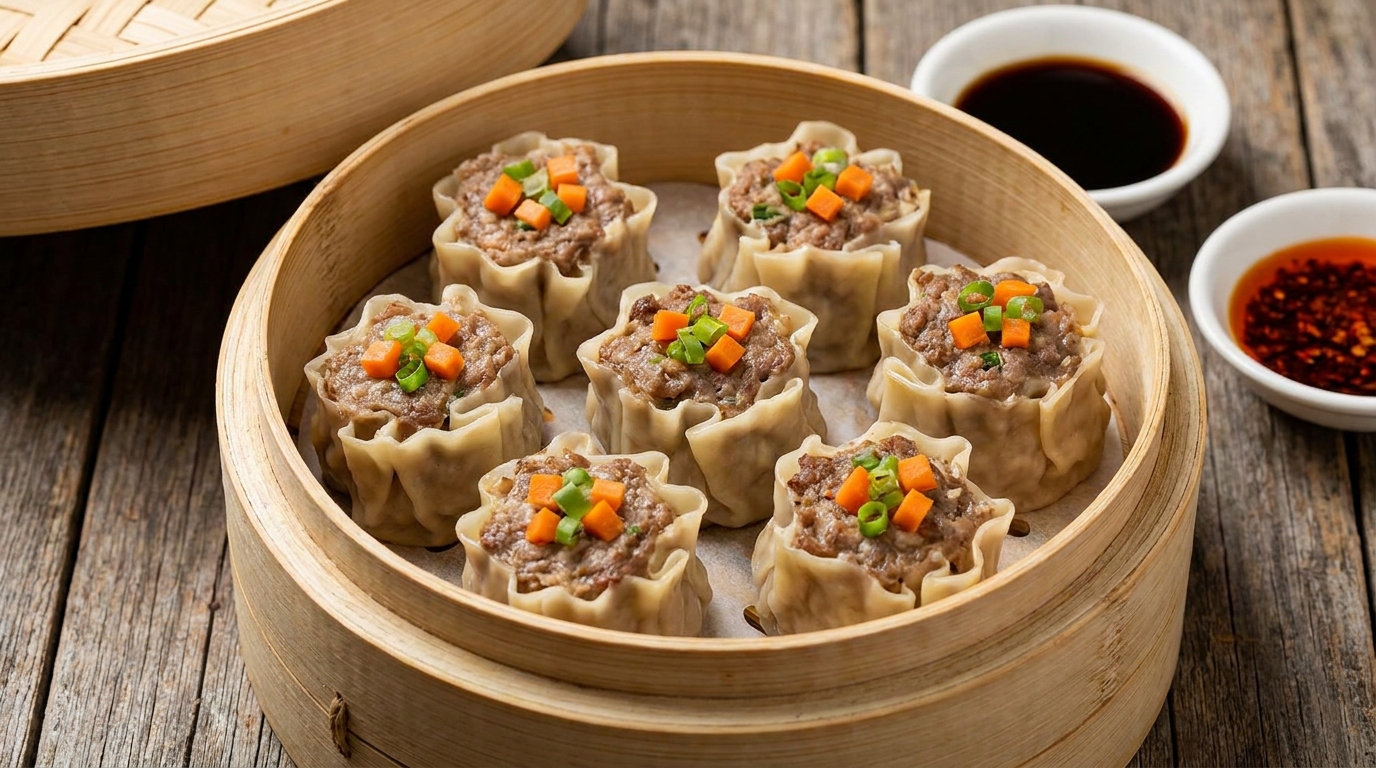
No-Fold Beef Siomai
All the flavor of classic steamed dumplings, none of the folding — just cup, fill, and steam.
Thank you for reading this post, don't forget to subscribe!
Siomai is one of those dishes that tastes like it demands real skill — thin wrappers pleated by hand around a savory filling, dozens of them made in a row for a family gathering. And traditionally, it does take practice to get those folds tight and even.
This version skips the folding almost entirely. Press a wrapper into a muffin tin or simply cup it in your palm, spoon in the seasoned beef filling, and gently gather the edges upward — no pleating technique required. What steams up still looks like real siomai, with that same soft wrapper and juicy, well-seasoned filling, just without the hand-folding learning curve.
It’s a genuinely useful shortcut for anyone who loves dumplings but doesn’t have the time, patience, or dexterity for traditional pleating — and it scales easily for a crowd, since the no-fold method is dramatically faster per piece.
This is the kind of recipe that makes homemade siomai a realistic weeknight option rather than a special-occasion project. What used to take an hour of careful folding for a batch can now be assembled in a fraction of the time, which means fresh, homemade dumplings become something you can reasonably make on a random weeknight rather than saving for a holiday gathering.
A Little Bit of History
Siomai traces its roots to Chinese shumai, a type of open-topped steamed dumpling that has been part of dim sum tradition for centuries. As the dish traveled and adapted across Southeast Asia, particularly into Filipino cuisine, it took on its own regional character — often filled with a combination of ground pork or beef, vegetables, and a distinct blend of soy sauce, sesame oil, and aromatics, and typically served with calamansi and soy sauce or chili oil for dipping.
The traditional pleating technique used in both shumai and siomai is meant to keep the dumpling’s characteristic open top while still holding the filling securely during steaming. It’s a skill passed down through generations in many households, often taught hands-on rather than from a written recipe, which is part of why it can feel intimidating to home cooks trying it for the first time without guidance.
The no-fold approach used here is a modern, practical adaptation rather than a traditional method — a response to how much time and practice classic pleating requires. By using a muffin tin or simply cupping the wrapper by hand, this version keeps the essential flavor and texture of siomai intact while making the process accessible to cooks who’ve never folded a dumpling before.
Dumplings in general hold deep cultural significance across many Asian culinary traditions, often associated with celebrations, family gatherings, and the communal act of preparing food together. The traditional practice of a family gathering to fold dumplings by hand, sharing stories while working through a large batch, is part of what makes the classic pleating technique so meaningful to many home cooks — even as quicker, simplified methods like this one make the dish more accessible to a wider range of skill levels.
Why This One Works
Traditional siomai folding exists mainly for presentation and to help the dumpling hold its shape while steaming. This method achieves the same structural goal a different way — by loosely gathering the wrapper up around the filling rather than pleating it — so the dumpling still holds together and steams evenly, just with a more rustic, open-top look.
The filling itself, a mix of ground beef, finely chopped vegetables, and classic seasonings like soy sauce, oyster sauce, and sesame oil, is what carries almost all the flavor, meaning the simplified wrapping technique doesn’t cost you anything in taste. Steaming, rather than boiling or frying, is what keeps the filling moist and the wrapper tender without becoming soggy or falling apart.
Using a muffin tin as a shaping aid, if you choose to, adds an extra layer of reliability for anyone new to dumpling-making — the wrapper naturally cups into the muffin well, giving the filling somewhere to sit while you gather and press the edges, which makes the whole process considerably more forgiving than trying to shape freeform dumplings entirely by hand.
It’s also worth understanding why steaming specifically, rather than boiling, is the right method here. Boiling would submerge the dumplings directly in water, risking a soggy, waterlogged wrapper and diluted filling flavor. Steaming cooks the filling gently with indirect moist heat, keeping the wrapper tender without becoming saturated, which is exactly the texture that makes siomai distinct from boiled dumplings like classic Chinese jiaozi.
What You’ll Need
- 1 lb ground beef
- 1/2 cup finely chopped carrots
- 1 small onion, minced
- 1 teaspoon minced garlic
- 2 tablespoons soy sauce
- 1 tablespoon oyster sauce
- 1 teaspoon sesame oil
- 1/2 teaspoon ground black pepper
- 20–24 square siomai or wonton wrappers
A Closer Look at Each Ingredient
The ground beef. A standard 80/20 or 85/15 ground beef gives the best balance of flavor and moisture for this filling — very lean beef can result in a drier, less juicy dumpling once steamed, since there’s less fat to keep the filling tender.
The carrots and onion. Finely chopped carrots and onion add both moisture and a subtle sweetness that balances the savory seasonings. Chop them small and evenly, since large pieces can make the wrappers harder to gather closed and create uneven texture in each bite.
The seasonings. Soy sauce, oyster sauce, sesame oil, garlic, and black pepper together form the classic siomai flavor base — savory, slightly sweet, and aromatic. Oyster sauce in particular adds a depth and umami richness that’s hard to replace, so it’s worth seeking out if you don’t already have it in your pantry.
The wrappers. Square siomai or wonton wrappers both work well here. Keep unused wrappers covered with a damp towel while you work, since they dry out and crack quickly when exposed to air, which makes them much harder to gather and shape.
Equipment You’ll Need
A steamer is the main piece of equipment this recipe relies on — a bamboo steamer basket set over a wok or pot of simmering water is traditional, though a metal steamer insert works just as well. If you don’t have a dedicated steamer, you can improvise one using a heatproof plate set on a small rack or upturned bowl inside a large, covered pot with a shallow layer of simmering water. A muffin tin is optional but genuinely helpful for beginners, since it gives each wrapper a shape to cup into while you fill and gather it.
How to Make Them
- Mix the filling. In a large bowl, combine the ground beef, carrots, onion, garlic, soy sauce, oyster sauce, sesame oil, and black pepper. Mix thoroughly until well combined.
- Prepare the wrappers. Lay out the siomai wrappers and lightly moisten the edges with a bit of water to help them hold their shape.
- Fill each wrapper. Place a spoonful of filling in the center of each wrapper.
- Gather, don’t fold. Gently gather the edges of the wrapper up and around the filling, pressing lightly at the base to help it hold — no pleating needed.
- Arrange for steaming. Place the filled siomai in a steamer lined with parchment or cabbage leaves, spaced slightly apart.
- Steam. Steam over simmering water for 12–15 minutes, until the filling is fully cooked through and the wrappers look glossy and tender.
- Serve. Serve hot with soy sauce, chili oil, or calamansi on the side for dipping.

Troubleshooting Common Issues
My siomai opened up during steaming. This usually means the filling was packed too loosely or the wrapper wasn’t gathered snugly enough at the base. Press gently but firmly at the base of each dumpling before steaming to help it hold its shape.
My wrappers dried out and cracked before I could fill them. This happens quickly when wrappers are exposed to open air. Keep unused wrappers covered with a slightly damp towel while you work through the batch, only uncovering a few at a time.
My filling tastes bland after steaming. Steaming can mute seasoning slightly compared to pan-frying, so it helps to season the raw filling a touch more assertively than you might for a dish that will be cooked another way. Taste a small cooked portion (a mini test patty fried in a pan) before filling all the wrappers, and adjust seasoning if needed.
My siomai stuck to the steamer basket. Line the steamer with parchment paper, cabbage leaves, or lightly oiled foil to prevent sticking, since the wrapper can adhere directly to a bare metal or bamboo steamer surface.
My filling feels dense or tough after steaming. This can happen if the beef mixture was overmixed, which can toughen ground meat much the way overworking meatballs or burger patties does. Mix just until the ingredients are combined, without excessive stirring.
My dumplings all cooked unevenly. Overcrowding the steamer basket can cause uneven cooking, since some dumplings end up shielded from direct steam by their neighbors. Leave a small gap between each piece, and steam in batches if necessary rather than overcrowding a single layer.
Serving Suggestions
Siomai is traditionally served hot, straight from the steamer, with a simple dipping sauce on the side — soy sauce with a squeeze of calamansi or lime is the classic pairing, though chili garlic sauce or a soy-vinegar blend both work well too. A sprinkle of finely chopped scallions or a few drops of sesame oil over the top just before serving adds a bit of extra aroma and color.
These make an excellent appetizer or party food, since they’re easy to eat with just a fork or even fingers, and a batch of 20–24 pieces goes a long way when served alongside other small dishes. They also work well as part of a larger meal — served over steamed rice with a simple vegetable side, they can easily become a full dinner rather than just an appetizer.
For a gathering, consider setting out two or three different dipping sauces so guests can customize each bite — a classic soy-calamansi mix, a spicier chili oil, and a simple vinegar-garlic sauce cover a good range of flavor preferences without much extra effort.
Siomai also works well as part of a larger dim sum-style spread if you’re hosting a gathering — paired with other steamed or fried appetizers, a simple cucumber salad, and a few dipping sauce options, it can anchor a full shared appetizer course rather than standing alone.
A Few Ways to Make Them Yours
Pork or Chicken Swap
Substitute ground pork or chicken for the beef for a lighter, more traditional-style filling.
Shrimp Addition
Fold in finely chopped shrimp along with the beef for a surf-and-turf twist on the classic filling.
Spicy Version
Add a spoonful of chili garlic sauce to the filling for a spicier version with built-in heat.
Air Fryer Finish
After steaming, give the siomai a quick 3–4 minute pass in the air fryer for a lightly crisped bottom.
Make-Ahead Tips
Siomai is genuinely well suited to making ahead, and freezing uncooked is actually the preferred method for the best texture later on. Assemble the filled, unsteamed siomai, then freeze them in a single layer on a tray until solid before transferring to a freezer bag — this prevents them from sticking together and lets you steam only as many as you need at a time.
If you’re planning to serve a large batch for a gathering, consider assembling everything the day before and storing the uncooked, filled siomai covered in the fridge overnight, then steaming fresh right before guests arrive. This gives you the convenience of advance prep without sacrificing the just-steamed texture that makes siomai so appealing.
Because uncooked siomai freeze so well, this recipe is also an excellent candidate for batch cooking — making a double or triple batch on a weekend and freezing the extras gives you homemade, restaurant-quality dumplings ready to steam on a busy weeknight with barely any active cooking time required.
A Note on Dietary Adjustments
This recipe can be adjusted for a few common dietary needs. For a lower-sodium version, reduce the soy sauce slightly and use a low-sodium variety, adjusting to taste. For a gluten-free version, look for gluten-free soy sauce (tamari) and gluten-free dumpling wrappers, both of which are increasingly available at well-stocked grocery stores.
This particular filling relies on ground meat for its structure and flavor, so a fully vegetarian adaptation would require a more significant recipe change — substituting a plant-based ground meat alternative or a finely chopped mushroom and vegetable filling can work, though the texture and cooking time may need some adjustment from this specific recipe.
For those managing sodium intake, using a reduced-sodium soy sauce and being mindful of the amount of oyster sauce, which also contains a fair amount of sodium, can meaningfully lower the overall sodium content of this dish without significantly changing its flavor profile.
Storage
Keep leftover cooked siomai in an airtight container in the fridge for up to 3 days, and reheat by steaming briefly. Uncooked, filled siomai freeze well — arrange in a single layer until solid, then transfer to a freezer bag for up to 2 months, and steam straight from frozen, adding a few extra minutes to the steam time.
Common Questions
Can I use wonton wrappers instead of siomai wrappers?
Yes — wonton wrappers work well as a substitute and are often easier to find. The texture will be very slightly different but still delicious.
Why did my siomai open up during steaming?
This usually means the filling was packed too loosely or the wrapper wasn’t gathered snugly enough at the base. Press gently but firmly at the base of each dumpling before steaming.
Can I pan-fry these instead of steaming?
Steaming is the traditional method and gives the best texture, but you can pan-fry the bottoms briefly after steaming for a crisped finish, similar to potstickers.
How do I know when the siomai are fully cooked?
The filling should reach an internal temperature of at least 160°F (71°C), and the wrapper should look glossy and slightly translucent rather than dry or opaque.
Can I make a bigger batch for meal prep?
Yes — this recipe doubles or triples easily. Assemble a large batch and freeze the extras uncooked for quick steaming later in the week.
What’s the best dipping sauce for siomai?
A classic combination of soy sauce and calamansi or lime juice is traditional, though chili garlic sauce or a simple vinegar-garlic sauce both pair well too.
Can I make the filling a day ahead and assemble the siomai the next day?
Yes — the raw filling can be mixed and stored covered in the fridge for up to a day before you assemble and steam the dumplings, which can help break up the prep work if you’re short on time.
What’s the difference between siomai and traditional Chinese shumai?
Siomai is a Filipino adaptation of Chinese shumai, generally featuring its own distinct blend of seasonings like soy sauce, oyster sauce, and sesame oil, and is traditionally served with calamansi alongside soy sauce for dipping.
One last thing worth mentioning: this no-fold technique is a genuinely useful skill to have on hand beyond just this specific recipe. The same gathering method works well for other dumpling fillings too, meaning once you’re comfortable with this approach, you can apply it to pork, chicken, or vegetarian fillings just as easily, opening up a much wider range of homemade dumplings without ever needing to learn traditional pleating.