
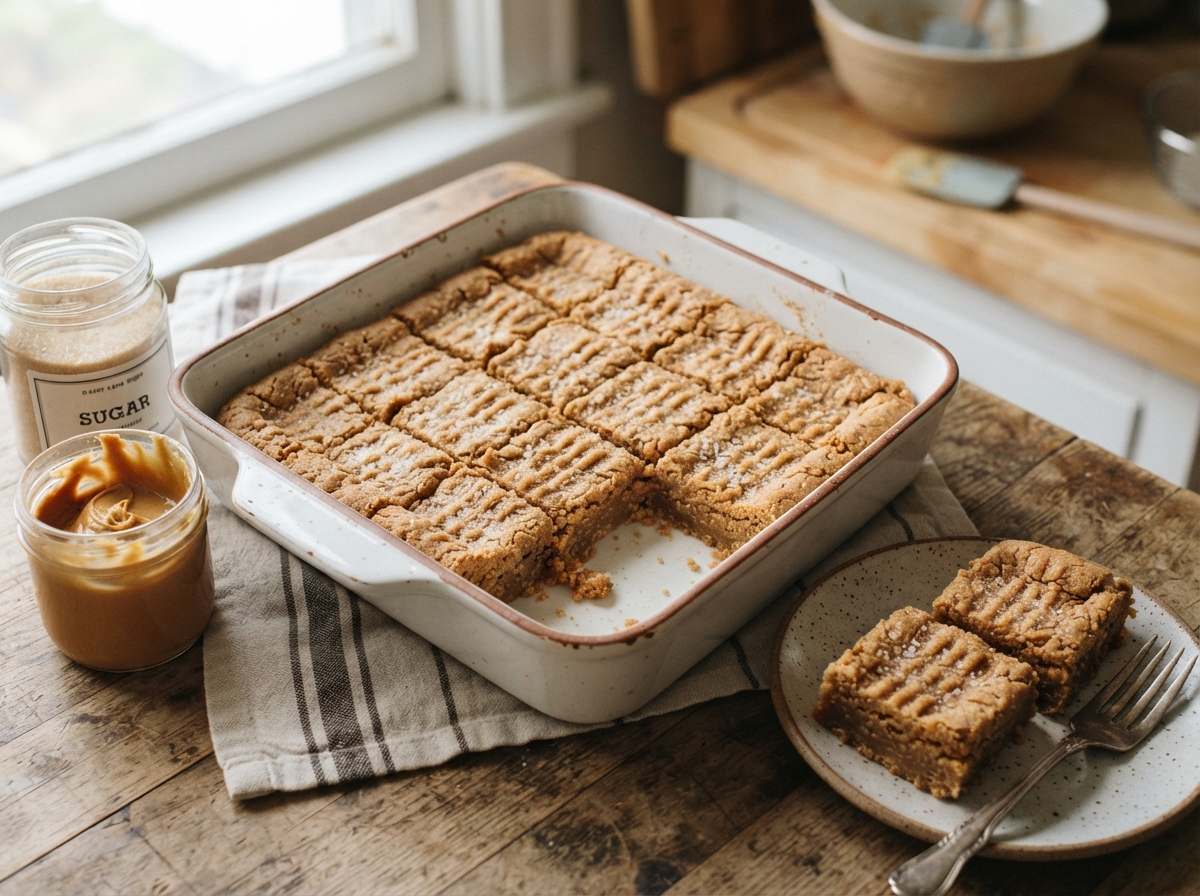
2-Ingredient Peanut Butter Cookie Bars
Peanut butter and refrigerated sugar cookie dough combine into a chewy, golden bar with almost no prep at all.
Thank you for reading this post, don't forget to subscribe!
These 2-Ingredient Peanut Butter Cookie Bars turn a jar of peanut butter and a tube of refrigerated sugar cookie dough into a chewy, golden bar with almost no prep at all. The two ingredients mash together into a dense, workable dough that presses into a pan and bakes into a bar with a crisp, golden edge and a soft, chewy center.
There’s no creaming butter and sugar, no measuring out flour or leavening, and no separate cookie dough to make from scratch, the tube of dough already has all of that built in. Once it’s combined with the peanut butter, the whole thing goes straight into the oven for under twenty-five minutes.
It’s the kind of treat that tastes like a proper peanut butter cookie but takes a fraction of the usual effort.
Why This Recipe Works
Refrigerated sugar cookie dough already contains flour, sugar, butter, and leavening blended together in a stable, ready-to-bake form, which means it doesn’t need any of those measured out separately here. When it’s combined with peanut butter, the peanut butter adds both extra fat and a distinct, nutty flavor that transforms a plain sugar cookie into something that tastes like a proper peanut butter cookie.
Pressing the combined dough into a pan, rather than baking it as individual cookies, gives you a uniform, easy-to-slice bar with far less hands-on shaping than portioning out dozens of individual cookies would require.
Why Softening the Dough First Matters
Letting the cookie dough come to room temperature before combining it with the peanut butter makes the two ingredients much easier to work into one even mixture. Cold dough straight from the refrigerator resists blending evenly, leaving streaks of peanut butter or dough that never fully incorporate.
What You’ll Need
- 1 cup creamy peanut butter
- 1 tube refrigerated sugar cookie dough
That’s the entire list. This recipe makes 16 bars.
A Note on Ingredient Choices
A standard creamy peanut butter blends in most smoothly, though a natural, oilier peanut butter can work too with a slightly softer result. Any standard tube of refrigerated sugar cookie dough works well here; a thicker, chewier cookie dough tends to give the richest bar.
Equipment You’ll Need
An 8×8-inch baking pan lined with parchment paper and an oven are really all you need here; there’s no mixer or extra bowl required beyond combining the two ingredients by hand.
How to Make It
- Preheat. Preheat the oven to 350°F.
- Line the pan. Line an 8×8-inch baking pan with parchment paper.
- Combine. Soften the cookie dough and combine it with the peanut butter until evenly mixed.
- Press. Press the mixture into the prepared pan.
- Bake. Bake for 18–22 minutes, or until the edges are lightly golden.
- Cool. Cool completely before cutting into bars.
- Slice. Slice and serve.
Getting an Even Press
Pressing the dough evenly into every corner of the pan, rather than just smoothing the center, is what gives the finished bars a uniform thickness once sliced. Damp hands or the back of a measuring cup both work well for pressing the mixture into a level layer.

Getting an Even Bake
Placing the pan on the center rack of the oven helps the bars bake evenly across the entire surface, since a rack that’s too high or too low can lead to uneven browning around the edges. Rotating the pan halfway through baking can also help if your oven tends to run unevenly.
Knowing When It’s Done
These bars are ready once the edges look lightly golden and just pulled away slightly from the sides of the pan. Because the center will look a touch underdone even when finished, relying on that golden edge is a more reliable indicator of doneness than checking the middle.
Tips for Perfect Peanut Butter Cookie Bars
Soften the cookie dough fully before combining it with the peanut butter; this single step makes the biggest difference in how evenly the two ingredients blend. Don’t overbake these bars, since they firm up quite a bit as they cool and can turn dry if left in the oven too long.
Troubleshooting Common Issues
My mixture has streaks of unmixed dough. The cookie dough likely wasn’t fully softened; let it sit at room temperature longer next time before combining.
My bars are falling apart when sliced. Let them cool longer before cutting; a warm bar is much softer and more likely to crumble.
My bars are dry. They were likely baked a few minutes too long; check for that lightly golden edge a little earlier next time.
My bars stuck to the pan. Be sure to line the pan with parchment paper and leave enough overhang to lift the whole block out cleanly.

A Few Ways to Make It Yours
Fork-Tine Pattern
Press a crosshatch pattern into the top with a fork before baking for a classic peanut butter cookie look.
Flaky Sea Salt
A light sprinkle of flaky sea salt over the top before baking adds a nice contrast to the sweetness.
Chocolate Chip Add-In
Fold a handful of chocolate chips into the dough before pressing it into the pan for extra richness.
Chopped Peanuts
A scatter of chopped peanuts over the top before baking adds crunch and reinforces the peanut butter flavor.
The plain version is worth trying first so you know the baseline flavor before adding any extras.
How to Store Peanut Butter Cookie Bars
Store the bars covered at room temperature for up to 4 days, or in the refrigerator for up to a week for a longer shelf life. Keeping them in an airtight container helps preserve their chewy texture.
When to Serve These Bars
These bars work well as a simple lunchbox treat, a quick contribution to a bake sale, or a make-ahead dessert to keep on hand for whenever a peanut butter cookie craving hits. Their sturdy, portable shape also makes them an easy option for a picnic or a road trip snack.
Nutrition and Serving Information
The recipe estimates approximately 220 calories per bar when the pan is cut into 16 bars, based on standard measurements for peanut butter and refrigerated cookie dough. This is only an estimate, since exact calorie and fat content will vary depending on the specific brands used. Because this recipe is built around peanut butter and cookie dough containing wheat, it isn’t appropriate for anyone with peanut or gluten sensitivities.
Make-Ahead Tips
These bars can be baked a day or two ahead and stored covered at room temperature, making them a convenient make-ahead treat for a lunchbox or a gathering. Because they need to cool completely before slicing anyway, they’re naturally suited to being made in advance.
The Science Behind a Two-Ingredient Cookie Bar
Refrigerated cookie dough is engineered to bake predictably, with its ratio of flour, sugar, fat, and leavening already balanced for a reliable rise and spread. Working in peanut butter changes that balance slightly, adding extra fat and protein that makes the finished bar denser and chewier than the cookie dough would be on its own, while the leavening already in the dough still provides enough lift to keep the bars from baking up flat and hard.
Portioning and Yield
This recipe makes 16 bars from a single 8×8-inch pan, a good size for a lunchbox rotation or a small gathering. If you’d like a larger batch, doubling both ingredients into a 9×13-inch pan works well, though the bake time may need to extend slightly given the greater volume of dough.
A Little Bit of History
Using refrigerated cookie dough as a shortcut base for homemade treats became a popular home-kitchen trick once tubes of pre-made dough were widely available, letting bakers skip measuring out a full ingredient list from scratch. Combining that dough with peanut butter is a natural extension of the same idea, layering in a classic cookie flavor with almost no additional effort.
Serving Suggestions
Serve the bars slightly warm for the softest, most cookie-like texture, or at room temperature once fully cooled for the cleanest slices. A glass of milk alongside is the classic pairing for anything peanut butter, rounding out the flavor nicely.
Choosing the Right Cookie Dough
A standard tube of refrigerated sugar cookie dough gives the most reliable texture and the truest classic cookie flavor. A chocolate chip cookie dough can work as a substitute if you’d like an extra layer of chocolate flavor mixed throughout the bars.
Why This Recipe Is So Beginner-Friendly
If you’ve never baked cookie bars before, this is about as forgiving a place to start as you’ll find. There’s no dry ingredient list to measure, no risk of throwing off a delicate ratio of flour to leavening, and no creaming butter and sugar to get exactly right. With only two ingredients and one simple step, combining and pressing the dough into a pan, there’s very little room for the kind of small mistakes that can derail a more complicated cookie recipe. This makes it a genuinely approachable recipe for a first-time baker or a child who wants to help press the dough into the pan, since the process is simple, safe, and has real, visible results within half an hour.
Adjusting the Flavor to Your Taste
As written, these bars get their flavor from the peanut butter and the cookie dough in balance, giving a result that tastes like a proper peanut butter cookie. If you’d like a more pronounced peanut butter flavor, stirring in an extra spoonful of peanut butter before pressing the dough into the pan shifts the balance nicely. A pinch of flaky salt over the top before baking can also sharpen the flavor and cut some of the sweetness. Because these bars have so few ingredients to begin with, small additions tend to have an outsized effect on the final flavor, so it’s worth trying the plain version first before deciding what, if anything, you’d like to add.
Pairing These Bars With Other Desserts and Drinks
Because the flavor here is rich, buttery, and distinctly peanut buttery, these bars pair naturally with lighter, brighter options if you’re serving more than one dessert. A simple fruit salad or a citrus-based dessert cuts through the richness nicely, while something equally indulgent like a chocolate cake leans further into the same direction if that’s the mood you’re after. On the drink side, these bars are a natural match for a cold glass of milk, while coffee works well for an afternoon treat.
A Note on Ingredient Proportions
The one cup of peanut butter to one tube of cookie dough ratio in this recipe was chosen carefully, and it’s worth understanding why before making adjustments. This balance gives enough peanut butter flavor to come through clearly, while the cookie dough still provides enough structure to hold the bars together once baked. If you use significantly more peanut butter relative to the dough, the bars may not set firmly enough to slice cleanly; if you use less peanut butter, the flavor can taste more like a plain sugar cookie than a true peanut butter treat. This particular ratio is what gives the bars their balanced flavor and chewy texture, so it’s worth treating the stated proportions as a tested baseline.
A Quick Note on Serving Temperature
These bars are good served warm, at room temperature, or even chilled, which is part of what makes them such a flexible treat to have on hand. Served warm, shortly after baking, the peanut butter flavor is at its most pronounced and the texture is at its softest. At room temperature, the bars firm up and slice more neatly, making them easy to pack for a lunchbox or a gathering.
Why This Recipe Is Naturally Kid-Friendly to Make
Because this recipe involves just combining two ingredients by hand and pressing them into a pan, it’s a genuinely simple treat to make with kids, provided an adult handles getting the pan in and out of the oven. Mashing the peanut butter into the cookie dough is a satisfying, hands-on task that gives a real sense of accomplishment once the finished bars come out of the oven golden and fragrant.
A Quick Note on Portion Control
Because these bars are rich with peanut butter and cookie dough, a modest square goes further here than it would with a lighter dessert. Cutting the pan into 20 smaller bars rather than 16 standard-sized ones is an easy way to stretch the batch a bit further for a larger gathering, while still giving everyone a satisfying, full-flavored taste of the peanut butter cookie.
A Note on Presentation
How you finish these bars changes the impression they make almost as much as the flavor itself. Left plain, straight from the pan, they read as a simple, homey snack for a lunchbox or an afternoon treat. Pressed with a fork-tine crosshatch pattern and finished with a sprinkle of flaky salt before baking, the same batch suddenly looks like something from a bakery case, which makes this a surprisingly versatile recipe to keep in rotation for both everyday snacking and occasions where presentation matters a little more.
Why This Recipe Is So Reliable
Part of what makes 2-Ingredient Peanut Butter Cookie Bars such a good recipe to keep on hand is how little can actually go wrong with it. There’s no leavening to measure precisely, no eggs to worry about curdling a batter, and no delicate emulsion between fat and sugar that can break if the kitchen is too warm or too cool. Peanut butter and cookie dough are both stable, forgiving ingredients on their own, and combining them doesn’t introduce any new chemistry that needs careful attention. As long as the pan is lined, the mixture is pressed evenly, and the bars aren’t pulled from the oven before the edges have turned golden, the result is consistent nearly every time, which is exactly the kind of dependability worth having in a go-to snack recipe.
A Word on Texture
The texture of these bars sits somewhere between a dense cookie and a soft peanut butter fudge, and that in-between quality is part of the appeal. Because the peanut butter is worked directly into the raw cookie dough rather than baked separately, it keeps the crumb closer together than a traditional cookie, so the bars slice cleanly instead of crumbling apart. At the same time, the dough’s own leavening still lifts it just enough during baking to keep the bite from feeling heavy or dense. The result is a bar that holds its shape well for cutting and packing, yet still feels soft and a little chewy against the fork or fingers.
A Final Thought on This Recipe
Recipes built around just two pantry staples tend to earn their place in a regular rotation not because they’re flashy, but because they solve a real problem: something needs to go in a lunchbox, a last-minute guest is arriving, or a peanut butter craving needs answering right now, and there’s no time or patience for a long ingredient list. 2-Ingredient Peanut Butter Cookie Bars answer that need reliably, using ingredients that are already sitting in most kitchens, and turning them into something that looks and tastes like real effort went into it. That combination of simplicity and payoff is exactly why this recipe is worth keeping close at hand.
Common Questions
Can I use a different cookie dough flavor?
Yes, a chocolate chip cookie dough works well as a substitute and adds an extra layer of chocolate flavor.
Why is my mixture streaky?
This usually means the cookie dough wasn’t fully softened; let it sit at room temperature longer before combining.
Can I use natural peanut butter instead of regular?
Yes, though the finished bars may be a touch softer than with a standard creamy peanut butter.
How do I know when these are done baking?
Look for lightly golden edges that have just pulled away slightly from the sides of the pan.
Can I double this recipe?
Yes, use a 9×13-inch pan and double both ingredients, allowing a few extra minutes of bake time.
How should I store leftovers?
Keep the bars covered at room temperature for up to 4 days, or refrigerate for up to a week.
Can I freeze these bars?
Yes, wrap tightly and freeze for up to 2 months; thaw at room temperature before serving.
2-Ingredient Peanut Butter Cookie Bars turn a jar of peanut butter and a tube of cookie dough into a chewy, golden treat with almost no effort at all. Combine, press, bake, and cool, that’s the entire process, and the result tastes just like a proper peanut butter cookie.