
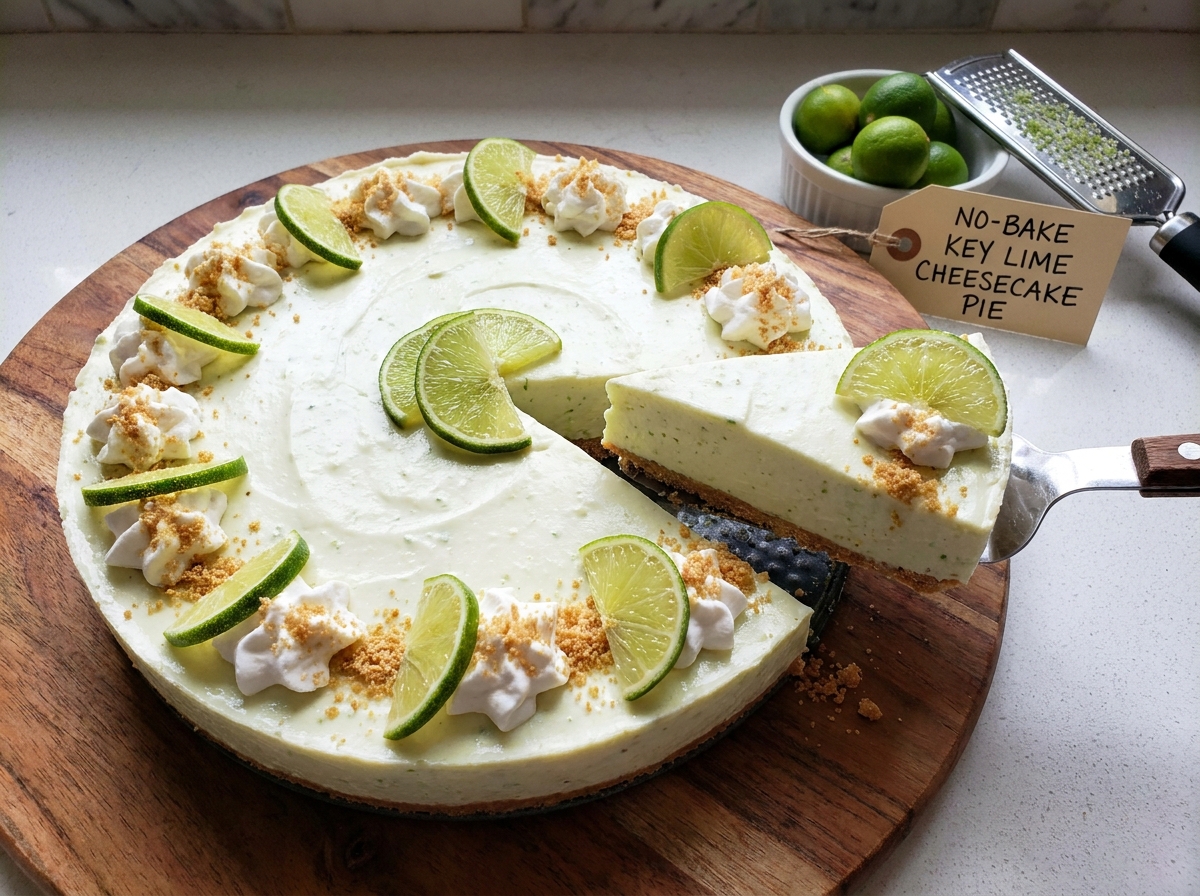
Key Lime Cheesecake Pie
Cream cheese, sweetened condensed milk, and key lime juice, set into a dense, tangy filling over a graham cracker crust — no oven, no eggs, no water bath.
Thank you for reading this post, don't forget to subscribe!
There are two paths to a key lime pie that never sees an oven. One relies purely on sweetened condensed milk and lime juice reacting together, thickening into a light, custard-style filling. The other adds cream cheese into that mix, and the result is a noticeably different pie — denser, richer, closer in texture to a genuine cheesecake than a classic icebox custard. This is the second version.
Cream cheese, beaten smooth and combined with sweetened condensed milk and key lime juice, sets into a thick, tangy filling that holds a clean, substantial slice, the kind that sits up firmly on a fork rather than wobbling. Poured into a graham cracker crust and given several hours in the fridge, it firms into something that eats like a genuine cheesecake with a bright, citrus-forward personality all its own.
What makes this version worth making instead of, or alongside, the simpler three-ingredient version is exactly that added richness. Cream cheese brings a tang and a density that a purely condensed-milk-and-lime filling doesn’t quite reach on its own, and the result feels a bit more substantial, a bit more like a dessert you’d order at a restaurant rather than a quick icebox pie thrown together on a weeknight.
This is the pie to make when you want key lime pie’s bright, citrus character, but with cheesecake’s dense, luxurious texture layered on top of it — genuinely the best of both, without ever needing to turn on the oven or worry about a cracked, overbaked top.
It’s also a pie that holds up beautifully for entertaining, precisely because that added cream cheese gives it more structural integrity than a lighter filling would have. Slices hold their shape cleanly on a plate, travel well if you need to transport the pie somewhere, and generally feel a little more forgiving and reliable than a purely custard-style version might.
A Little Bit of History
Key lime pie’s origins trace back to the Florida Keys, where the small, intensely tart key lime has grown for generations and where sweetened condensed milk became a pantry staple precisely because it didn’t spoil the way fresh dairy would in the tropical heat, long before refrigeration was reliable or widespread in the region. Combining that shelf-stable milk with the Keys’ abundant key limes produced a pie that could be made without refrigerated ingredients, using a reaction between the lime juice’s natural acidity and the condensed milk’s proteins to thicken the filling without any cooking at all.
The addition of cream cheese to that original formula reflects a later, broader trend in American dessert-making — the steady rise of cheesecake-style fillings across countless classic pies and desserts throughout the mid-to-late 20th century, as cream cheese became a widely available, affordable pantry staple in its own right. Bakers began folding cream cheese into all kinds of existing dessert formulas, chasing that dense, tangy richness cheesecake is known for, and key lime pie was a natural candidate for the treatment, given how well cream cheese’s tang complements citrus flavors in general.
This particular hybrid — a key lime filling enriched with cream cheese, rather than a purely condensed-milk-and-juice custard — has become genuinely popular in its own right over the past few decades, appearing on dessert menus and in home kitchens as something distinct from, though clearly related to, the original, simpler version. It occupies a middle ground between a traditional key lime pie and a full lime cheesecake, borrowing structure and richness from the latter while keeping the bright, straightforward, no-bake simplicity of the former.
It’s worth noting, too, that key lime pie carries real regional weight beyond just its ingredient list — it was named Florida’s official state pie in 2006, and it remains one of the most recognizable American regional desserts, alongside things like Boston cream pie or New York cheesecake. This cream cheese version, while a departure from the most traditional recipe, still sits clearly within that same broader tradition, honoring the essential flavor even as it reworks the texture.
Why This One Works
The chemistry underlying this filling is the same acid-dairy reaction that makes the simpler, three-ingredient key lime pie possible — key lime juice’s natural acidity reacts with dairy proteins, thickening the mixture without any heat or added eggs. What changes here is which dairy proteins are doing the reacting. Cream cheese, already thick and dense on its own, brings a different starting texture into that reaction than condensed milk alone would, and the combined result sets into something noticeably firmer and more substantial once chilled.
Beating the cream cheese smooth on its own, before introducing the condensed milk and lime juice, matters more here than it might initially seem. Cream cheese needs to be fully broken down and free of lumps before it meets the other two ingredients; if it’s not, those lumps become far harder to work out later; no amount of additional whisking after the fact fully resolves cold, dense cream cheese chunks once the mixture starts to thicken around them.
Because cream cheese is already thick and holds its shape well on its own, it gives this filling a denser, more cheesecake-like body than a filling made purely from condensed milk and lime juice would have. That’s the entire reason this version reads as a genuine cheesecake-style pie rather than a lighter, more custard-like icebox pie — the cream cheese does real structural work here, not just flavor work.
Chilling for a substantial period, ideally several hours or overnight, is what allows all of this to fully set. The acid-dairy reaction begins as soon as the ingredients are combined and continues to firm up in the fridge, but a dense, cream-cheese-enriched filling like this one genuinely benefits from more time than a lighter filling would need — rushing the chill is the single most common reason a slice doesn’t hold its shape cleanly when you go to serve it.
What You’ll Need
- 16 oz cream cheese, softened
- 1 can (14 oz) sweetened condensed milk
- 1/2 cup key lime juiceBottled or fresh
- 1 9-inch graham cracker crustStore-bought or homemade
Whipped cream, lime zest, and thin lime slices make a classic, simple garnish for serving.
A Closer Look at Each Ingredient
The cream cheese. Full-fat block cream cheese, fully softened, gives this filling its dense, genuinely cheesecake-like texture. Cold cream cheese resists blending smoothly and can leave lumps throughout the finished filling, so give it a full 30 minutes or more at room temperature before you start — this is the single most important prep step for a smooth result.
The sweetened condensed milk. This is not the same product as evaporated milk, despite the similar-looking cans that often sit side by side on grocery shelves. Sweetened condensed milk is thick, already sweetened, and central to how this filling both tastes and sets — double-check the label carefully before buying.
The key lime juice. Bottled key lime juice is a genuinely reliable, widely available option, since fresh key limes can be difficult to find outside Florida and the Gulf Coast and are tedious to juice in the quantities a pie requires. If you do have access to fresh key limes, the flavor is slightly brighter and more aromatic, but a good bottled juice produces an excellent, authentic-tasting pie without the extra effort.
The crust. A standard store-bought graham cracker crust works well and saves a step, though a homemade version — graham crumbs, melted butter, and a touch of sugar, pressed into a pie dish — gives a slightly thicker, more substantial base if you prefer to make your own.
How to Make It
- Soften the cream cheese. Make sure your cream cheese has come fully to room temperature before you begin — this is the biggest factor in how smooth your finished filling turns out.
- Beat until smooth. In a large bowl, beat the softened cream cheese on its own until completely smooth and free of lumps.
- Add the condensed milk. Pour in the sweetened condensed milk and beat again until fully combined and glossy.
- Add the lime juice. Slowly whisk in the key lime juice. The mixture will noticeably thicken as the acid reacts with the dairy — this is exactly what you want to see.
- Pour into the crust. Pour the thickened filling into your prepared graham cracker crust and smooth the top with a spatula.
- Chill. Refrigerate for at least 4 hours, or ideally overnight, until the filling is fully set and firm to the touch.
- Garnish and serve. Top with whipped cream, lime zest, or thin lime slices just before serving, and slice while thoroughly chilled.

Troubleshooting Common Issues
My filling stayed lumpy instead of smooth. This almost always traces back to cream cheese that wasn’t fully softened before mixing. Always beat the cream cheese alone first until completely smooth, then add the condensed milk and lime juice — adding them too early, while there are still cold lumps of cream cheese, makes those lumps much harder to work out later.
My pie didn’t set firm even after the full chilling time. Give it more time — this filling genuinely benefits from a full overnight chill rather than the minimum 4 hours, especially in a warmer kitchen or if your fridge runs on the milder side. The added cream cheese makes this a denser filling than a simpler condensed-milk-only version, and it needs the extra time to firm all the way through.
My filling tastes too tart or not tart enough. This can vary depending on the size and acidity of your limes or the specific brand of bottled juice you use. If you find the finished pie too tart, a touch more condensed milk next time will help balance it; if it’s not tart enough, use full-strength juice rather than a diluted version.
My crust turned soggy underneath the filling. This can happen if the filling was poured in while still very loose, or if the pie sat at room temperature too long before going into the fridge. Whisk until properly thickened before pouring, and refrigerate promptly once assembled.
My pie’s texture is uneven, dense in some spots and looser in others. This usually means the cream cheese wasn’t fully and evenly incorporated before the other ingredients were added. Beat it thoroughly and scrape down the sides of the bowl periodically to make sure everything is combining evenly, not just at the center.
My filling separated slightly, with a thin layer of liquid on top after a day or two. A very thin layer of separation after sitting in the fridge for a couple of days is normal for an acid-set dairy filling like this one. Simply blot it gently with a paper towel before serving, and try to enjoy the pie within the first several days for the best texture.
Serving Suggestions
This pie is rich, dense, and tangy enough to serve entirely on its own, chilled straight from the fridge, but the classic finishing touch is a generous layer or piped rosettes of freshly whipped cream over the top, along with a bit of lime zest or a few thin lime wheels for garnish. That combination is traditional for good reason — the light, airy cream softens the density of the cream-cheese-enriched filling and adds a visual contrast against the pale, custard-colored pie beneath it.
Because this version is denser and more substantial than a simpler icebox-style key lime pie, it holds up especially well after a lighter meal, where a more filling dessert feels appropriate, or as the finale to a dinner party where guests are expecting something with real presence on the plate rather than a lighter, more casual treat.
This pie also travels well for a few hours if kept cool, thanks to that added cream cheese giving it more structural stability than a lighter filling — a genuine advantage for potlucks and gatherings where the pie needs to survive some time out of the fridge before serving. For a more polished presentation, pipe the whipped cream in small rosettes around the edge of the pie rather than spreading it across the whole surface, and finish with thin lime wheels arranged around the border.
A cup of iced tea or a cold glass of lemonade pairs naturally with this pie, echoing its bright, citrusy character, while a shot of espresso alongside a slice makes for a genuinely satisfying end to a dinner party, since the pie’s richness holds its own against a strong, concentrated coffee flavor in a way a lighter dessert might not.
A Few Ways to Make It Yours
Toasted Coconut Topping
Sprinkle toasted coconut flakes over the whipped cream for a tropical finishing touch that pairs naturally with the lime.
Graham Cracker Crumble
Add an extra sprinkle of crushed graham crackers over the top along with the whipped cream for more texture.
White Chocolate Drizzle
Drizzle melted white chocolate over the chilled, set pie in thin lines for a decorative, slightly sweeter finish.
Individual Cups
Layer crushed graham crumbs and the filling into small jars or cups for portioned, no-slice servings, perfect for a party.
Make-Ahead Tips
This pie is genuinely built for making ahead, since it needs a substantial chilling period regardless of when you plan to serve it. It can be made up to two days in advance and kept covered in the fridge, which makes it a reliable choice for holidays, dinner parties, or any occasion where oven time and prep time on the day of serving are already stretched thin.
If you’re adding a whipped cream topping, it’s best to hold off until closer to serving time, since whipped cream can lose some of its structure and start to weep a bit of liquid if it sits on the pie for too long before serving. If you know you’ll need the pie ready well in advance, consider keeping the whipped cream separate in its own container and piping it on just before the pie goes to the table.
This recipe also scales up reasonably well for a larger gathering — doubling the filling ingredients and using two prepared crusts lets you serve a crowd without any change to the basic method or chilling time, and the cream-cheese-enriched filling holds up just as reliably at double the volume.
A Note on Dietary Adjustments
This recipe can be adapted for a few common dietary needs with a little care. For a lower-sugar version, a reduced-sugar sweetened condensed milk can be substituted, though the texture and set may be slightly softer since sugar content affects how firmly the filling thickens. For a gluten-free version, simply use a certified gluten-free graham cracker crust — the filling itself contains no gluten at all.
Full dairy-free adaptation is more difficult with this particular recipe, since cream cheese and sweetened condensed milk are both central to how the filling sets and tastes. Dairy-free cream cheese and condensed milk alternatives exist and can be substituted, though the acid-based thickening reaction may behave somewhat differently depending on the specific products, so a small test batch is worth trying first if you haven’t used those particular substitutes before.
For those managing portion sizes, this pie is rich enough that a standard eighth-slice portion is genuinely satisfying — cutting slightly smaller slices, particularly if serving alongside other desserts at a larger gathering, is a simple way to stretch this pie further without anyone feeling shortchanged.
Storage
Keep the pie covered in the fridge for up to 5 days — the acid-set, cream-cheese-enriched filling holds up well chilled without any risk of spoiling the way an egg-based custard might. This pie doesn’t freeze particularly well due to the dairy-based filling, which can separate and lose its smooth texture once thawed, so it’s best enjoyed fresh within the first several days.
Common Questions
How is this different from a simpler, three-ingredient key lime pie without cream cheese?
The cream cheese version sets denser and firmer, with a genuine cheesecake-like texture and a slightly tangier flavor than a lighter filling made purely from condensed milk and lime juice. Both rely on the same basic acid-dairy chemistry, but the added cream cheese changes the final texture significantly.
Can I use regular lime juice instead of key lime juice?
You can, and the pie will still taste good, but it won’t have quite the same distinctly tart, aromatic flavor that genuine key lime juice provides. Regular lime juice is less acidic and slightly less floral, so the finished pie will taste milder and a touch less complex.
Why does the lime juice thicken the filling?
The acid in the lime juice reacts with the proteins in both the cream cheese and the sweetened condensed milk, causing the mixture to thicken without any cooking or added eggs.
How do I know when the pie is fully set and ready to slice?
The filling should feel firm to a light touch and hold a clean edge when you make the first slice, rather than sinking or spreading. If it still feels soft or slightly jiggly, give it more time in the fridge.
Can I make this pie in individual servings instead of one full pie?
Yes — layer crushed graham cracker crumbs and the filling into small jars or cups for individual, portioned servings, which also chill and set slightly faster than a full pie due to their smaller size.
Why is my pie’s color pale yellow instead of green?
This is completely normal and doesn’t affect the flavor. Authentic key lime juice actually produces a pale, custard-yellow filling — the vivid green color often seen at restaurants and bakeries typically comes from added food coloring, not the natural juice itself.
Can I freeze this pie for longer storage?
Freezing isn’t recommended for this particular filling, since the dairy-based mixture tends to separate and lose its smooth, sliceable texture once thawed. This pie is best made and enjoyed within about five days for the best quality.
Can I add extra lime zest directly into the filling, not just as a garnish?
Yes — folding a teaspoon or two of finely grated lime zest directly into the filling before pouring it into the crust boosts the aromatic citrus flavor noticeably, in addition to whatever zest you use as a garnish on top.