
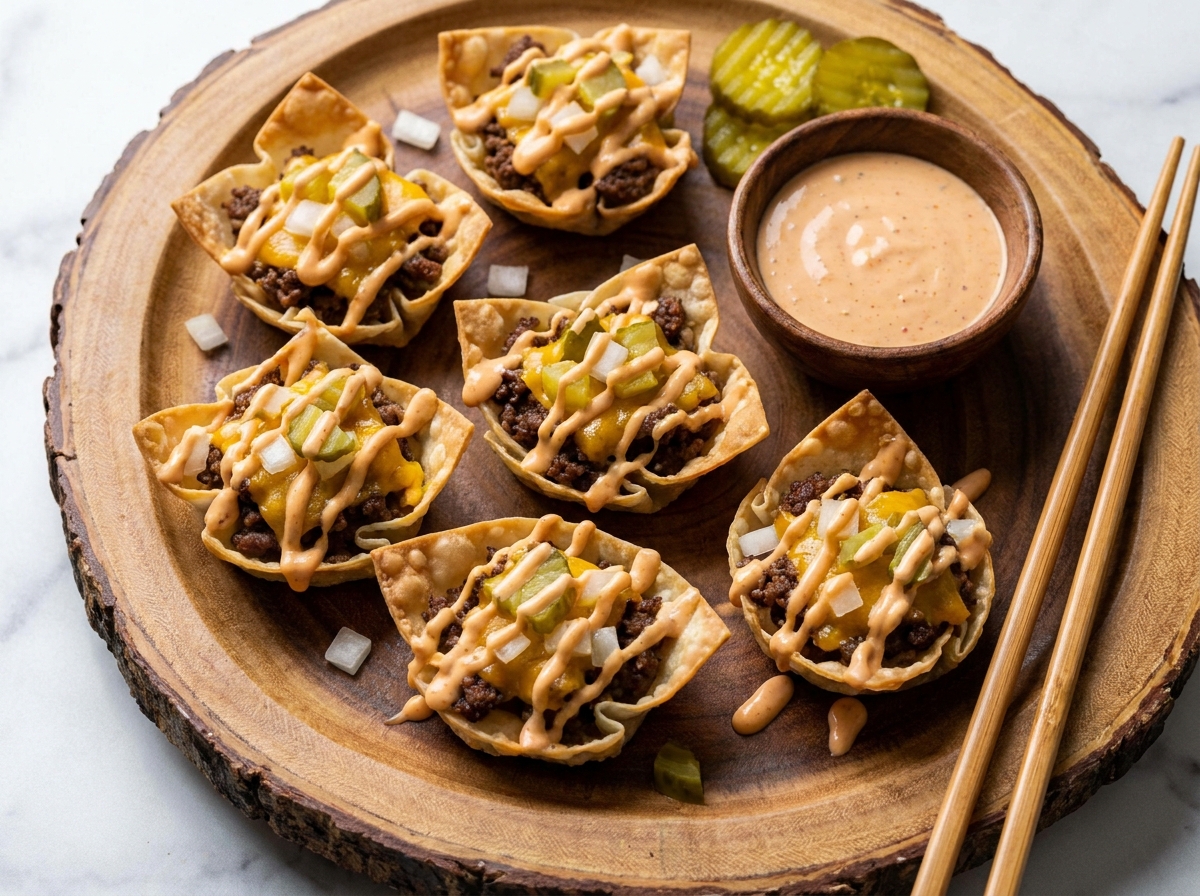
No-Fold Cheeseburger Potsticker Bites
Seasoned beef, melted cheddar, onion, ketchup, and mustard gathered into wonton wrappers — no pleating required — then pan-crisped until golden on the bottom.
Thank you for reading this post, don't forget to subscribe!
No-Fold Cheeseburger Potsticker Bites are a fun mash-up of two comfort-food favorites: the classic American cheeseburger and the crispy-bottomed potsticker. Instead of shaping a full burger and serving it on a bun, seasoned ground beef, melted cheddar cheese, onion, ketchup, mustard, and Worcestershire sauce are tucked inside round wonton wrappers.
The wrappers are gathered together around the filling rather than carefully pleated, making this recipe much easier for anyone who loves potstickers but does not want to spend time learning traditional folding techniques. The result is a small, golden, handheld bite with a savory beef-and-cheese center, a tender wrapper, and a wonderfully crisp bottom. It is the kind of appetizer that looks far more complicated than it really is, which makes it especially useful when you want something impressive without spending hours in the kitchen.
The combination works because the flavors are immediately familiar while the presentation feels fresh and playful. Each bite delivers the recognizable flavor of a cheeseburger in a completely different format, and the small size makes these especially appealing for parties, game days, family snacks, or casual entertaining. Think of them as miniature cheeseburgers wrapped in a crispy little shell.
The biggest attraction of this recipe is right there in the name: no complicated folding is required. Traditional potstickers can involve pleating the wrapper into multiple folds, and while that technique can be beautiful, it can also become frustrating when you are preparing a large batch. Here, the wrapper simply receives a spoonful of filling in the center, the edges are moistened with water, and the wrapper is gathered over the filling and pressed to seal.
The goal is not perfection; the goal is a secure seal that keeps the beef and cheese inside while the wrapper cooks. Because the filling is already cooked before it goes into the wonton wrappers, you are primarily concentrating on cooking the wrapper and creating that signature crispy skillet bottom. The steam created after adding water to the skillet helps soften and cook the wrappers, while the uncovered finishing stage restores some of the crispness underneath. It is a little like giving a cheeseburger a tiny edible jacket, except this jacket can be crisped in a skillet and dipped into sauce.
Why These Cheeseburger Bites Are So Popular
There is something naturally appealing about turning a familiar favorite into a bite-sized appetizer, and cheeseburger potstickers do exactly that. Cheeseburgers are already among the most recognizable comfort foods, with ground beef, cheese, onions, ketchup, and mustard creating a flavor combination that needs very little explanation. Potstickers bring a completely different texture and cooking technique, particularly the crisp-bottom-and-steamed-wrapper combination. When those two ideas meet, you get something that feels both nostalgic and new.
These bites are also practical because they can be eaten without a plate full of toppings sliding around or a large burger becoming messy. They are easy to pass around at gatherings, and you can offer several dipping sauces so guests can customize each bite. The recipe also uses everyday ingredients rather than requiring a long shopping list of specialty products. Wonton wrappers are widely useful in the kitchen, and once you have them, you can use the leftovers for everything from dumplings to dessert bites.
The 24-piece yield also makes this recipe naturally suited to entertaining. Instead of making a dozen full burgers, you can create a platter of small bites that encourages people to grab one, dip it, and reach for another.
The Best of Burgers and Potstickers
The real magic comes from how naturally the two food styles complement each other. A cheeseburger normally depends on the contrast between a soft bun, juicy beef, creamy or melted cheese, and sharp condiments. A potsticker, meanwhile, depends heavily on textural contrast, with a browned exterior and tender wrapper surrounding a flavorful filling. In this recipe, the wonton wrapper takes the place of the bun while also adding a crispness that a conventional burger does not have.
The cheddar melts into the seasoned beef mixture, creating a rich center that stays compact enough to fit neatly inside each wrapper. Ketchup and yellow mustard bring the classic burger flavor, while Worcestershire sauce adds a deeper savory note that helps prevent the filling from tasting flat. Finely diced onion adds another familiar burger element without making the filling too bulky.
The result is not simply a cheeseburger placed inside a wonton; it is a new texture-driven version of the same flavor profile. That is why these bites work particularly well as appetizers. They are recognizable enough for picky eaters but unusual enough to catch the attention of guests who enjoy trying creative comfort food.
What You’ll Need
- 1 lb ground beefModerately lean, for a flavorful but manageable filling
- 1 cup shredded cheddar cheeseSharp or mild, your preference
- 1/4 cup onion, finely diced
- 1 tbsp ketchup
- 1 tbsp yellow mustard
- 1 tsp Worcestershire sauce
- 1/2 tsp garlic powder
- 1/2 tsp salt
- 1/4 tsp black pepper
- 24 round wonton wrappersKept covered so they don’t dry out
- 1 tbsp vegetable oilFor the skillet
- 2 tbsp waterFor steaming
- Sesame seeds (optional)For garnish
Each bite comes out to roughly 95 calories — plenty of room to eat more than one.
Choosing the Right Ground Beef and Cheese
For the beef, a moderately lean ground beef works well because you want enough fat to keep the filling flavorful without leaving excessive grease inside the wrappers. After browning the beef and onion, drain excess grease before adding the seasonings. This small step matters because too much liquid or grease can make the filling difficult to handle and may interfere with getting a good seal.
Cheddar is the obvious choice for a classic cheeseburger flavor, but you can adjust the cheese according to your preference. Sharp cheddar will give the bites a more pronounced cheese flavor, while mild cheddar creates a softer, familiar taste. Shredding the cheese yourself can help it melt smoothly into the warm beef mixture, although packaged shredded cheddar can also be convenient.
The key is to stir the cheese into the beef while the mixture is still warm so it begins melting and binds the filling together. A cohesive filling is easier to portion because it does not crumble apart when you spoon it onto the wrappers. If you want a particularly gooey center, you can experiment with adding a little more cheese, but avoid overfilling the wrappers — the best potsticker bite is one where the filling is generous enough to taste satisfying but small enough that the wrapper can close securely around it.
Equipment You’ll Need
A large skillet, ideally nonstick or well-seasoned cast iron, does double duty here — first for browning the beef, then for crisping and steaming the assembled bites. A lid that fits the skillet is essential for the steaming stage, since that’s what traps the moisture that cooks the wrappers through. A small bowl of water for moistening the wrapper edges, a rubber spatula for breaking up the beef as it browns, and a clean kitchen towel for keeping unused wrappers covered will round out what you need. An instant-read food thermometer is worth having on hand too, since it’s the most reliable way to confirm the beef has reached a safe internal temperature before it goes anywhere near a wonton wrapper.
How to Make the Cheeseburger Filling
- Brown the beef and onion. Heat a large skillet over medium heat and add the ground beef and finely diced onion. Cook until the beef is browned and fully cooked, breaking it apart as it cooks so the onion becomes evenly distributed throughout the mixture.
- Drain the grease. Drain any excess grease, then return the skillet to the heat if necessary.
- Season the beef. Stir in the ketchup, yellow mustard, Worcestershire sauce, garlic powder, salt, and black pepper. Let the mixture cook for another one to two minutes so the condiments and seasonings become fully incorporated into the beef.
- Melt in the cheese. Remove the skillet from the heat and immediately stir in the shredded cheddar cheese. The residual heat from the beef should help the cheese melt and blend into the mixture.
- Let it cool slightly. Allow the filling to cool before assembling the wontons — it should stay warm enough for the cheese to remain soft, but not so hot that it makes the wrappers difficult to handle.
The filling should resemble a moist, cohesive cheeseburger mixture rather than loose browned beef. If it looks excessively wet, allow it to cool for a few more minutes before filling the wrappers — a slightly cooled mixture is easier to portion accurately and gives you more control when sealing the bites.
How to Fill and Seal the Wrappers
- Lay out the wrappers. Place the 24 round wonton wrappers on a clean work surface, working in batches if necessary. Keep the unused wrappers covered with a clean, slightly damp kitchen towel so they stay flexible.
- Portion the filling. Place approximately one tablespoon of the cheeseburger filling in the center of each wrapper. Resist the urge to add more just because you want an extra-cheesy bite.
- Moisten the edges. Lightly moisten the edges of the wrapper with water — just enough for a thin layer, not a soak.
- Gather and seal. Bring the edges upward over the filling, gently gathering them toward the top, and press firmly enough to create a seal without crushing the filling underneath.
How to Seal Them Without Complicated Folding
The easiest way to think about sealing these bites is to imagine wrapping a small gift rather than folding an elaborate dumpling. The filling sits in the middle, and the wrapper edges are brought together around it. Water acts like edible glue, helping the wrapper surfaces adhere to one another. Use your fingertips to press the gathered edges together, making sure there are no obvious openings — you do not need to press so hard that the wrapper becomes flattened.
If the wrapper feels dry or begins cracking, your workspace may be too exposed to air, so cover the remaining wrappers while assembling the next batch. Once each bite is sealed, place it seam-side up on a clean plate or tray while you finish the rest, and try not to stack the uncooked bites since the wrappers can stick together. The no-fold approach is especially useful when making these with kids or when cooking for a crowd, because it removes the technical pressure associated with traditional dumpling pleating.

How to Cook No-Fold Potsticker Bites
- Heat the oil. Heat one tablespoon of vegetable oil in a large skillet over medium heat. Arrange the filled potsticker bites in a single layer, leaving enough space so they cook without crowding.
- Brown the bottoms. Cook for approximately two to three minutes, watching carefully as the bottoms turn golden and crisp.
- Add water and cover. Once the bottoms have developed a good browned surface, carefully add two tablespoons of water to the skillet and immediately cover it with a lid — steam will form quickly, so be cautious.
- Steam. Allow the bites to steam for approximately three to four minutes.
- Uncover and re-crisp. Remove the lid and continue cooking for another one to two minutes so excess moisture evaporates and the bottoms crisp again.
- Garnish and serve. Sprinkle with sesame seeds if desired and transfer to a serving plate. Serve hot, while the contrast between crisp bottoms, tender wrapper, melted cheese, and savory beef is at its best.
Getting Crispy Bottoms and Tender Wrappers
The trick to excellent potsticker bites is controlling the balance between crispness and moisture. If the skillet is too cool at the beginning, the wrappers may absorb oil without developing the golden crust you want. If the heat is too high, the bottoms can brown too quickly before the wrappers have had a chance to cook properly. Medium heat provides a useful middle ground, allowing the bottoms to develop color while leaving enough time for the steaming stage.
The small amount of water added after browning is important because it generates steam without flooding the skillet. Once the lid comes off, the remaining moisture needs to evaporate so the bottoms can crisp again. Avoid constantly moving the potstickers while they brown, because leaving them in place helps create a more defined crust. If the bites seem to stick, give them another moment rather than immediately trying to force them loose — as the crust develops, they often release more easily.
How to Know When the Beef Is Fully Cooked
Although the ground beef is browned before it goes into the wonton wrappers, food safety still deserves attention. The USDA recommends cooking ground beef to a minimum internal temperature of 160°F (71°C) as measured with a food thermometer. Color alone is not a reliable way to judge whether ground beef has reached a safe temperature, because beef can brown before it reaches 160°F.
For this recipe, cooking the beef thoroughly during the initial skillet stage is the simplest way to handle the safety requirement before assembling the bites. If you want additional confirmation, use an instant-read thermometer to check the thickest part of the cooked filling before it goes into the wrappers, since checking temperature after assembly is far more difficult.
Also remember to keep raw ground beef and ready-to-eat ingredients separate during preparation, and wash hands and surfaces after handling raw meat. USDA guidance emphasizes clean, separate, cook, and chill practices for reducing food-safety risk — small habits that take very little time and make a real difference in any recipe built around ground meat. Once cooked, serve the bites promptly and refrigerate leftovers rather than leaving them at room temperature for an extended period.
Best Dipping Sauces for Cheeseburger Potstickers
The dipping sauce is where you can really personalize these cheeseburger potsticker bites. The simplest option is plain ketchup, especially if you want the experience to taste as close as possible to a classic cheeseburger. A creamy burger sauce made with mayonnaise, ketchup, mustard, and a little pickle relish can take things in a richer direction. For a tangy contrast, try a sauce built around mustard, while a spicy ketchup or sriracha-style sauce can bring heat to the party.
Ranch dressing is another easy option if you enjoy creamy dips with savory appetizers, and a smoky barbecue sauce works surprisingly well with the beef and cheddar, giving the bites a backyard-grill flavor. You can also serve several sauces at once and let everyone choose their favorite — this works particularly well for parties, because the potstickers themselves stay consistent while the dipping sauces create different flavor experiences.
If you’re serving kids, ketchup is likely the easiest crowd-pleaser. Adults may appreciate a spicy burger sauce, chipotle-style dip, or tangy mustard instead. The important thing is to keep the sauce thick enough to cling to the crisp wrapper rather than becoming watery and making the bites soggy.

Common Mistakes to Avoid
Overfilling the wrappers. It can be tempting to add more filling, but too much makes sealing difficult and increases the chance of leaks during cooking.
Letting the wrappers dry out. Keep unused wrappers covered and only expose the ones you’re currently filling — once they lose moisture, they crack more easily when gathered.
Using too much water on the edges. You only need enough moisture to make the wrapper sticky; soaking it can make it slippery and fragile instead.
Cooking at too high a heat. The bottoms can burn before the wrappers steam properly. Medium heat gives you far more control over the whole process.
Overcrowding the skillet. Crowded potstickers may steam rather than brown effectively, leaving you without that signature crisp bottom.
Skipping the grease drain. A greasy filling can be difficult to handle and may leak during assembly, so drain excess grease from the beef before adding seasonings and cheese.
Judging doneness by color alone. USDA guidance specifically recommends using a food thermometer and cooking ground beef to 160°F rather than relying on how brown it looks.
What to Serve With Cheeseburger Potstickers
Because these bites are rich and savory, they pair well with sides that add freshness, crunch, or acidity. A simple green salad can balance the beef and cheese, while a crisp cucumber salad provides a refreshing contrast. If you’re serving the potstickers as part of a game-day spread, consider pairing them with fries, potato wedges, coleslaw, or a tray of fresh vegetables. Pickle spears are particularly fitting, since they echo the classic cheeseburger flavor while adding a sharp, crunchy contrast.
You can also build a full appetizer board featuring the potstickers, dipping sauces, vegetables, and other small bites — the miniature size makes them easy to mix into a larger spread without requiring guests to sit down for a formal meal. For a family dinner, serve them alongside roasted potatoes or a simple vegetable side.
If the goal is a casual, interactive meal, place the potstickers in a large serving dish with small bowls of ketchup, mustard, burger sauce, and barbecue sauce, and let everyone choose their preferred combination. The best side dishes here don’t need to be complicated, since the potstickers already bring plenty of savory flavor on their own.
A Few Ways to Make It Yours
Bacon Cheeseburger
Cook bacon until crisp, crumble it finely, and stir it into the warm filling along with the cheddar for a smoky, salty upgrade.
Spicy Cheeseburger
Add finely diced jalapeño to the beef as it cooks, or swap in pepper Jack for some or all of the cheddar.
Pickle Cheeseburger
Fold in well-drained, finely chopped dill pickles for a bright, tangy bite that cuts through the richness.
Smoky BBQ Bites
Replace some of the ketchup with barbecue sauce for a backyard-grill flavor that pairs beautifully with cheddar.
The key principle behind any variation is to keep additional ingredients finely chopped and relatively dry — large or watery add-ins make the filling harder to portion and the wrappers harder to seal. Think of the original recipe as your foundation, then build from there using whatever you already have in the fridge.
How to Make Them Ahead of Time
These potsticker bites can be prepared ahead of time, which is one reason they’re so useful for entertaining. The beef filling can be cooked in advance, cooled, covered, and refrigerated until you’re ready to assemble the wontons — keeping the filling chilled can actually make portioning easier, since it becomes firmer and less messy to work with.
If you plan to assemble the bites several hours ahead, arrange them in a single layer on a tray and cover them so the wrappers don’t dry out. Avoid stacking them directly on top of one another, since the wrappers may stick together. For longer storage, freezing the assembled uncooked bites is a convenient option, provided they’re separated during initial freezing before being transferred to an airtight container or freezer bag.
When cooking from frozen, allow additional cooking time, since the filling and wrapper begin at a colder temperature. Preparing the filling ahead can reduce last-minute kitchen work, leaving you to focus on skillet cooking shortly before serving — a genuinely practical choice for parties when you want the food to taste freshly cooked.
Storage and Reheating Tips
If you have leftovers, allow them to cool before placing them in a covered container and refrigerating. USDA guidance recommends refrigerating cooked leftovers promptly and generally using them within three to four days. When reheating, a skillet is usually the best method if you want to restore some of the original crispness — heat over medium heat and warm the bites until the centers are hot, adding a small splash of water and covering briefly if the wrappers seem dry, then uncovering to crisp the bottoms again.
A microwave is faster, but it tends to soften the wrapper rather than recreate the skillet texture; if you use one, reheat carefully and check that the filling is hot throughout, aiming for the USDA-recommended 165°F. Avoid repeatedly reheating the same batch — warm only the portion you plan to eat. If you’re preparing these for a gathering, it’s generally better to cook batches close to serving time rather than holding them for hours, since the crisp wrapper is at its best fresh from the skillet.
Tips for Making Perfect Potsticker Bites Every Time
For consistently good results, prepare your entire workstation before you start filling the wrappers — the cooled cheeseburger mixture, wonton wrappers, a small bowl of water, a tray, and your skillet, all within reach. Portioning approximately one tablespoon of filling into each wrapper keeps the batch uniform, which matters because bites with dramatically different filling amounts won’t cook at exactly the same rate.
When sealing, focus on making a secure closure rather than a beautiful shape, and place finished bites in a single layer while you work. Before cooking the full batch, make sure your skillet is properly heated and the oil is spread across the cooking surface. Once the potstickers are in the skillet, give the bottoms enough time to brown before moving them, and after adding water, immediately cover to capture the steam. When you remove the lid, let the remaining moisture evaporate before serving.
Most importantly, remember these are meant to be easy. The charm of the recipe isn’t perfect dumpling artistry — it’s the combination of familiar cheeseburger flavor, crisp wonton texture, and a simple assembly method that anyone can master.
Common Questions
Can I use a different cheese?
Absolutely. Cheddar gives these potstickers their classic cheeseburger identity, but Monterey Jack, Colby Jack, pepper Jack, or a cheddar blend all work beautifully. A sharper cheese creates a stronger flavor, while a milder cheese keeps things closer to a family-friendly classic. Whatever you choose, stir it into the warm beef mixture after removing the skillet from the heat so it melts fully into the filling.
Can I make these without sesame seeds?
Yes — sesame seeds are purely a finishing touch. The bites have plenty of flavor and texture without them. Finely chopped green onion is another optional garnish, or you can leave them plain and let the dipping sauce provide the contrast.
Can I freeze cheeseburger potsticker bites?
Yes, as long as they’re handled properly. Freeze assembled uncooked bites separately on a tray first so they don’t stick together, then transfer them to an airtight freezer bag once firm. When cooking from frozen, allow extra cooking time and make sure the filling is thoroughly hot all the way through.
Why are my wonton wrappers tearing?
Wrappers tear when they’re too dry, overfilled, or handled too roughly. Keep unused wrappers covered, use about a tablespoon of filling per wrapper, and press the edges together gently rather than pulling the wrapper tightly. A badly torn wrapper is easiest to replace rather than repair.
How do I keep the potstickers crispy?
Follow the two-stage skillet method: brown the bottoms in oil first, then add water and cover to steam the wrappers tender, then uncover and cook again until the excess moisture evaporates and the bottoms re-crisp. Serve soon after that final stage, since trapped steam in a covered container will soften the crust.
Can I use ground turkey instead of ground beef?
Yes, though the flavor will be lighter and less traditionally burger-like. Because ground poultry carries a different food-safety requirement, cook it to 165°F as measured with a food thermometer, rather than the 160°F used for beef.
Can I add lettuce or tomato to the filling?
It’s better to leave raw lettuce and fresh tomato out of the wrappers, since both add moisture that can make the filling watery and harder to seal. If you want those flavors, serve them fresh on the side instead.
Can I make mini cheeseburger potstickers for parties?
Yes — use slightly less filling per wrapper to create smaller bites, making sure they can still be sealed securely. Smaller bites cook a bit faster, so watch the browning stage closely.
What’s the best skillet for this recipe?
A large nonstick skillet is the most convenient choice, since it makes browning the wonton bottoms easier without excessive sticking. A well-seasoned cast-iron skillet also works well, though it may need closer attention to heat control.
Can I serve these as a main meal instead of an appetizer?
Definitely — serve a larger portion alongside fries, roasted potatoes, salad, or coleslaw. A selection of dipping sauces turns the meal into a fun, build-your-own cheeseburger-inspired dinner.
No-Fold Cheeseburger Potsticker Bites are proof that a recipe doesn’t need complicated techniques or a long ingredient list to feel special. They take the unmistakable flavors of a cheeseburger and package them inside tender wonton wrappers that develop a deliciously crisp skillet bottom, using nothing more than a quick combination of browning and steaming. Whether you make the classic version, add bacon, bring in jalapeños, or fold in pickles, the basic technique stays simple and dependable — just remember to cook the beef to 160°F with a food thermometer, and let the skillet do the rest.