
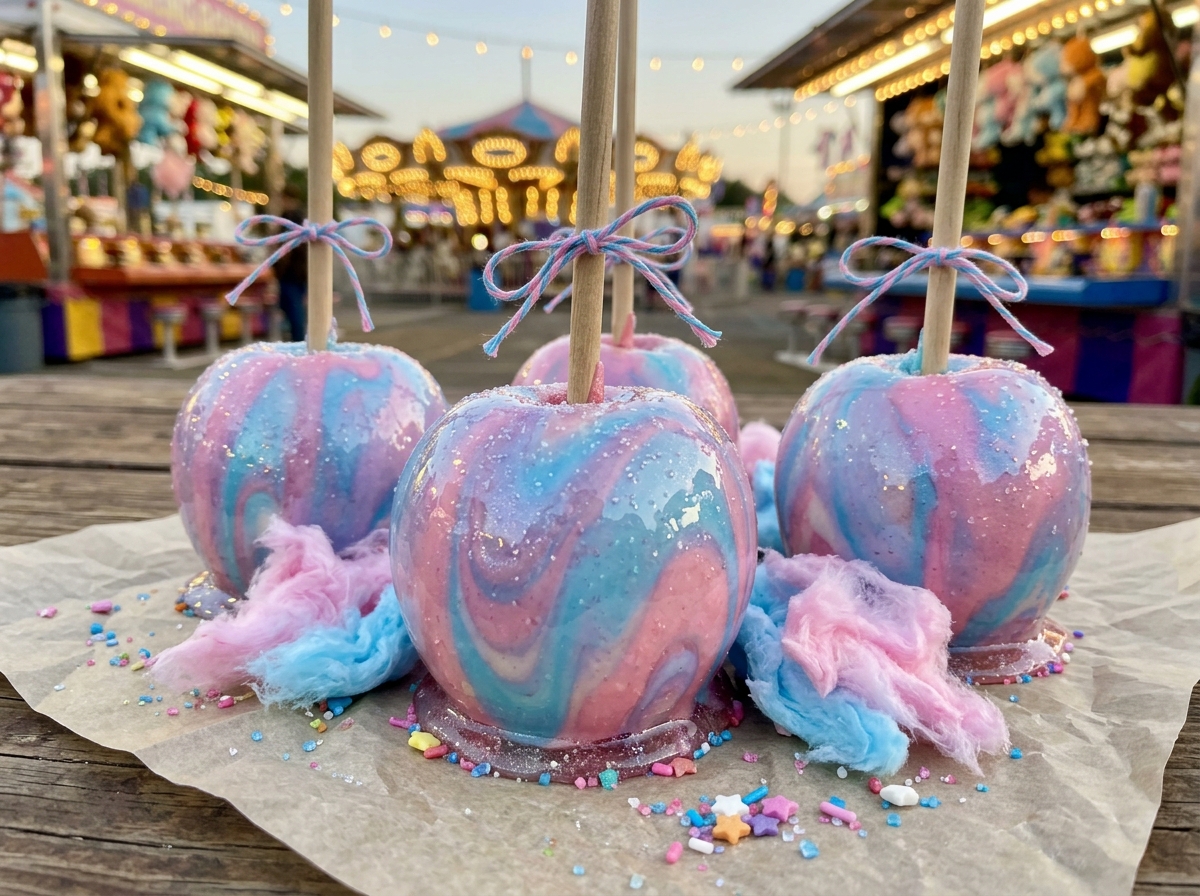
Cotton Candy Swirl Candy Apples
Crisp apples dipped in a glossy, cotton candy-flavored hard candy shell swirled with pastel pink and blue.
Thank you for reading this post, don't forget to subscribe!
A handful of pantry staples turn into a crunchy, glossy candy shell with all the sweet, nostalgic flavor of cotton candy. There’s a simple sugar syrup cooked to the hard crack stage, flavored with cotton candy extract, tinted pastel pink and blue, and swirled over crisp, fresh apples.
Drying the apples completely, cooking sugar, corn syrup, and water to 300°F, stirring in the flavoring and colors, and dipping each apple with a quick swirl of pink and blue is most of the process here. About half an hour at room temperature is all that’s left before the candy shells are hard and ready to crack into.
Crunchy, juicy, and bursting with color, these candy apples are a showstopping treat for a Halloween party, a birthday celebration, a summer fair, or any time you want a homemade dessert that looks like it came straight from a candy shop.
Why This Recipe Works
Cooking sugar, corn syrup, and water to 300°F drives off almost all of the water in the syrup, which is what lets the coating cool into a hard, glassy shell rather than a soft, sticky caramel. The corn syrup plays an important supporting role, since it keeps the sugar from forming large crystals as it cooks, which is what gives the finished shell its smooth, clear, glossy finish instead of a cloudy or grainy one.
Dividing the hot syrup into two portions and tinting one pink and one blue lets you layer the colors as you dip, creating that dreamy cotton candy swirl while the flavoring gives every crunchy bite a sweet, fairground taste.
Why Completely Dry Apples Matter
Washing the apples and then drying them completely, rather than giving them a quick wipe, is what helps the candy coating grip the fruit instead of sliding off or forming bubbles. Even a thin film of water can cause hot syrup to sputter and stop it from setting evenly against the skin, so it’s worth taking the extra minute to dry each apple thoroughly.
What You’ll Need
- 6 small apples
- 2 cups (400g) granulated sugar
- ¾ cup (180ml) light corn syrup
- ½ cup (120ml) water
- ½ teaspoon cotton candy flavoring
- A few drops pink gel food coloring
- A few drops blue gel food coloring
You’ll also need 6 wooden candy apple sticks, a candy thermometer, and a baking sheet lined with parchment paper or a silicone baking mat. This recipe makes 6 candy apples.
A Note on Ingredient Choices
Firm, crisp apples hold up best under the hot candy coating, with Granny Smith offering a sweet-and-tart contrast to the sugary shell and Gala giving a naturally sweeter bite. Gel food coloring, rather than liquid coloring, delivers bright, saturated pastel shades with just a few drops and won’t add extra water to the hot syrup.
Equipment You’ll Need
A heavy-bottomed saucepan, a candy thermometer, two heat-safe containers, a spoon, wooden candy apple sticks, and a baking sheet lined with parchment paper or a silicone mat are all you need; no oven required.
How to Make It
- Prepare the apples. Wash the apples thoroughly and dry them completely. Remove the stems and insert a wooden stick firmly into the top of each apple. Make sure the apples are completely dry so the candy coating sticks properly.
- Prepare your workspace. Line a baking sheet with parchment paper or a silicone baking mat. Lightly grease it if needed to prevent sticking.
- Make the candy syrup. In a heavy-bottomed saucepan, combine the sugar, corn syrup, and water. Stir gently over medium heat until the sugar dissolves. Once the mixture begins boiling, stop stirring and cook until it reaches 300°F (149°C) on a candy thermometer.
- Add the flavoring. Remove the saucepan from the heat and carefully stir in the cotton candy flavoring. Avoid leaning over the hot syrup, as it is extremely hot.
- Create the cotton candy colors. Carefully divide the hot syrup between two heat-safe containers. Add a small amount of pink food coloring to one portion and blue food coloring to the other. Work quickly and carefully because the candy hardens as it cools.
- Dip the apples. Dip each apple into the candy syrup, rotating it to coat evenly. For the swirl effect, alternate small amounts of pink and blue candy coating as you dip, or drizzle one color over the other before the coating sets. Let excess candy drip back into the container.
- Let them harden. Place each coated apple on the prepared baking sheet. Allow the candy coating to cool and harden completely at room temperature, about 20–30 minutes.
- Serve. Once the coating is firm, serve the candy apples immediately or store them individually wrapped in a cool, dry place.
Getting a Pretty Pink and Blue Swirl
Dipping each apple into one color first and then quickly spooning or drizzling the second color over the top, before the first layer sets, is what creates those soft, marbled ribbons of pink and blue. Turning the apple slowly as the second color runs down the sides lets the two shades flow into each other naturally, and stopping after just a turn or two keeps the swirl defined rather than blending into one muddy shade.

Getting an Even Coating
Tilting the container so the syrup pools deeply on one side, then rolling the apple through it in one smooth motion, helps every apple come out with a thin, even shell from top to bottom. Holding the apple above the container for a few seconds and giving it a gentle twist lets excess candy drip away, which keeps the shell from getting too thick or pooling heavily at the base.
Knowing When They’re Done
These candy apples are ready once the shell feels completely hard and glassy to the touch, with no tackiness when tapped lightly with a fingertip. If the coating still feels sticky after 30 minutes, the syrup likely didn’t quite reach 300°F, so it’s worth checking your thermometer’s accuracy before the next batch.
Tips for Perfect Cotton Candy Apples
Setting out the apples, colors, and containers before you start the syrup, rather than scrambling once it’s hot, gives you the time you need to dip every apple before the candy begins to harden. Choosing small apples, rather than large ones, keeps the candy-to-fruit ratio balanced and makes each apple easier to coat in a single smooth turn.
Troubleshooting Common Issues
My candy coating is sticky instead of hard. The syrup didn’t reach 300°F; use a reliable candy thermometer and cook it a little longer next time. My candy slid off the apple. The apple was likely still damp or waxy; dry it completely and remove any wax before dipping. My syrup hardened before I finished dipping. Warm it gently over low heat for a moment to loosen it, stirring carefully. My candy shell looks cloudy or grainy. The syrup was probably stirred after it began to boil; leave it untouched once it’s bubbling.
A Few Ways to Make It Yours
Sparkle and Sprinkles
Press sparkling sugar or pastel star sprinkles onto the shell while it’s still warm.
Cotton Candy Crown
Tuck a small tuft of pink and blue cotton candy at the base of each stick just before serving.
Purple Swirl
Add a third portion tinted purple for a richer unicorn-style swirl.
Party Bows
Tie a pastel ribbon or baker’s twine bow around each stick for a festive finish.
The classic version is worth trying first so you know the baseline flavor before adding any extras.
How to Store These Candy Apples
Wrap each apple individually in a cellophane bag and keep them in a cool, dry place, where they’re best enjoyed within a day or two. Avoid refrigerating them, since the condensation that forms when they come back to room temperature can turn the candy shell soft and sticky.
When to Serve These Candy Apples
These candy apples work beautifully for a Halloween party, a birthday celebration, a baby shower, or a summer fair. Their pastel colors also make them a fun centerpiece for a unicorn or carnival-themed party.
Nutrition and Serving Information
This recipe makes 6 candy apples at roughly 350 to 450 calories each, depending on the size of the apples and how much candy coating clings to each one. Because the candy shell is made almost entirely of sugar, these apples are a once-in-a-while treat, and anyone with braces or sensitive teeth may want to enjoy theirs sliced.
Make-Ahead Tips
These candy apples can be made the morning of or the day before a party, as long as they’re wrapped individually and kept somewhere cool and dry. Making them too far ahead isn’t recommended, since the apples slowly release moisture under the shell and the candy can begin to soften.
The Science Behind This Treat
As a sugar syrup boils, water steadily evaporates and the temperature climbs, with each temperature range matching a different candy stage. At 300°F, known as the hard crack stage, the syrup is almost pure sugar with very little water left, so it cools into a brittle, glassy solid rather than a chewy one. Corn syrup adds glucose molecules that get in the way of sucrose crystals forming, which keeps the shell smooth and clear, and stopping the stirring once the syrup boils helps prevent stray crystals from starting a chain reaction that turns the candy grainy.
Portioning and Yield
This recipe makes enough candy syrup to coat 6 small apples, a good amount for a small party or a family treat. For larger apples you may coat only 4 or 5, while very small apples can stretch the batch to 7 or 8.
A Little Bit of History
Candy apples are often traced back to the early twentieth century in the United States, when a candy maker reportedly dipped apples in red cinnamon candy as a display piece and soon found them selling faster than anything else in the window. They became a fixture at fairs, carnivals, and Halloween celebrations, and this pastel cotton candy version brings together two of the most beloved fairground treats in one.
Serving Suggestions
Serve these candy apples standing upright on a parchment-lined tray or rustic wooden board, with a few tufts of pink and blue cotton candy tucked around them. For easier eating, slice the apples into wedges with a sharp knife and serve them on a platter so guests can enjoy the candy shell in smaller bites.
Choosing the Right Apples
Small, firm, crisp apples are the best choice here, since they hold up under the hot coating and stay juicy inside the shell. Granny Smith apples offer a tart contrast that balances the sweet candy beautifully, while Gala, Honeycrisp, or Fuji apples give a sweeter, milder bite. Whatever variety you choose, look for apples with smooth, unblemished skin and no soft spots.
Why This Recipe Is Approachable With a Thermometer
If you’ve never made hard candy before, this recipe is a genuinely approachable place to start, since a candy thermometer takes the guesswork out of knowing when the syrup is ready. With just a few ingredients and one saucepan, the most important steps are simply watching the temperature, working calmly, and having everything set up before the syrup comes off the heat.
Adjusting the Flavor to Your Taste
As written, these candy apples get their sweet, nostalgic flavor from the cotton candy flavoring stirred into the hot syrup, balanced by the fresh, juicy apple underneath. If you’d like a different flavor profile, swapping in bubblegum, strawberry, or vanilla flavoring shifts the whole apple in a new direction while keeping the same simple method. Because flavorings vary in strength from brand to brand, it’s worth starting with the stated amount and adjusting slightly in future batches once you know how strong yours is.
Pairing These Candy Apples With Other Treats and Drinks
Because the flavor here is bright, fruity, and sweet, these candy apples pair naturally with richer, chocolatey treats if you’re serving more than one dessert, since the contrast keeps a spread feeling balanced. A tray of chocolate fudge or peanut butter clusters rounds out a party table nicely alongside these, while popcorn and cotton candy lean into the same carnival theme. On the drink side, these apples pair well with pink lemonade, apple cider, or sparkling water.
A Note on Ingredient Proportions
Using two cups of sugar with three-quarters of a cup of corn syrup and half a cup of water gives a syrup that cooks to the hard crack stage evenly and stays smooth, and it’s worth understanding why that balance matters before adjusting it. Reducing the corn syrup makes the candy more likely to crystallize and turn grainy, while adding extra water simply means a longer cooking time before the syrup reaches 300°F. This particular ratio is what gives the finished shell its clear, glossy crunch, so it’s worth treating the stated amounts as a tested baseline.
A Quick Note on Serving Temperature
These candy apples are best served at room temperature, when the shell is fully hard and the apple underneath is crisp and juicy. In a hot or humid setting, keep them in a cool, shaded spot until serving so the candy shell doesn’t turn tacky.
How Kids Can Safely Help
Because this recipe involves sugar syrup cooked to 300°F, the cooking and dipping steps are a job for adults only, and children should stay well away from the stove while the syrup is hot. Kids can still join in by washing and drying the apples, choosing the colors, adding sprinkles once an adult has dipped each apple, and tying ribbons around the sticks, which makes it a fun, safe project to share.
A Quick Note on Portion Control
Because each candy apple carries a generous layer of sugar, sharing one goes a long way here, especially for younger children. Slicing the apples into wedges before serving is an easy way to stretch a batch further for a larger gathering.

A Note on Presentation
How you finish these candy apples changes the impression they make almost as much as the flavor itself. Served plainly on a tray, they read as a cheerful homemade treat. Dusted with sparkling sugar, tied with pastel bows, and crowned with a little tuft of cotton candy, the same apples suddenly look like something from a carnival candy stand, which makes this a recipe worth dressing up for a party or keeping simple for an everyday treat.
A Final Note on Batch Size
This recipe is sized to make 6 candy apples, which keeps the whole process manageable within about an hour including the cooling time. For a bigger batch, make the syrup in two separate rounds rather than doubling it in one pot, since a smaller amount of syrup is easier to color and dip before it begins to harden.
A Word on Texture
The texture of these candy apples comes from the contrast between a thin, glassy candy shell that cracks with each bite and the cool, crisp, juicy apple underneath. That contrast is part of what makes a candy apple so satisfying, and it’s why reaching the full hard crack temperature matters so much, since an undercooked syrup sets chewy and sticky rather than shattering cleanly.
A Note on Working With Hot Sugar Syrup
Sugar syrup at 300°F is far hotter than boiling water and clings to skin, so it’s worth working slowly and carefully throughout this recipe. Wearing oven mitts, keeping a bowl of cold water nearby, using heat-safe containers, and never leaning over the saucepan all help keep the process safe. Clear a space on the counter before you start, and keep children and pets out of the kitchen until the syrup has cooled.
A Note on Gifting This Batch
Because they come on their own sticks, these candy apples make a lovely homemade gift or party favor for friends, classmates, or neighbors. Wrapped individually in clear cellophane and tied with a pastel ribbon, they look festive and stay protected from humidity until they’re enjoyed.
A Note on Scaling Down the Batch
If 6 candy apples is more than you need, the syrup can be halved for 3 apples, though a smaller amount of syrup is shallower and can be trickier to dip into. Using a small, deep saucepan or a narrow heat-safe container helps the syrup pool deeply enough to coat each apple in one smooth turn.
A Note on Choosing Your Saucepan
A heavy-bottomed saucepan is the best choice for this recipe, since it spreads heat evenly and helps prevent hot spots that can scorch the sugar. A medium pot that holds the syrup at a depth of at least two inches also gives your candy thermometer an accurate reading. Light-colored pans make it easier to see the syrup’s color as it cooks. Whatever pan is used, make sure it’s completely clean and dry before you begin.
Why a Candy Thermometer Makes a Difference
A candy thermometer is the most reliable way to know exactly when the syrup reaches the hard crack stage, rather than guessing by color or time. Clipping it to the side of the pan with the tip fully submerged, but not touching the bottom, gives the most accurate reading, and testing it in boiling water beforehand confirms that it’s calibrated correctly.
Common Questions
Can I make these without a candy thermometer?
It’s possible using the cold water test, where a drop of syrup should form hard, brittle threads, but a thermometer gives far more reliable results.
Why is my candy coating sticky?
The syrup likely didn’t reach 300°F, or the apples were stored somewhere humid after coating.
Where can I find cotton candy flavoring?
Cotton candy flavoring is sold in the baking aisle of many craft and baking supply stores, as well as online.
Can I use liquid food coloring?
Gel coloring is best because it’s more concentrated and adds less liquid, but a few drops of liquid coloring will work in a pinch.
Which apples work best?
Small, firm apples like Granny Smith or Gala hold up best and give a good balance of candy to fruit.
How long do candy apples last?
They’re best within a day or two, wrapped individually and kept in a cool, dry place.
Can I refrigerate candy apples?
It’s best not to, since condensation can make the candy shell soft and sticky.
However you decorate them and whoever you share them with, these cotton candy swirl candy apples deliver crunchy, colorful, fairground sweetness from just a handful of simple ingredients and a saucepan. They’re proof that a little candy-making patience can turn an ordinary apple into something truly magical.