
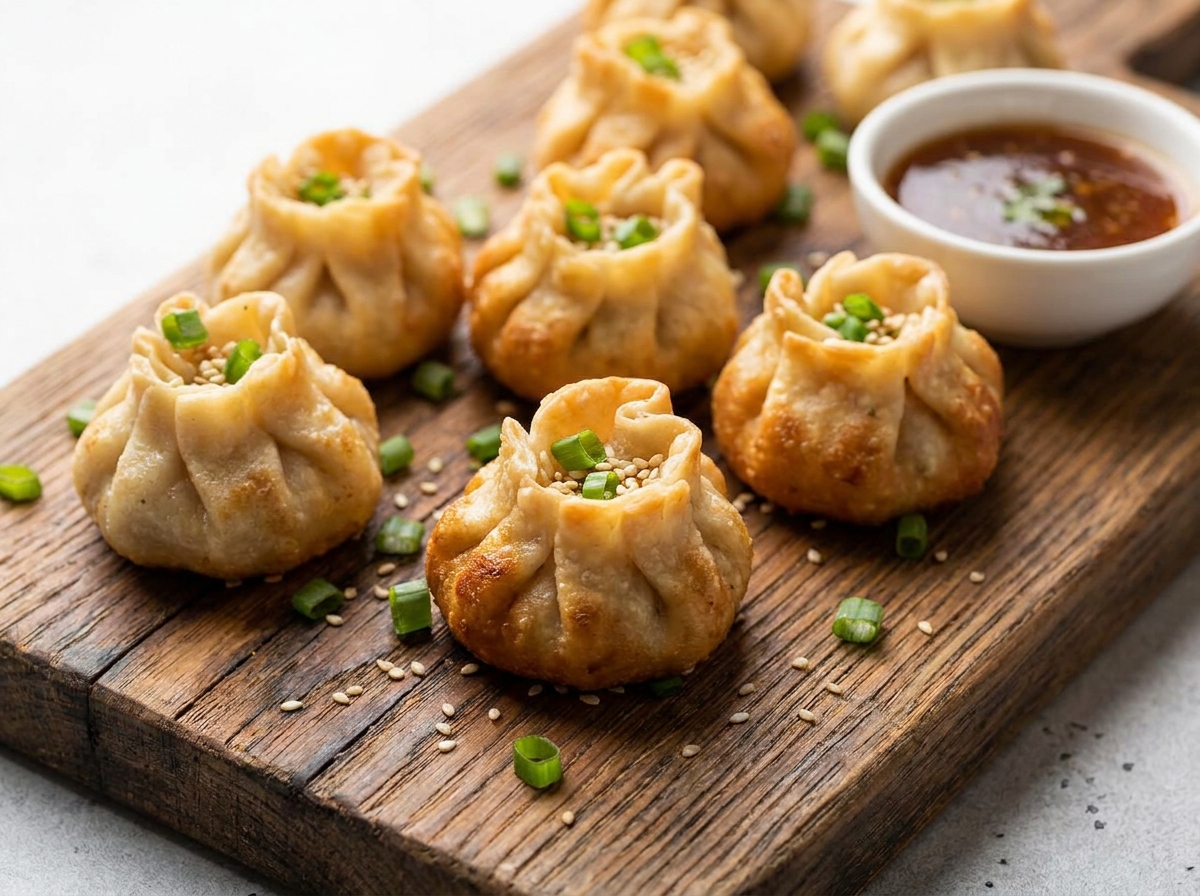
No-Fold Chicken Dumpling Bites
A savory chicken filling gathered into wonton wrappers, seared until golden, then steamed right in the skillet — all the flavor of a dumpling with none of the folding.
Thank you for reading this post, don't forget to subscribe!
If you’ve ever loved the idea of homemade dumplings but dreaded the folding, these No-Fold Chicken Dumpling Bites are the answer. A savory mixture of ground chicken, cabbage, green onion, and garlic gets tucked into a wonton wrapper with a simple upward gather instead of a careful pleat, then seared until the bottoms turn golden and steamed right in the same skillet until the filling is fully cooked through.
There’s no dumpling-folding technique to practice, no pleating pattern to get right, and no special equipment beyond a skillet with a lid. The open-top shape isn’t just a shortcut, either — it lets the filling peek through, gives you a little crispy wrapper edge around a tender, savory center, and makes these bites look like something from a restaurant appetizer plate even though the technique behind them couldn’t be simpler.
Because they cook in one pan from start to finish, sear and all, these come together in under thirty minutes, which makes them a realistic weeknight appetizer or a fast party food rather than a project reserved for a free weekend. Serve them with your favorite dipping sauce and they disappear from the plate fast.
Why Skip the Fold
Traditional dumplings ask you to seal the filling completely inside a pleated wrapper, which takes practice to do neatly and takes time to do in any real volume. These bites take a different approach: instead of sealing the wrapper shut, you gather the edges upward around the filling and simply leave the top open. That one change removes the fussiest part of dumpling-making entirely, while still giving you a wrapper that crisps on the bottom and steams soft on the sides, holding a well-seasoned chicken filling in the center.
Because there’s no seal to worry about, there’s also no risk of a dumpling bursting open in the pan from an imperfect pleat. The open top actually works in your favor here, letting steam escape evenly as the filling cooks through rather than trapping pressure inside a fully sealed wrapper.
A Two-Step Cooking Method in One Pan
These dumpling bites get their texture from a two-step cooking method that happens entirely in a single skillet. First, they sear in a little oil until the bottoms turn deep golden brown, which builds a browned, slightly crisp base. Then a splash of water goes into the hot pan and the lid goes on immediately, turning the same skillet into a steamer that gently cooks the chicken filling through without drying it out. A final minute uncovered re-crisps the bottoms after steaming softens the wrapper, giving you the best of both textures in every bite.
Why Ground Chicken Works So Well Here
Ground chicken is a lighter option than the pork typically used in classic dumplings, and it takes on the flavors of garlic, ginger, soy sauce, and sesame oil easily since it doesn’t carry a heavy flavor of its own. Combined with finely shredded cabbage, it also picks up a little extra moisture and texture as the cabbage releases some of its own liquid during cooking, which keeps the filling from drying out during the steaming step. Because the filling is fully exposed at the top rather than sealed inside the wrapper, the aromatics in the mixture stay front and center in both the aroma and the flavor of the finished bite.
What You’ll Need
- 1 pound ground chicken
- 1 cup finely shredded cabbage
- 2 green onions, sliced
- 2 cloves garlic, minced
- 1 tablespoon soy sauce
- 1 teaspoon sesame oil
- 1 teaspoon grated fresh ginger
- 1 package round wonton wrappers
- 1 tablespoon vegetable oil
- 1/4 cup water
Each bite comes out to roughly 85 calories, and the recipe makes about 20 dumpling bites.
A Note on Wrappers
Round wonton wrappers are what give these bites their signature open, gathered shape, so look for those specifically rather than the square wrappers used for folded dumplings or egg rolls. Round wrappers are usually found in the refrigerated section near tofu and other Asian ingredients at most grocery stores. Keep any unused wrappers covered with a damp paper towel while you work, since they dry out and crack quickly once exposed to air.
Equipment You’ll Need
A large mixing bowl is all you need for combining the filling, and a large skillet with a well-fitting lid does the rest of the work. Choose a nonstick or well-seasoned skillet so the seared bottoms release cleanly, and have the lid within reach before you add the water, since you’ll want to cover the pan immediately to trap the steam. A small spoon works well for portioning the filling into each wrapper.
How to Make It
- Mix the filling. In a large bowl, combine the ground chicken, cabbage, green onions, garlic, soy sauce, sesame oil, and ginger. Mix until well combined.
- Fill the wrappers. Place a small spoonful of the chicken mixture in the center of each wonton wrapper.
- Gather, don’t fold. Instead of folding, gently gather the edges of the wrapper upward around the filling, leaving the top slightly open.
- Heat the oil. Heat the vegetable oil in a large skillet over medium heat.
- Sear. Arrange the dumpling bites in the skillet and cook for 2–3 minutes, until the bottoms are golden brown.
- Steam. Carefully add the water, immediately cover the skillet, and steam for 6–8 minutes, or until the chicken is fully cooked.
- Re-crisp. Remove the lid and cook for another 1–2 minutes to crisp the bottoms.
- Serve. Serve hot with your favorite dumpling dipping sauce.
Gathering the Wrapper
Gathering is a much more forgiving motion than folding. Cup the filled wrapper gently in one hand and use the fingers of your other hand to press the edges up and inward around the filling, rotating as you go until the wrapper holds its shape on its own. It doesn’t need to close completely at the top — a small opening exposing the filling is exactly the look this recipe is going for. If a wrapper tears slightly at the edge, a light dab of water helps it hold together.
Getting the Sear Right
A hot, well-oiled skillet is what gives these bites their golden, slightly crisp bottom before the steaming step even begins. Medium heat is the sweet spot: hot enough to brown the wrapper in a few minutes, but not so hot that the bottoms scorch before the tops have had a chance to set slightly. Resist the urge to move the dumplings around once they’re in the pan; let them sit undisturbed so an even, deep golden crust has time to form on the bottom.
Steaming Cooks the Filling Through
Ground chicken needs to reach a safe internal temperature, and the steaming step is what accomplishes that without drying out the filling or burning the wrapper. Adding the water and immediately covering the pan traps steam that surrounds each dumpling bite, gently cooking the chicken through from the top down while the seared bottom stays in contact with the hot pan. The full 6 to 8 minutes matters here; cutting the steaming time short can leave the center of the filling underdone, especially in bites made with a slightly larger spoonful of filling.
Why the Final Uncovered Minute Matters
Steaming softens the bottoms slightly, even the ones that seared up nice and crisp in step 5. Removing the lid for a final minute or two lets any extra moisture cook off and gives the bottoms a chance to re-crisp before serving, which is a small step that makes a real difference in the finished texture. Skipping it still gives you a fully cooked dumpling bite, just one with a softer, less crisp base.
A Few Ways to Make It Yours
Ground Pork Swap
Swap the ground chicken for ground pork for a richer, more traditional dumpling flavor.
Spicy Version
Add a small spoonful of chili garlic sauce or a pinch of red pepper flakes to the filling for a spicier bite.
Extra Vegetables
Stir in finely minced shiitake mushrooms or shredded carrot along with the cabbage for extra texture and flavor.
Sesame Seed Finish
Sprinkle toasted sesame seeds and extra sliced green onion over the top right before serving for a more finished, restaurant-style presentation.
The classic chicken and cabbage filling is a great place to start before trying any of these variations, since it gives you a baseline for how the seasoning and cook time should look and taste.
Dipping Sauces to Serve Alongside
A simple soy sauce with a splash of rice vinegar and a drop of sesame oil is the classic pairing and lets the chicken filling shine through. For something with a little more kick, stir a spoonful of chili garlic sauce or sriracha into the soy mixture. A sweet chili sauce also works nicely if you’d like to balance the savory filling with something a little sweeter, and a quick peanut sauce turns these into a heartier appetizer for a bigger spread.
How to Store Chicken Dumpling Bites
Store any leftover cooked dumpling bites in an airtight container in the refrigerator for up to 3 days. Reheat them in a skillet over medium heat for a few minutes to help re-crisp the bottoms, since a microwave will leave the wrapper soft. Uncooked, assembled dumpling bites can also be frozen on a baking sheet until solid, then transferred to a freezer bag; cook them straight from frozen, adding a minute or two to both the sear and the steam time.
When to Serve These Bites
These dumpling bites work well as a party appetizer, a game-day snack, or a fun addition to an Asian-inspired dinner spread alongside fried rice or a simple noodle dish. Because they cook quickly in a single pan, they’re also realistic for a weeknight appetizer or a light dinner when paired with a side salad or steamed vegetables. Arrange them on a platter with a small bowl of dipping sauce in the center for an easy, shareable presentation.
Nutrition and Serving Information
Each dumpling bite comes out to approximately 85 calories when the recipe is divided into 20 bites, based on standard ground chicken, cabbage, and wonton wrapper measurements. This is only an estimate, since the exact calorie, sodium, and fat content will vary depending on the specific brands of soy sauce, sesame oil, and wrappers used, as well as the fat content of the ground chicken. Wonton wrappers typically contain wheat and egg, and sesame oil is a tree nut and seed product some guests may need to avoid, so check labels carefully if you’re serving a crowd with dietary restrictions.
Make-Ahead Tips
The filling can be mixed up to a day ahead and kept covered in the refrigerator, which makes assembly quick when you’re ready to cook. You can also fully assemble the dumpling bites a few hours ahead, keeping them covered with a damp paper towel on a tray in the refrigerator so the wrappers don’t dry out, then sear and steam them just before serving so they come to the table hot and freshly cooked.
The Science Behind the Sear-Then-Steam Method
Searing first and steaming second is a technique borrowed directly from classic potsticker cooking, and it works because it separates two different cooking goals into two different stages. The dry heat of the sear browns the wrapper through the Maillard reaction, building color and flavor that steam alone could never produce, since steam never gets hot enough to brown food. Once the water hits the hot pan and the lid goes on, the environment shifts entirely from dry to moist heat, and that trapped steam is what gently and evenly cooks the raw chicken filling through without scorching the wrapper further. Because the bottom of each dumpling bite is already sitting in a thin layer of hot oil during the steaming phase, it stays in contact with dry heat even while the top of the filling cooks in steam, which is exactly why the final uncovered minute is able to re-crisp that base again once the water has cooked off.
Portioning and Yield
This recipe makes about 20 dumpling bites from one pound of ground chicken and a package of round wonton wrappers, which is a good amount for a party appetizer serving 6 to 8 people alongside other dishes, or a lighter meal for 3 to 4 people served over rice. If you’re feeding a larger crowd, the filling doubles easily; just work in batches in the skillet so you don’t overcrowd the pan, which can prevent the bottoms from searing evenly and make the steaming step less consistent.
A Little Bit of History
Dumplings in one form or another show up across nearly every culinary tradition in Asia, from Chinese jiaozi and wontons to Japanese gyoza, each with its own wrapper, filling, and folding style built up over generations. The pleating techniques used for traditional dumplings are genuinely skilled work, often passed down and practiced for years, which is part of why a home cook facing a package of wrappers for the first time can feel intimidated before they’ve even started. This recipe borrows the flavors and the basic sear-then-steam cooking method from that tradition while stepping away from the pleating altogether, landing on an open, gathered shape that takes cues from a rustic dumpling or a simplified shumai rather than a tightly sealed potsticker. It’s less about recreating a specific regional dumpling exactly and more about capturing what makes dumplings so appealing in the first place: a savory, well-seasoned filling wrapped in something that turns golden and a little crisp in a hot pan.
Serving Suggestions
Beyond a simple platter with dipping sauce, these dumpling bites fit nicely into a bigger spread. Set them out alongside a bowl of steamed edamame and a cucumber salad for a light appetizer course, or serve them next to fried rice and a stir-fried vegetable for a more complete meal. For a party, arranging them on a large board with two or three different dipping sauces in small bowls lets guests customize each bite, and a scattering of extra sliced green onion and sesame seeds over the top makes the platter look considerably more finished with almost no extra effort. They also hold their heat reasonably well for a short stretch on a warming tray, which makes them practical for a buffet-style gathering where people are serving themselves over the course of an hour or two.
Portion and Filling Amounts
Getting a consistent size across all 20 dumpling bites makes a real difference in how evenly they cook, so it’s worth taking a moment to portion the filling before you start assembling. A slightly rounded teaspoon of the chicken mixture is about right for most standard round wonton wrappers, giving enough filling to feel substantial without overfilling the wrapper so much that it won’t gather closed at the top. If a wrapper is overstuffed, it tends to split along the sides during the sear, which lets filling leak into the pan instead of staying contained. Using a small cookie scoop instead of a spoon can help keep every bite close to the same size, which also means they’ll finish cooking at closer to the same time during the steaming step rather than some being underdone while others are ready. A little consistency here pays off across the whole batch, especially if you’re serving guests who’ll be comparing bites side by side on the same plate.
Common Questions
Can I use square wonton wrappers instead of round?
Round wrappers are recommended for the gathered, open-top shape this recipe is built around. Square wrappers will work in a pinch, but the corners create a different shape and may not gather as neatly.
Can I bake these instead of pan-frying?
This recipe is designed around the skillet sear-and-steam method for the best texture. Baking will give a different result without the golden seared bottom, since the technique relies on direct contact with hot oil.
Can I freeze uncooked dumpling bites?
Yes. Freeze them on a baking sheet until solid, then transfer to a freezer bag. Cook straight from frozen, adding a minute or two to both the sear and steam times.
What’s the best dipping sauce?
A simple soy sauce with a splash of rice vinegar and a little sesame oil is the classic choice, though sweet chili sauce or a chili garlic soy blend both work well too.
How do I know the chicken is fully cooked?
The chicken should no longer be pink and should reach an internal temperature of 165°F. If you’re unsure, cut one dumpling bite in half to check before serving the rest.
Can I make these with ground turkey instead?
Yes, ground turkey works as a direct substitute for ground chicken with a very similar result in both flavor and texture.
Why is my filling too wet?
Finely shredded cabbage can release extra moisture. If your filling seems loose, pat the shredded cabbage dry with a paper towel before mixing it into the chicken.
No-Fold Chicken Dumpling Bites prove that you don’t need pleating skills to get a genuinely good homemade dumpling. Mix the filling, gather the wrappers, sear, steam, and re-crisp — that’s the whole process, and it delivers a savory, golden appetizer that’s just as at home on a party platter as it is on a weeknight dinner table.