
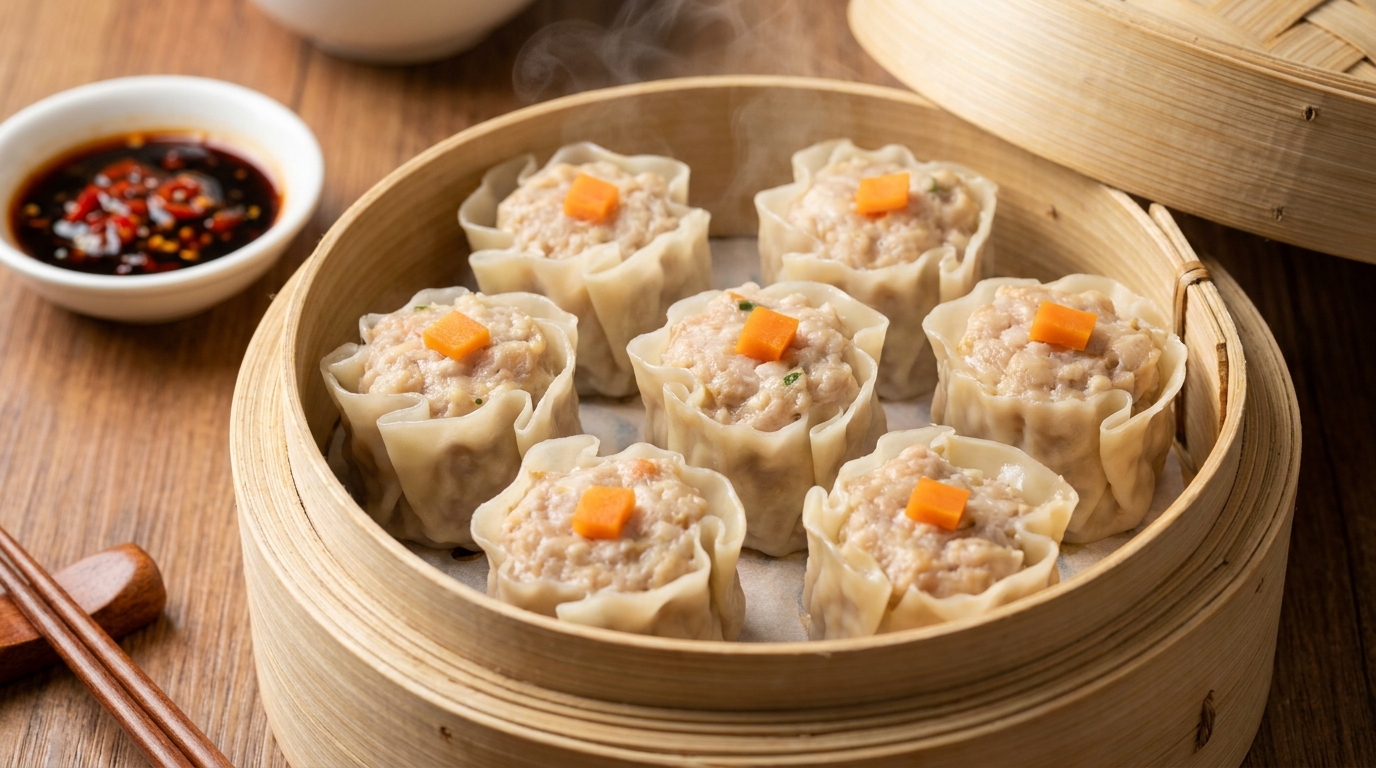
No-Fold Chicken Siomai
Ground chicken, cabbage, and garlic come together into a savory dumpling mixture that skips the wrapper entirely — no folding, no pleating, just shape and cook.
Thank you for reading this post, don't forget to subscribe!
No-Fold Chicken Siomai takes everything people love about traditional siomai, the seasoned ground meat, the finely shredded cabbage, the savory hit of soy and sesame, and lets go of the one part that keeps most home cooks from making it on a weeknight: the wrapper. Instead of pleating individual wonton wrappers around a spoonful of filling, this version shapes the seasoned chicken mixture directly into small dumplings by hand, then bakes or pan-fries them until golden and cooked through.
The result is a dish that tastes remarkably close to the siomai you’d find steaming in a bamboo basket at a favorite dim sum spot, but without the fiddly folding technique that usually takes practice to get right. Ground chicken, cabbage, garlic, ginger, and a handful of pantry seasonings do all of the flavor work, while an egg and breadcrumbs hold everything together into dumplings that hold their shape whether they go into the oven or a hot skillet.
It’s a genuinely approachable recipe for anyone who loves the flavor of siomai but has always been intimidated by the wrapping step, and it comes together in well under an hour from start to finish.
Why This Recipe Works
Traditional siomai relies on a thin wonton wrapper to hold its filling together while it steams, but that wrapper is really just a vessel, it doesn’t contribute much flavor on its own. This recipe recognizes that and builds the entire dumpling around the seasoned filling itself, using an egg and breadcrumbs as an internal binder instead of an external wrapper. That swap does two things at once: it removes the most technically demanding step of making siomai from scratch, and it lets the seasoned chicken filling be the entire dumpling rather than just the center of one.
Shredded cabbage adds moisture and a bit of natural sweetness as it cooks down, echoing the vegetable content that traditional siomai filling usually includes, while soy sauce, oyster sauce, and sesame oil bring the same savory, umami-forward flavor base that makes siomai so craveable in the first place. Because the dumplings go into a hot oven or a hot skillet rather than a steamer, they also develop a golden, slightly caramelized exterior that steamed siomai never gets, adding a textural contrast that a lot of people end up preferring.
Why the Egg and Breadcrumbs Matter
Ground chicken is looser and holds together less firmly than a fattier ground meat like pork, so this recipe leans on a classic meatball technique to compensate: an egg to bind the mixture and breadcrumbs to absorb excess moisture and give the dumplings enough structure to hold their shape as they cook. Skipping either one tends to produce dumplings that fall apart when you try to flip them in a skillet or pull them off a baking sheet, so both are doing real, functional work here rather than just padding out the recipe.
What You’ll Need
- 1 lb (450 g) ground chicken
- 2 cups shredded cabbage
- 2 green onions, finely sliced
- 2 cloves garlic, minced
- 1 teaspoon grated ginger
- 2 tablespoons soy sauce
- 1 tablespoon oyster sauce
- 1 teaspoon sesame oil
- 1 egg
- ½ cup breadcrumbs
- Salt and black pepper, to taste
- Cooking spray or oil
This makes 4 servings, at roughly 285 calories per serving.
A Note on Cabbage and Aromatics
Shredding the cabbage finely is worth the extra minute or two, since large pieces won’t fully soften during the cook time and can make the dumplings harder to hold together. Fresh garlic and ginger give a brighter, more fragrant result than the jarred or powdered versions, but either works in a pinch if that’s what you have on hand. The green onion adds a mild, fresh bite that balances the richness of the soy and oyster sauce nicely.
Equipment You’ll Need
A large mixing bowl is where the entire filling comes together, and a baking sheet or a nonstick skillet is all you need for the cooking step, depending on which method you choose. A rimmed baking sheet keeps any rendered fat contained if you’re baking, while a nonstick or well-seasoned skillet makes flipping the dumplings for pan-frying much easier. A small cookie scoop or a regular tablespoon helps portion the mixture into evenly sized dumplings.
How to Make It
- Preheat. Preheat your oven to 375°F (190°C) or heat a nonstick skillet over medium heat.
- Combine. In a large bowl, combine the ground chicken, cabbage, green onions, garlic, ginger, soy sauce, oyster sauce, sesame oil, egg, breadcrumbs, salt, and pepper.
- Mix. Mix until everything is evenly incorporated.
- Shape. Scoop about 2 tablespoons of the mixture and shape into small oval or round dumplings.
- Arrange. Arrange on a lightly greased baking sheet or cook in a skillet with a little oil.
- Cook. Bake for 20–25 minutes, or pan-fry for 5–6 minutes per side until golden and cooked through.
- Serve. Serve warm with soy sauce, chili oil, or your favorite dipping sauce.
Shaping the Dumplings Evenly
Using a consistent scoop size, about 2 tablespoons per dumpling, keeps the whole batch cooking at roughly the same rate, so you’re not left with some dumplings burning while others are still undercooked in the middle. Slightly wet hands make the mixture easier to shape without it sticking to your fingers, and a light, gentle touch when forming each dumpling helps keep the texture tender rather than compacted and dense.

Baking Versus Pan-Frying
Baking is the more hands-off option, since the oven does the work evenly across the whole tray while you attend to something else, and it’s the easier choice if you’re making a larger batch that wouldn’t all fit in a skillet at once. Pan-frying takes a bit more attention, since you’ll want to flip each dumpling partway through, but it rewards that attention with a deeper, more caramelized crust on both flattened sides. Neither method is more correct than the other; it really comes down to whether you’d rather have hands-off convenience or a slightly crispier finish.
Knowing When They’re Done
Ground chicken needs to reach a safe internal temperature all the way through, so the dumplings should look golden brown on the outside and feel firm, not soft or squishy, when pressed gently. If you have an instant-read thermometer, the center of a dumpling should read 165°F (74°C). When in doubt, cut one open, at 285 calories a serving this is a forgiving enough recipe that sacrificing one for a visual check is worth the peace of mind.
Tips for Perfect No-Fold Siomai
Squeeze any excess moisture out of the shredded cabbage before mixing it in if it seems especially wet, since too much liquid in the filling can make the dumplings harder to shape and more likely to fall apart during cooking. Keep your dumplings roughly the same size for even cooking, and don’t crowd the baking sheet or skillet, since dumplings that are too close together will steam rather than brown properly.
Troubleshooting Common Issues
My dumplings fell apart while cooking. This usually means the mixture needed a bit more breadcrumbs to bind it, or the dumplings weren’t chilled or handled gently enough before cooking. Try adding an extra tablespoon of breadcrumbs next time.
My dumplings were dry. Ground chicken is leaner than pork, so overcooking can dry it out quickly. Pull them from the heat as soon as they reach a safe internal temperature rather than leaving them longer for extra browning.
My dumplings browned too fast on the outside. Lower the oven temperature slightly or reduce the skillet heat to medium-low, giving the inside more time to cook through before the outside over-browns.
My filling felt too wet to shape. Add a bit more breadcrumbs, a tablespoon at a time, until the mixture holds together well when shaped.

A Few Ways to Make It Yours
Shrimp Add-In
Fold in a handful of finely chopped raw shrimp along with the ground chicken for a classic siomai flavor combination.
Carrot and Mushroom
Add finely diced carrot and minced shiitake mushroom to the filling for extra texture and an earthier flavor.
Spicy Chili Oil Finish
Top each dumpling with a spoonful of chili crisp or chili oil right before serving for a spicy kick.
Lemon or Calamansi Squeeze
A squeeze of fresh citrus over the finished dumplings brightens the whole dish nicely.
The plain version is worth making first so you know the baseline flavor before adding any extras.
How to Store Leftovers
Store cooked dumplings in an airtight container in the refrigerator for up to 3 days. Reheat gently in a skillet over medium-low heat or in the microwave in short bursts to avoid drying out the chicken. These also freeze well; freeze the cooked dumplings in a single layer before transferring to a freezer bag, and reheat from frozen in a hot oven until warmed through.
When to Serve This Siomai
This recipe works well as a weeknight main served over steamed rice, as a party appetizer with a few dipping sauces on the side, or as part of a larger spread alongside other Asian-inspired dishes. Because the dumplings hold their shape well once cooled, they’re also a good option for meal prep or a packed lunch.
Nutrition and Serving Information
Each serving comes to approximately 285 calories, based on standard ground chicken and pantry ingredient measurements, with the recipe divided into 4 servings. This is only an estimate, since exact calorie and fat content will vary depending on the specific brands and cuts used. Because this recipe contains egg, soy, and gluten from the breadcrumbs, it isn’t appropriate for anyone with those specific allergies without substitution.
Make-Ahead Tips
The uncooked dumpling mixture can be shaped and refrigerated, covered, for up to a day ahead of when you plan to cook it, which makes this a convenient recipe to prep in the morning before a busy evening. You can also fully cook a batch ahead of time and reheat it gently just before serving, since the flavor holds up well over a day or two in the refrigerator.
The Science Behind a Wrapper-Free Dumpling
A traditional dumpling wrapper works because gluten in the wheat flour dough stretches thin without tearing, giving the filling a sturdy but pliable shell. This recipe replaces that entirely by relying on the egg’s proteins to bind the ground chicken and vegetables into a cohesive mass as it cooks, the same mechanism that holds a meatball or meatloaf together. Breadcrumbs absorb excess moisture released from the cabbage and chicken during cooking, preventing the dumplings from becoming soggy or falling apart, while direct heat from the oven or skillet firms the exterior into a light crust that stands in for the browned, slightly chewy edge a folded wrapper would normally provide.
Portioning and Yield
This recipe makes enough for 4 servings from one pound of ground chicken, a good amount for a weeknight dinner for a small family or a generous appetizer portion for a slightly larger group. If you’d like more dumplings for a party, the recipe doubles cleanly, just be sure to use a large enough bowl to mix everything evenly and don’t overcrowd the baking sheet or skillet when cooking a bigger batch.
A Little Bit of History
Siomai has deep roots in Chinese dim sum tradition, where it’s typically made with a thin wonton wrapper cupped around a filling of ground pork or shrimp, then steamed in bamboo baskets. As the dish traveled and took on regional variations, particularly in the Philippines, where siomai became a beloved street food staple, home cooks have long looked for ways to capture that same savory flavor with less specialized technique. This no-fold version follows in that same spirit of practical adaptation, keeping the flavors that make siomai so satisfying while removing the wrapper-folding skill that traditionally takes real practice to master.
Serving Suggestions
Serve these dumplings warm, straight from the oven or skillet, with small bowls of soy sauce, chili oil, and a vinegar-based dipping sauce on the side so everyone can mix their own combination. A simple side of steamed rice and stir-fried greens rounds the meal out nicely, and a sprinkle of sliced green onion or sesame seeds over the top adds a fresh, finished look for company.
Choosing the Right Ground Chicken
A standard ground chicken, rather than an all-white-meat ground chicken breast, gives a juicier, more forgiving result here, since the slightly higher fat content helps keep the dumplings moist through cooking. If all you can find is a leaner ground chicken breast, a tablespoon of extra oil worked into the mixture helps compensate for the lower fat content and keeps the finished dumplings from drying out.
Why This Recipe Is Naturally Kid-Friendly to Make
Because there’s no hot steamer to manage and no delicate wrapper-folding technique to teach, this is a genuinely easy recipe to make with kids in the kitchen, whether that means letting them measure out the soy sauce and sesame oil or handing them the job of shaping the mixture into small dumplings by hand. Rolling the mixture into rounds is a satisfying, tactile task for younger cooks, and because the shapes don’t need to be perfectly uniform to taste good, it’s a forgiving recipe for a first-time helper who’s still building confidence and fine motor skills in the kitchen. Just be sure an adult handles the raw chicken and the hot oven or skillet, since both call for a bit more caution than the mixing and shaping steps.
Adjusting the Seasoning to Your Taste
The soy sauce, oyster sauce, and sesame oil in this recipe were balanced to give a savory, well-rounded flavor without leaning too far in any one direction, but there’s plenty of room to adjust if you’d like. A little extra grated ginger brightens the whole dish with a sharper, more fragrant edge, while an additional clove of garlic deepens the savory base if that’s the direction you prefer. If you like a touch of heat built directly into the filling rather than added at the table, a small amount of finely minced chili or a pinch of white pepper folded in with the other seasonings works well without overwhelming the other flavors. As with most ground meat mixtures, it’s worth cooking a small test patty in the skillet before shaping the full batch if you’ve made any seasoning adjustments, that way you can taste and correct the balance before committing the rest of the mixture to its final shape.
Pairing This Dish With Other Sides
Because the flavor profile here leans savory and umami-forward rather than spicy or heavy, these dumplings pair naturally with a wide range of simple sides. Steamed jasmine rice is the most traditional pairing, soaking up any extra dipping sauce that ends up on the plate, while a quick stir-fry of bok choy, snap peas, or broccoli adds color and a fresh, vegetal contrast to the rich filling. For a lighter meal, a simple cucumber salad dressed with rice vinegar and a touch of sesame oil echoes the same flavor notes already in the dumplings without competing with them. If you’re serving a larger spread, these also fit naturally alongside other Asian-inspired appetizers like spring rolls or a simple miso soup to start the meal.
A Note on Portion Control
Because these dumplings are protein-rich and satisfying in fairly small portions, it’s easy to build a balanced plate around them without overdoing it on any one component. Three or four dumplings alongside a modest portion of rice and vegetables makes a complete, well-rounded meal for most appetites, while a couple of extra dumplings work well as a filling snack or light lunch on their own. If you’re serving these at a party, keeping the dumplings on the smaller side, closer to a tablespoon and a half of mixture rather than a heaping two tablespoons, stretches the batch further and makes them easier to eat in one or two bites alongside other appetizers on the table.
Common Questions
Can I use ground pork or turkey instead of chicken?
Yes, either one works well in this recipe; ground pork will give a richer flavor, while ground turkey behaves similarly to chicken.
Do I have to use both soy sauce and oyster sauce?
Both together give the most balanced, savory flavor, but you can use soy sauce alone if oyster sauce isn’t available.
Can I steam these instead of baking or pan-frying?
Yes, steaming for about 12 to 15 minutes works well too, though you’ll lose the golden, slightly crisp exterior that baking or pan-frying gives.
Can I freeze the uncooked dumplings?
Yes, freeze them in a single layer on a tray until firm, then transfer to a freezer bag; cook from frozen, adding a few extra minutes to the cook time.
Why is my mixture too sticky to shape?
Wetting your hands lightly before shaping usually solves this; if it’s still too sticky, add a bit more breadcrumbs.
Can I make these ahead for a party?
Yes, shape and refrigerate the raw dumplings up to a day ahead, or fully cook them and reheat gently before serving.
What dipping sauce works best?
A simple mix of soy sauce, a splash of rice vinegar, and a little chili oil is a classic pairing that complements the savory filling well.
No-Fold Chicken Siomai takes the flavor of a favorite dim sum dumpling and makes it genuinely approachable for a weeknight, no wrapper folding, no steamer setup required. Mix, shape, cook, and serve warm with your favorite dipping sauce, that’s the entire process, and the result tastes like something you’d order at a restaurant.