
2-Ingredient Chocolate Peanut Butter Cookies
Peanut butter and chocolate cake mix, stirred together and baked into soft, fudgy cookies — no flour, eggs, or butter needed.
Thank you for reading this post, don't forget to subscribe!
Some days you want a homemade cookie without a long ingredient list, a mixing bowl full of separate dry and wet ingredients, or any real measuring beyond a couple of cups. These 2-Ingredient Chocolate Peanut Butter Cookies solve that problem completely, relying on just peanut butter and boxed chocolate cake mix to create a soft, fudgy cookie with a deep chocolate flavor and a subtle peanut butter richness running underneath.
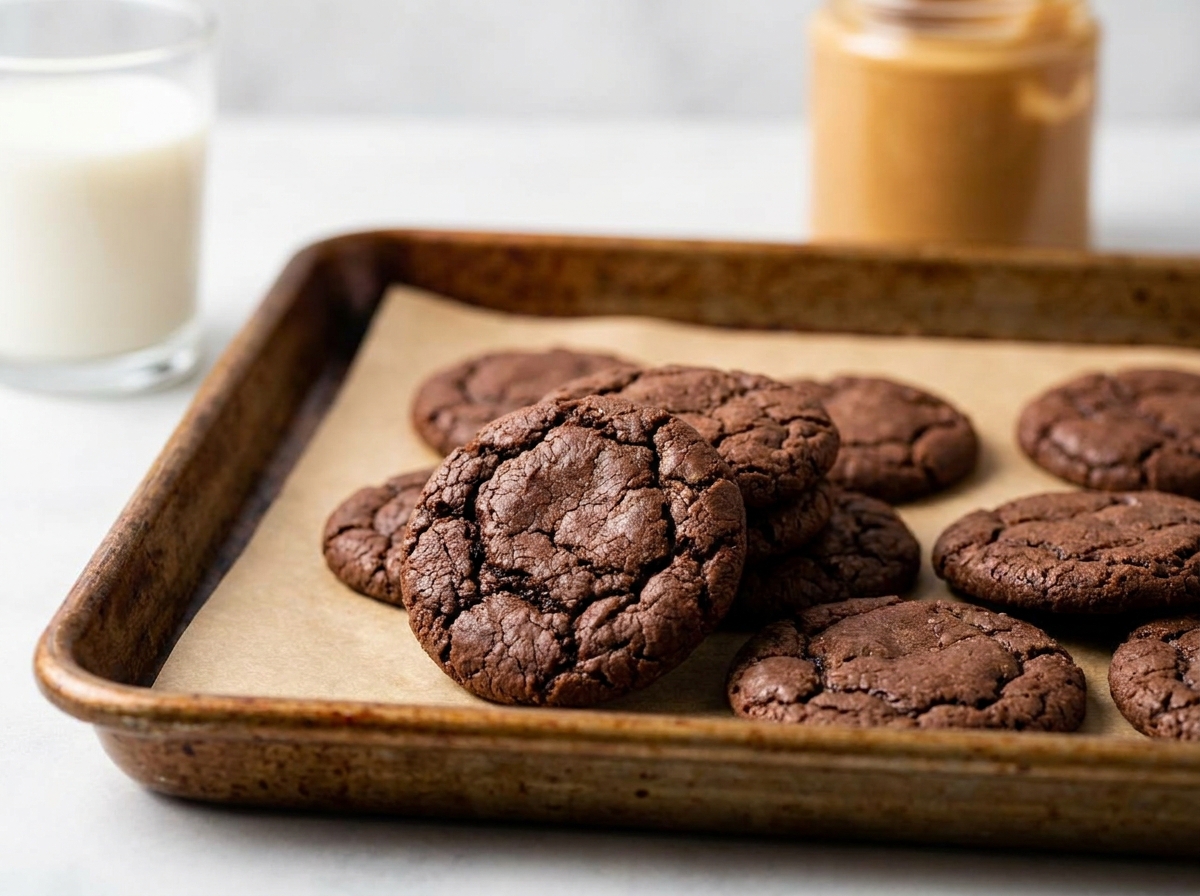
There’s no flour, no eggs, no butter, and no baking soda or baking powder to add separately — the cake mix already contains everything a cookie would normally need in the way of leavening and structure, so all you’re doing is combining it with peanut butter to create a rollable, bakeable dough. The result bakes up with a crackled, slightly shiny top and a dense, brownie-like interior that’s closer to a fudgy cookie than a cakey one.
The whole process, from mixing to cooling, takes about fifteen minutes, which makes this one of the fastest ways to get a batch of homemade cookies on the table. Whether you’re short on time, low on pantry staples, or just want a chocolate-peanut-butter treat without much effort, this is the kind of recipe worth keeping in your back pocket.
Why These Two-Ingredient Cookies Are So Easy
The whole concept behind this recipe is letting a box of chocolate cake mix do double duty as both the flour and the flavor base. Cake mix already contains flour, sugar, cocoa, leavening, and a bit of fat, all pre-measured and pre-balanced by the manufacturer, which means combining it with just one more ingredient can produce a cookie dough without any additional dry ingredients. Peanut butter supplies the moisture, fat, and binding that would normally come from eggs and butter in a traditional cookie recipe, while also contributing its own distinct roasted flavor that plays well against the chocolate.
Because there’s no creaming of butter and sugar, no whisking dry ingredients separately, and no resting time for the dough, this recipe moves from pantry to oven in just a few minutes. That makes it a particularly good option for a last-minute dessert, a fun baking project with kids, or simply a low-effort way to satisfy a chocolate craving on a weeknight.
A Fudgy Cookie With Deep Chocolate Flavor
Because chocolate cake mix is formulated to produce a moist, tender cake, using it as the base for a cookie naturally leans the texture toward fudgy rather than crisp. These cookies bake up with a soft, dense center and a slightly crackled top, closer in texture to a flourless brownie cookie than a classic crunchy chocolate chip cookie. The chocolate flavor is noticeably deep and rich, since cake mix is formulated with cocoa and sugar specifically balanced for a moist chocolate dessert, and that intensity carries through clearly even with just one other ingredient added.
Why Peanut Butter and Chocolate Cake Mix Work So Well Together
Peanut butter brings fat, protein, and moisture to the dough in a way that closely mirrors what eggs and butter would normally provide in a traditional cookie recipe, while also contributing its own roasted, slightly salty flavor that complements the sweetness of the cake mix. Because cake mix already contains sugar and cocoa in a carefully balanced ratio, there’s no need to add anything else to achieve a properly sweetened, chocolate-forward dough — the peanut butter simply needs to bind everything together and add enough fat for the cookies to bake up soft rather than dry. The pairing works precisely because each ingredient fills a role the other doesn’t: the cake mix handles flavor and structure, and the peanut butter handles moisture and richness.
What You’ll Need
- 1 cup creamy peanut butter
- 1 cup chocolate cake mixmeasured straight from the dry box mix, not prepared batter
That’s the entire list. The recipe makes about 12 cookies, each around 150 calories.
Choosing the Best Peanut Butter and Cake Mix
A standard creamy peanut butter blends far more easily into the dry cake mix than a natural, oil-separated variety, giving you a smoother, more consistent dough with less stirring. If you only have natural peanut butter on hand, stir it thoroughly before measuring so the oil is evenly distributed; otherwise the dough may turn out oilier in some spots and drier in others. For the cake mix, any standard chocolate or devil’s food cake mix works well here — a devil’s food mix will give you a slightly more intense, darker chocolate flavor, while a standard chocolate mix bakes up a bit milder and sweeter. Since only one cup of the box is used, you’ll have plenty left over for another batch or a future cake.
Equipment You’ll Need
A large mixing bowl and a sturdy spoon or spatula are all you need to combine the peanut butter and cake mix, since the dough comes together with just a few minutes of stirring by hand. A baking sheet lined with parchment paper keeps the cookies from sticking and makes cleanup easy. A standard fork is useful for flattening each cookie slightly before baking, similar to the classic crosshatch pattern on a peanut butter cookie, and a wire rack helps the cookies finish cooling evenly once they come out of the oven.
How to Make It
- Preheat and prep. Preheat the oven to 350°F and line a baking sheet with parchment paper.
- Combine. Add the peanut butter and chocolate cake mix to a bowl.
- Stir into a dough. Stir until a thick cookie dough forms, with no dry streaks of cake mix remaining.
- Roll into balls. Roll the dough into small balls and place them on the prepared baking sheet.
- Flatten gently. Gently flatten each cookie with the back of a fork.
- Bake. Bake for 8 to 10 minutes, just until the cookies are set.
- Cool. Let the cookies cool on the baking sheet for 5 minutes before transferring them to a wire rack.
Get the Dough to the Right Consistency
The dough should come together into a thick, slightly sticky mass that holds its shape when rolled into a ball, similar in texture to a traditional cookie dough, just without any flour. If the mixture feels too dry or crumbly to hold together, a peanut butter that’s on the stiffer side may need an extra tablespoon or so worked in; if it feels too loose or sticky to roll, chilling the dough in the refrigerator for 10 minutes before shaping can make it easier to handle. Most of the time, though, a straightforward one-to-one ratio of peanut butter to cake mix comes together into a workable dough without any adjustment at all.

Flatten Before Baking
Because this dough has no flour to encourage natural spreading, pressing each ball down gently with the back of a fork — or the bottom of a glass, if you prefer a smoother finish rather than a crosshatch pattern — is an important step rather than an optional flourish. Flattening the dough to about a half-inch thickness before baking helps the cookies bake through evenly and gives them the familiar round, slightly domed cookie shape rather than staying in a tall, dense mound. If you’d like the classic crosshatch look associated with traditional peanut butter cookies, press the fork down in one direction and then turn it 90 degrees and press again.
Bake Until Just Set
These cookies bake quickly, and the difference between a fudgy, tender cookie and an overly dry one often comes down to just a minute or two in the oven. Start checking at the 8-minute mark; the cookies are ready when the tops look set and no longer glossy and wet, but the centers should still look slightly soft rather than fully firm. They’ll continue to set as they cool on the baking sheet, so pulling them a touch early, rather than waiting until they look completely done, is the safer choice if you want to preserve that fudgy texture.
Cool Before Moving
Because these cookies contain no flour and rely entirely on the cake mix and peanut butter for structure, they’re noticeably more delicate straight out of the oven than a traditional cookie. Let them rest on the baking sheet for the full 5 minutes before attempting to move them; this brief rest lets them firm up just enough to transfer to a wire rack without falling apart. Once on the rack, let them finish cooling completely before serving if you want the cleanest texture, though many people enjoy them slightly warm, when the chocolate flavor is most pronounced and the center is at its softest.
Tips for Perfect Chocolate Peanut Butter Cookies
Use a creamy, well-blended peanut butter for the smoothest dough, and stir natural peanut butter thoroughly before measuring if that’s what you have on hand. Flatten each cookie with a fork before baking, since the dough won’t spread much on its own without flour. Watch the bake time closely and pull the cookies while the centers still look a little soft — they firm up as they cool, and a cookie that looks fully set in the oven has usually gone slightly past the ideal fudgy texture. Let the cookies rest on the baking sheet for a few minutes before transferring them, since they’re more fragile than a traditional cookie until they’ve had a chance to firm up.
Troubleshooting Common Issues
My dough was too dry and crumbly to roll. This can happen with a stiffer peanut butter. Work in an extra tablespoon of peanut butter until the dough holds together when pressed.
My cookies spread too thin and flat. The dough may have been slightly warm or the peanut butter unusually soft. Chilling the dough for 10 minutes before shaping can help the cookies hold their shape better in the oven.
My cookies fell apart when I moved them. They likely needed more time to cool on the baking sheet first. Let them rest the full 5 minutes so they firm up enough to handle.
My cookies turned out dry instead of fudgy. This usually means they were baked a minute or two too long. Pull them while the centers still look slightly soft, since they continue to set as they cool.
My dough tasted too sweet or not chocolatey enough. Try a devil’s food cake mix instead of a standard chocolate mix for a more intense, less sweet chocolate flavor.

A Few Ways to Make It Yours
Peanut Butter Swirl
Press a small spoonful of extra peanut butter into the top of each cookie before baking and swirl it slightly with a toothpick for a marbled look.
Powdered Sugar Dusting
Dust the cooled cookies with powdered sugar for a bakery-style finish and a touch of extra sweetness.
Chocolate Chips
Fold a handful of mini chocolate chips into the dough for extra pockets of melted chocolate throughout.
Flaky Salt Finish
A light sprinkle of flaky salt over the tops right after baking plays up the sweet-and-salty contrast between the chocolate and peanut butter.
Try the classic version first so you have a baseline for texture and sweetness, then decide whether any of these additions are worth making part of your regular routine.
How to Store Chocolate Peanut Butter Cookies
Store the cooled cookies in an airtight container at room temperature for up to about 4 days. Because these cookies are more delicate than a traditional flour-based cookie, layering parchment or wax paper between them in the container helps prevent them from sticking together or breaking. They can also be refrigerated for slightly longer storage, though they’re at their best texture within the first few days. These cookies freeze well too — place them in a single layer in a freezer-safe container and thaw at room temperature before serving.
When to Serve These Easy Cookies
These cookies are a good fit whenever you want a quick, homemade-tasting dessert without much planning: a last-minute treat for guests, a lunchbox cookie, a bake sale contribution, or a simple after-dinner sweet. Because the whole process takes about fifteen minutes from start to finish, they’re also a good option for a spontaneous baking project with kids, since there’s very little measuring or technique involved beyond stirring and flattening. Served slightly warm, they make a simple but satisfying dessert on their own, and a scoop of vanilla ice cream turns them into something a bit more special.
Nutrition and Serving Information
The recipe estimates approximately 150 calories per cookie across 12 servings. Treat this as an estimate rather than an exact figure, since the specific brands of peanut butter and cake mix used will affect the final calorie and sugar content. Cutting the dough into smaller or larger portions will change the calories per cookie accordingly. Because the recipe relies on peanut butter and a sweetened cake mix, it’s best enjoyed as an occasional treat rather than an everyday snack. Always check the cake mix box and peanut butter label for allergen information, since the recipe contains peanuts, wheat, and other ingredients typical of a boxed cake mix.
Make-Ahead Tips
The dough for these cookies comes together so quickly that make-ahead prep isn’t usually necessary, but if you’d like to get ahead, the raw dough balls can be shaped, flattened, and refrigerated for up to a day before baking, or frozen for longer storage. Bake refrigerated dough straight from the fridge, adding a minute or so to the bake time if needed. Frozen dough balls should be thawed in the refrigerator before baking for the most even results.
The Science Behind a Two-Ingredient Cookie
Cake mix is engineered to be a nearly complete baking system on its own, containing flour, sugar, cocoa, salt, and a chemical leavening agent, all balanced in ratios a food scientist worked out so the mix behaves predictably once liquid and fat are added. In a normal cake recipe, that liquid and fat come from eggs, oil, and water or milk. In this cookie recipe, peanut butter steps in to provide both the fat and enough moisture to bring the dry mix together into a workable dough, while its natural stickiness helps hold everything in shape once portioned and flattened. The leavening already built into the cake mix is still active, which is why these cookies puff slightly and crackle on top in the oven even without any eggs or baking powder added separately. Understanding this is useful if you ever want to troubleshoot the recipe: since the cake mix is doing most of the structural work, changes to the peanut butter, like using a much oilier or much stiffer variety, have an outsized effect on the final texture compared to what you’d see adjusting a single ingredient in a more traditional, multi-ingredient cookie recipe.
Portioning and Yield
This recipe makes about 12 cookies from a single cup of cake mix, which is a reasonably sized, shareable cookie given how rich and fudgy the texture is. If you’d like smaller cookies for a dessert tray with other treats, rolling the dough into smaller balls will stretch the same batch to 16 or 18 bite-sized cookies instead, though you’ll want to reduce the bake time slightly to avoid drying them out. For larger, more substantial cookies, rolling the dough into bigger balls and flattening them a bit less will get you closer to 8 or 9 cookies, with a slightly longer bake time needed to set the thicker centers. Because only one cup of cake mix and one cup of peanut butter are used, doubling the recipe is simple if you want a bigger batch, and the method stays exactly the same regardless of scale.
Common Questions
Can I use a different flavor of cake mix?
Yes, though the chocolate flavor is what pairs so distinctly with the peanut butter here. A yellow or spice cake mix would produce a completely different, less chocolate-forward cookie using the same basic method.
Why are my cookies more fragile than regular cookies?
Because there’s no flour in this recipe, the cookies rely entirely on the cake mix and peanut butter for structure, which makes them more delicate, especially right out of the oven. Letting them cool on the baking sheet before moving them helps prevent breakage.
Can I double this recipe?
Yes, simply double both the peanut butter and the cake mix, keeping the one-to-one ratio the same. You’ll get roughly twice as many cookies from the same basic method.
Can I freeze the baked cookies?
Yes. Place them in a single layer in an airtight, freezer-safe container, then thaw at room temperature before serving.
Can I use natural peanut butter?
Yes, but stir it thoroughly before measuring, since the oil in natural peanut butter can separate during storage and affect how the dough comes together.
How do I know when the cookies are done?
The tops should look set and no longer wet or glossy, but the centers should still look a little soft. They continue to firm up as they cool, so pulling them slightly early helps keep them fudgy.
2-Ingredient Chocolate Peanut Butter Cookies prove that a satisfying, homemade-tasting cookie doesn’t need a long ingredient list or much technique at all. With just peanut butter and a box of chocolate cake mix, you can have a batch of soft, fudgy cookies ready in about fifteen minutes. Sometimes the smartest dessert is the one that turns a pantry shortcut into something genuinely worth making again.