
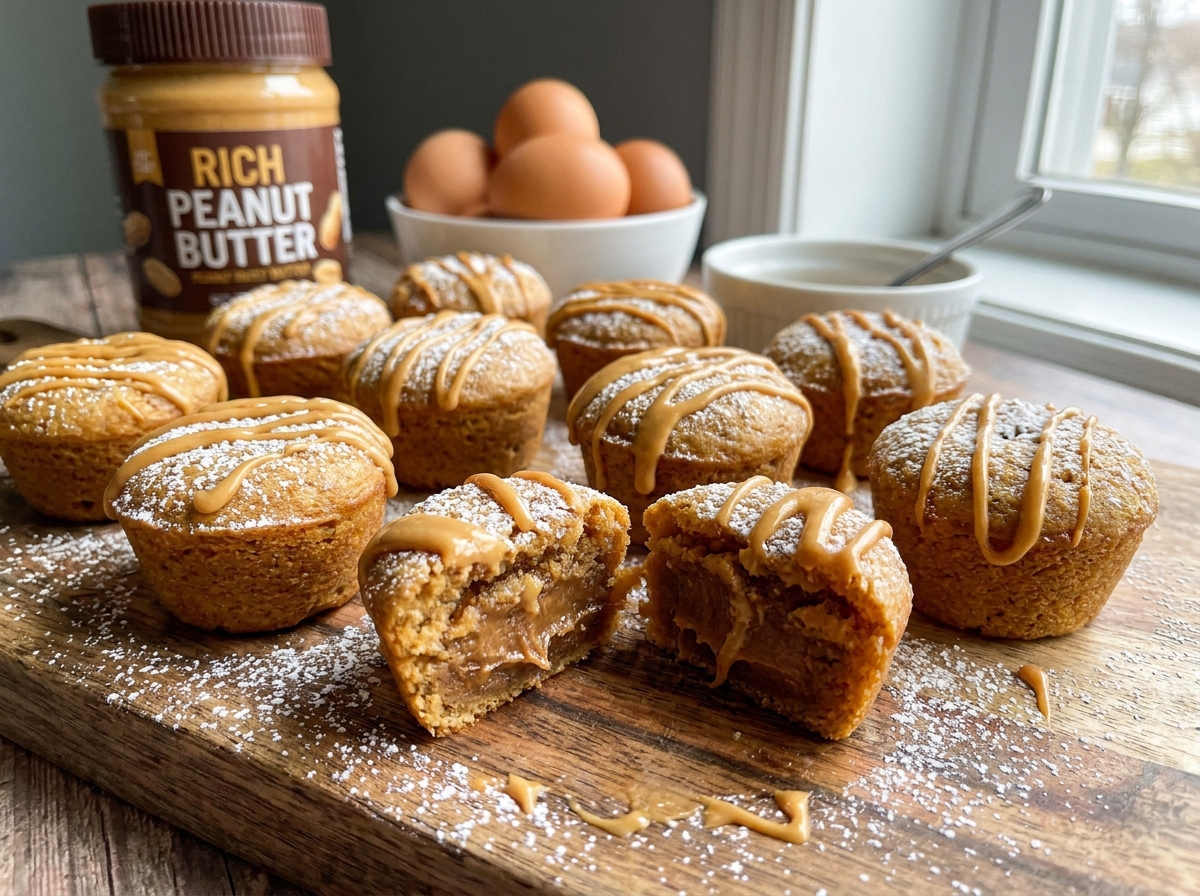
2-Ingredient Rich Peanut Butter Cake Bites
Peanut butter and cake mix rolled into little bites and chilled until firm — no oven, no eggs, just a rich, dense treat ready in well under an hour.
Thank you for reading this post, don't forget to subscribe!
These 2-Ingredient Rich Peanut Butter Cake Bites turn just peanut butter and a box of yellow cake mix into a batch of dense, rollable bites with real peanut butter flavor in every one. Mixed into a thick dough, scooped into small portions, and rolled by hand, these come together entirely in the refrigerator, without ever touching an oven.
There’s no baking, no eggs, and no butter involved at all. The peanut butter binds the dry cake mix into a moldable dough on its own, the same way it does in so many other no-bake treats, while the cake mix brings the sweetness and light vanilla flavor that makes these taste far more developed than a two-ingredient recipe has any right to.
Because the dough comes together in one bowl and only needs a short chill before it’s ready to serve, these are one of the fastest bite-sized treats to make from a short pantry list.
Why This Recipe Works
Peanut butter’s high fat content is what makes it possible to skip the oven entirely here. When it’s worked into a dry cake mix, the fat coats every particle of flour and sugar, binding the mixture into a dough that holds together well enough to roll into balls by hand, without needing eggs or melted butter to make it cohesive. The cake mix supplies the sugar and light flavor a from-scratch peanut butter ball recipe would need extra ingredients to achieve, which is why this two-ingredient version tastes so much more complete than its short ingredient list would suggest.
A short chill in the refrigerator firms the bites up by solidifying the fat throughout the dough, giving each one a dense, slightly firm bite rather than a soft, sticky one. Because the portions are small, that chill time is much shorter than it would be for a full pan of bars, making these one of the quickest no-bake treats to pull together start to finish.
Why Rolling by Hand Works So Well Here
The dough this recipe produces is firm enough to hold a rolled shape almost immediately after mixing, which is part of what makes it so satisfying to work with. Rolling the portions between your palms compacts the dough slightly as you go, which helps each bite hold together well once chilled and gives the finished treat a smooth, uniform surface rather than a rough, crumbly one.
What You’ll Need
- 1 cup creamy peanut butter
- 2 cups yellow cake mix
That’s the entire list. Each bite comes out to roughly 140 calories, and the recipe makes 18 bites.
A Note on Cake Mix and Rolling
A standard yellow cake mix gives the most reliable dough for rolling, since its fine, dry texture blends smoothly with the peanut butter without leaving lumps. If the dough feels too soft to roll cleanly right after mixing, a short 10-minute rest in the refrigerator before rolling firms it up just enough to make shaping the bites much easier and less messy.
Equipment You’ll Need
A mixing bowl and a sturdy spoon are all you need to bring the dough together, and a small cookie scoop helps portion the bites evenly so they chill and finish at the same rate. A parchment-lined tray gives you a surface to place the rolled bites on while they firm up in the refrigerator.
How to Make It
- Combine. Add the peanut butter and cake mix to a bowl.
- Mix. Mix until well combined and a thick dough forms.
- Portion. Scoop small portions and roll them into bite-sized balls.
- Arrange. Place the bites on a parchment-lined tray and gently flatten if desired.
- Chill. Refrigerate for 30–60 minutes until firm.
- Serve. Serve chilled or at room temperature.
Getting Smooth, Evenly Sized Bites
A small cookie scoop is the easiest way to keep every portion close to the same size, which helps the bites chill at the same rate and gives the finished batch a neat, uniform look. Rolling each portion firmly between your palms for a few seconds smooths out any cracks in the dough and compacts it slightly, giving you a clean, rounded bite rather than a rough, crumbly one.

Rolling and Flattening the Bites
Rolling the portions into smooth balls gives a classic, bite-sized treat, but gently flattening each one slightly with your palm after rolling creates a bit more surface area, which some people find easier to eat in one or two bites. Either shape chills and firms up the same way, so this step really comes down to personal preference rather than affecting the texture or flavor.
Knowing When They’re Ready
The bites are ready once they feel firm rather than soft or tacky to the touch. Press one gently between two fingers; if it still feels soft and gives easily, let the batch chill for another 10 to 15 minutes. A fully chilled bite should hold its shape at room temperature for a little while without softening too quickly.
Tips for Perfect Peanut Butter Cake Bites
Use a small cookie scoop to keep the bites evenly sized so they all chill at the same rate, and don’t skip the flattening step if you’d like a slightly wider, easier-to-eat shape. Give the bites the full chill time before serving, since a rushed batch will be softer and stickier than one that’s had time to fully firm up.
Troubleshooting Common Issues
My dough was too soft to roll. Chill the dough for 10 minutes before shaping; a slightly firmer dough is much easier to portion and holds its shape better.
My bites cracked while rolling. This can happen with a drier dough; rolling firmly and evenly between your palms for a few extra seconds usually smooths out any cracks.
My bites stuck together on the tray. Make sure the bites have enough space between them on the parchment, since they can soften and merge together if crowded before fully chilling.
My bites tasted too sweet. Some cake mixes are sweeter than others; a natural, unsweetened peanut butter can help balance a very sweet mix.

A Few Ways to Make It Yours
Powdered Sugar Coating
Roll the finished bites in powdered sugar for a simple, pretty finish and a touch of extra sweetness.
Chocolate Chip Add-In
Fold a small handful of mini chocolate chips into the dough before rolling for a chocolate chip version.
Chocolate Drizzle
Drizzle melted chocolate over the chilled bites for a more finished, dessert-table look.
Crushed Peanut Coating
Roll the bites in finely crushed peanuts right after shaping for extra crunch and flavor.
The plain two-ingredient version is worth trying first so you know the baseline flavor and texture before adding any extras.
How to Store Peanut Butter Cake Bites
Store the bites in an airtight container in the refrigerator for up to a week, since they’re built to stay cold and can soften at room temperature. They also freeze well; place them in a freezer-safe container or bag and thaw in the refrigerator before serving.
When to Serve These Bites
These bites work well as a quick snack, a lunchbox addition, or a bite-sized dessert for a gathering, since their small size makes them easy to eat without utensils. Because they’re rich and satisfying in just one or two bites, they’re also a good option for a dessert platter alongside other small treats.
Nutrition and Serving Information
The recipe estimates approximately 140 calories per bite when the batch is divided into 18 pieces, based on standard peanut butter and boxed cake mix measurements. This is only an estimate, since exact calorie and fat content will vary depending on the specific brands used. Because this recipe is built around peanut butter and a boxed cake mix, it contains peanuts and gluten as major allergens, so these are not appropriate for anyone with those specific allergies.
Make-Ahead Tips
These bites keep well for a week or more, making them a convenient make-ahead snack or party treat. Roll the full batch a day or two ahead and store in an airtight container in the refrigerator, then set them out about 10 minutes before serving if you’d like them slightly softer than straight from the cold.
The Science Behind a No-Bake Dough
Peanut butter’s fat content is what makes it possible to bind a dry cake mix into a dough without any heat at all. At room temperature, that fat is soft and spreadable, letting it coat the fine particles in the cake mix and hold them together into a cohesive, moldable mixture. Chilling the rolled bites in the refrigerator solidifies that same fat, locking each bite into a firm, dense structure the same way refrigeration sets no-bake cookies or fudge. Because these portions are so small, that firming process happens much faster than it would in a full pan of bars, which is part of why this recipe comes together in well under an hour.
Portioning and Yield
This recipe makes about 18 bites from one cup of peanut butter and two cups of cake mix, a good amount for a small gathering or a week of snacks. If you’d like larger bites, scooping bigger portions will bring the yield down closer to 12; smaller scoops can stretch the batch to 24 or more bite-sized pieces for a crowd. The recipe doubles or even triples cleanly using the same ratio if you’d like a bigger batch for a party, a bake sale, or simply for gifting to friends and neighbors during the holidays.
A Little Bit of History
Peanut butter balls built from just a few pantry staples have a long history in home baking, going back to simple no-bake peanut butter and powdered sugar combinations that needed nothing more than a mixing bowl and a refrigerator. This recipe follows that same tradition of convenience, swapping in a boxed cake mix for the powdered sugar and other binders older versions relied on, which adds both extra flavor and structure while keeping the process just as simple and just as quick.
Serving Suggestions
Serve these bites chilled, straight from the refrigerator, for the firmest texture and cleanest bite. Arranged on a small platter, they make an easy addition to a dessert spread or a party table, and a light dusting of powdered sugar over the top adds a simple, finished look without much extra effort. They also travel well in a small container for a lunchbox or a snack on the go.
Why This Recipe Comes Together So Quickly
Because the cake mix already contains the sugar, flavor, and fine texture that a from-scratch peanut butter ball recipe would need several separate ingredients to achieve, this recipe skips straight to the mixing and rolling steps. That’s what makes it realistic to have a finished batch ready in under 40 minutes total, including chill time, with almost none of that time spent on anything more complicated than stirring a bowl and rolling a few dozen small balls of dough.
Understanding the Texture
These bites are dense and a little firm, closer to a rolled fudge or truffle than to a soft, cakey baked good. That’s expected, since there’s no leavening or egg-based structure here to create a light, airy texture the way baking would. Once you know to expect a dense, no-bake bite rather than a fluffy one, these read as a rich, satisfying little treat rather than a recipe that came up short somewhere in the process.
Choosing Between Rolling Sizes
A standard tablespoon-sized scoop gives a classic bite-sized treat that’s easy to pop in one or two bites, while a slightly smaller half-tablespoon scoop stretches the batch further and makes a good option for a dessert platter with a lot of other treats to sample. Larger scoops, closer to two tablespoons, turn these into more of a truffle-sized treat that’s better suited to a smaller gathering where a more substantial bite feels appropriate. Whichever size you choose, keeping the portions consistent within a single batch is what gives the finished tray its neat, uniform look.
Why This Recipe Is Naturally Kid-Friendly to Make
With no oven, no raw eggs, and no hot stovetop anywhere in the process, this is a genuinely easy recipe to make alongside kids, whether that means letting them measure the peanut butter and cake mix or handing them the job of rolling the portions into balls. Rolling dough between your palms is also a satisfying, hands-on task that most kids enjoy, and because the ingredients are simple pantry staples, there’s little risk involved if a young helper wants to taste a bit of the dough along the way before it’s rolled and chilled.
Adjusting the Texture to Your Preference
If you’d like a softer bite, a shorter chill of around 20 to 30 minutes leaves the dough slightly more tender, while a longer chill of an hour or more firms the bites up into a denser, sturdier treat that holds its shape at room temperature for longer once served. The type of peanut butter used also affects the final texture; a natural, oilier peanut butter tends to stay a touch softer even after a full chill, while a standard commercial peanut butter sets up firmer thanks to its added stabilizers. Trying both a shorter and a longer chill time on your first batch is a simple way to figure out which texture you and your family like best before settling into a routine for future batches.
Making These Ahead for a Party
Because these bites hold up so well in the refrigerator, they’re an easy make-ahead option when you’re planning for a party or a holiday gathering with a long list of other dishes to prepare. Rolling and chilling the full batch a day or two in advance frees up time on the day of the event, and the bites will taste just as fresh, since the refrigerator actually helps the flavors settle and meld a bit more than they do right after the initial chill. If you’re serving a large group, doubling or tripling the recipe ahead of time and storing the extra bites in stacked, parchment-lined containers keeps them from sticking together while saving valuable refrigerator space.
Pairing These Bites With Drinks and Other Desserts
A cold glass of milk is the classic pairing for anything peanut butter flavored, and these bites are no exception, since the rich, dense texture practically calls for something cold to wash it down. Coffee also works surprisingly well alongside them, particularly if the bites lean on the sweeter side, since a slightly bitter cup helps balance the sweetness of the cake mix. If you’re building out a larger dessert table, these bites pair nicely with lighter, fruit-based treats like the pineapple creamsicle bars or a slice of lemon pie, since the contrast between the dense peanut butter flavor and something bright and citrusy keeps the whole spread feeling varied rather than one-note.
A Note on Ingredient Ratios
The 1-to-2 ratio of peanut butter to cake mix in this recipe was developed specifically to produce a dough that’s firm enough to roll cleanly but not so dry that it crumbles apart. Adding extra cake mix beyond that ratio will make the dough drier and harder to shape, often requiring an extra splash of milk or an additional spoonful of peanut butter to bring it back together. Adding extra peanut butter, on the other hand, produces a softer, stickier dough that may need a longer chill time before it firms up enough to hold a rolled shape. Sticking close to the original ratio on your first attempt is the easiest way to get a feel for how the dough should look and behave before experimenting with any adjustments.
Common Questions
Why is my dough too soft to roll?
Chill the dough for about 10 minutes before shaping; a slightly firmer dough is much easier to portion and holds its shape better.
Can I use natural peanut butter?
Yes, though the dough may be softer and could need a longer chill before it holds its shape well.
Can I coat these in chocolate?
Yes, dipping the chilled bites in melted chocolate or drizzling it over the top both work well for a more finished look.
Can I freeze these bites?
Yes, freeze them in an airtight container or bag and thaw in the refrigerator before serving.
Do these need to stay refrigerated?
Yes, since there’s no baking involved, these are best kept chilled and will soften at room temperature over time.
Can I double this recipe?
Yes, this recipe doubles cleanly using the same 1-cup-peanut-butter-to-2-cup-cake-mix ratio.
What if my bites cracked while rolling?
Roll them a bit more firmly and evenly between your palms; a few extra seconds of rolling usually smooths out any cracks.
2-Ingredient Rich Peanut Butter Cake Bites turn a jar of peanut butter and a box of cake mix into a batch of dense, rollable bites with real peanut butter flavor in every one. Mix, roll, chill, and serve — that’s the entire process, and the result is a rich, genuinely satisfying little treat that’s ready in well under an hour with barely any real effort at all.