
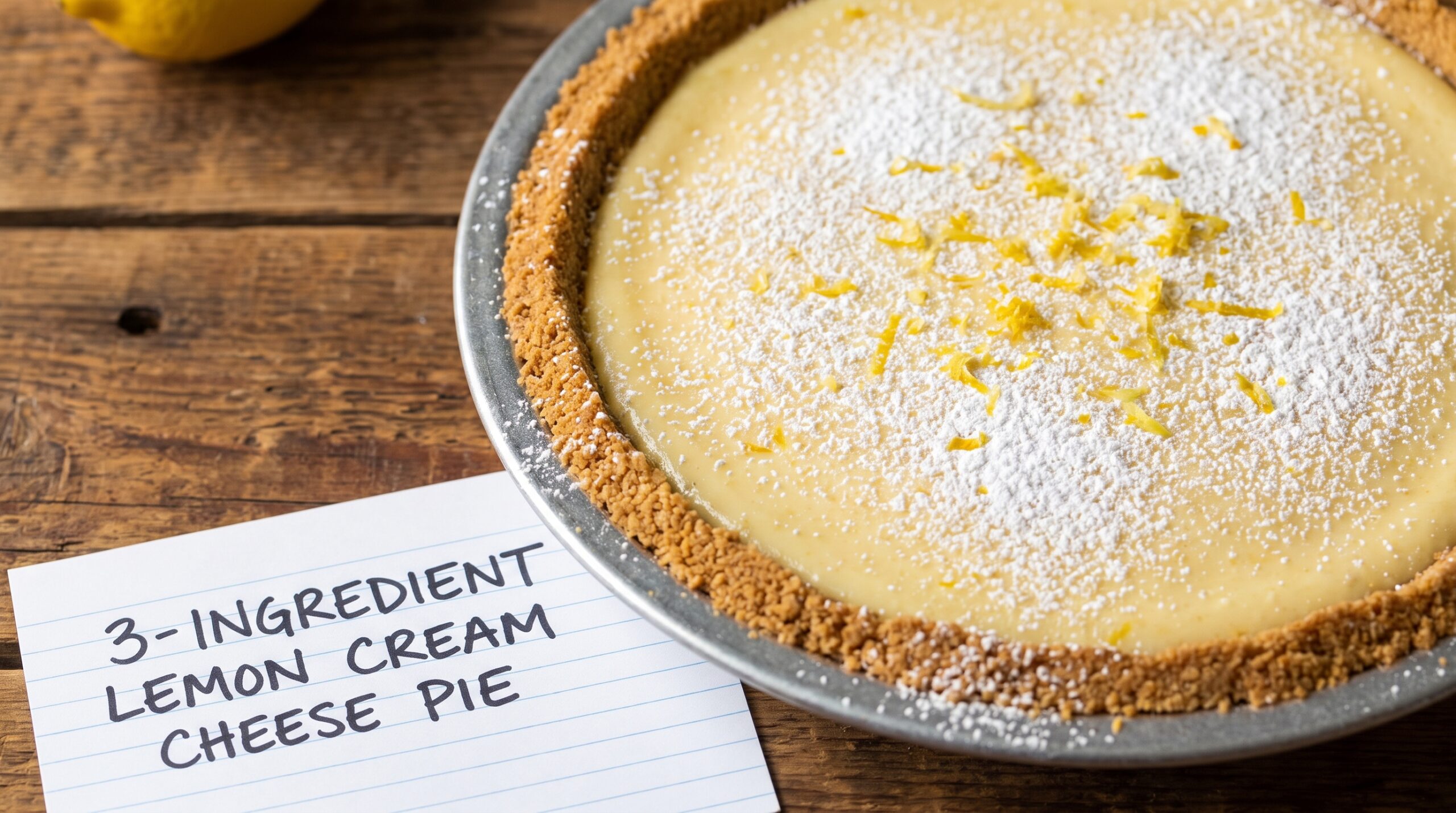
Lemon Cream Cheese Pie
Bright, tangy, impossibly smooth — a no-bake lemon icebox pie that comes together with a can opener and a whisk.
Thank you for reading this post, don't forget to subscribe!
This is the pie you make when the day is too hot for the oven and you still want something that tastes like real effort went into it.
Three ingredients — cream cheese, sweetened condensed milk, and fresh lemon juice — whisked together and poured into a graham cracker crust, then left alone in the fridge to firm up into something bright, tangy, and unbelievably smooth. No baking, no water bath, no worrying about a custard cracking down the middle. Just a whisk, a bowl, and patience.
What makes this pie special is the way three very ordinary ingredients transform into something that tastes far more complex than the sum of its parts. The cream cheese brings richness and body. The sweetened condensed milk brings sweetness and a silky, almost custard-like consistency. And the lemon juice does two things at once — it brightens the whole thing with citrus tang, and its acidity is what actually thickens the filling as it chills, no gelatin or cooking required.
It’s also the kind of pie that photographs beautifully with almost no styling effort. The pale yellow filling, the flecks of lemon zest scattered across the top, the clean edge of a well-chilled slice — it looks like something from a bakery case, even though the entire process takes about fifteen minutes of hands-on work followed by a long, hands-off wait in the fridge. That gap between how impressive it looks and how little effort it actually demands is a big part of why this style of pie has stayed a favorite across generations of home bakers.
A Little Bit of History
Lemon icebox pies belong to a broader family of “icebox desserts” that became enormously popular in American home kitchens starting in the 1930s, once refrigeration became common in households. Before that point, most creamy pies required a stovetop custard and an oven-baked crust — a process that took time, heat, and real technique. The icebox pie offered a shortcut: mix a few pantry staples, pour into a crust, and let the refrigerator do the rest of the work.
Sweetened condensed milk played a starring role in that shift. Introduced commercially in the mid-1800s and widely adopted in home baking by the early 20th century, it offered something home cooks hadn’t had easy access to before — a shelf-stable, already-sweetened, thick dairy base that could be combined with acidic ingredients like lemon or lime juice to set into a pie filling without any cooking at all. Key lime pie, in many ways this pie’s closer cousin, followed the same basic formula and became a Florida classic for exactly this reason. This lemon version follows the same logic, swapping in lemon juice and adding cream cheese for extra richness and a slightly tangier, denser filling than the classic version typically has.
The addition of cream cheese to this style of pie is a somewhat newer development, gaining popularity as home bakers began experimenting with combining icebox pie technique with cheesecake-style richness. It’s a natural pairing — both rely on dairy for their structure, and both are traditionally no-bake or minimally baked desserts meant to be assembled quickly and left to the refrigerator to finish the work. The result of combining the two traditions is a pie that’s tangier and more substantial than a classic icebox pie, but far simpler to make than a traditional baked cheesecake.
Why This One Works
The real trick behind this pie is chemistry, not technique. Lemon juice is acidic, and when it’s combined with the proteins in sweetened condensed milk and cream cheese, that acidity causes the mixture to thicken on its own, without any heat or gelatin involved. It’s the same basic principle that makes key lime pie set up in the fridge rather than the oven — the acid does the work that heat or a setting agent would normally do in other recipes.
Cream cheese adds an extra layer of stability on top of that reaction. Because it’s already thick and holds its shape well on its own, it gives the filling a denser, more cheesecake-like body than a lemon filling made purely from condensed milk and juice would have. That’s part of why this version leans closer to a cross between a lemon icebox pie and a no-bake cheesecake — rich, tangy, and sliceable, rather than loose and pourable.
There’s also a practical reason this three-ingredient method has stayed so popular over the decades: it’s remarkably forgiving compared to a baked custard pie. A baked lemon curd or custard filling can curdle, weep, or crack if the oven runs too hot or the pie is left in even a few minutes too long. This version sidesteps all of that risk entirely — there’s no heat involved in setting the filling, which means there’s no window of overbaking to worry about, no risk of a cracked surface, and no need to babysit anything in the oven while it finishes.

What You’ll Need
- 8 oz cream cheese, softenedLeft at room temperature for about 30 minutes
- 1 can (14 oz) sweetened condensed milk
- 1/2 cup fresh lemon juiceAbout 3–4 medium lemons, juiced
You’ll also need a 9-inch graham cracker crust, store-bought or homemade, and optional lemon zest or whipped cream for garnish.
A Closer Look at Each Ingredient
The cream cheese. Full-fat block cream cheese is what gives this pie its rich, dense texture — the kind sold in a rectangular block, not the spreadable tub variety, which contains more air and moisture and can throw off the pie’s set. Softening it fully before mixing is essential; cold cream cheese resists blending into a smooth filling and tends to leave small lumps throughout the pie.
The sweetened condensed milk. This isn’t the same thing as evaporated milk, despite the similar-looking cans — sweetened condensed milk is thick, extremely sweet, and already has sugar cooked into it, which is exactly what this no-bake filling relies on for both sweetness and body. Double-check the label before you buy, since the two products sit side by side on most grocery shelves and are easy to mix up.
The lemon juice. Freshly squeezed lemon juice makes a real difference here, both in flavor and in how reliably the filling sets. Bottled lemon juice can work in a pinch, but it often has a slightly duller, more one-note flavor, and its acidity level can vary between brands, which sometimes affects how firmly the pie sets in the fridge. If you’re using fresh lemons, roll them firmly on the counter before juicing to help release more juice from each one.
The crust. A standard 9-inch graham cracker crust, whether store-bought or homemade, is the traditional base for this pie and complements the tangy filling well with its subtle sweetness and crumbly texture. If you’d rather make your own, combine about 1½ cups of graham cracker crumbs with a third cup of melted butter and a couple tablespoons of sugar, then press firmly into a pie dish and chill briefly before filling.
How to Make It
- Soften the cream cheese. Make sure your cream cheese has come fully to room temperature before you begin — this is the single biggest factor in how smooth your filling turns out.
- Beat until smooth. In a large bowl, beat the softened cream cheese on its own until completely smooth and free of lumps.
- Add the condensed milk. Pour in the sweetened condensed milk and beat again until fully combined and glossy.
- Add the lemon juice. Slowly whisk in the fresh lemon juice. The mixture will noticeably thicken as the acid reacts with the dairy — this is exactly what you want to see.
- Pour into the crust. Pour the thickened filling into your prepared graham cracker crust and smooth the top with a spatula.
- Chill. Refrigerate for at least 4 hours, or ideally overnight, until the filling is fully set and firm to the touch.
- Garnish and serve. Top with lemon zest, thin lemon slices, or a dollop of whipped cream just before serving, and slice while thoroughly chilled.

Troubleshooting Common Issues
My filling stayed loose and never thickened. This is almost always due to using bottled lemon juice with lower acidity than fresh, or not softening the cream cheese fully before mixing, which prevents it from combining smoothly with the other ingredients. Fresh lemon juice and a fully room-temperature block of cream cheese give the most reliable result.
My pie didn’t set firm even after chilling. Give it more time — this pie genuinely benefits from a full overnight chill rather than the minimum four hours, especially if your kitchen runs warm. The acid-based thickening reaction needs time in the cold to fully stabilize.
My filling tastes lumpy or grainy. This usually traces back to cream cheese that wasn’t fully softened or wasn’t beaten smooth on its own before the other ingredients were added. Always beat the cream cheese by itself first until it’s completely lump-free, then incorporate the condensed milk and lemon juice.
My crust turned soggy. A graham crust can soften if the filling is added while it’s still very loose, or if the pie sits at room temperature too long before chilling. Get the filled pie into the fridge as soon as it’s assembled, and don’t let it linger on the counter.
My pie tastes too tart. This usually comes down to particularly acidic or large lemons. If you find the finished pie tarter than you’d like, a slightly smaller amount of lemon juice next time, or a touch more sweetened condensed milk, can help balance the flavor to your preference without affecting how well it sets.
My filling separated or looks curdled. This is uncommon with this method since there’s no heat involved, but it can happen if the cream cheese wasn’t beaten smooth before the other ingredients were added, or if very cold condensed milk was combined too quickly. Bringing all ingredients closer to room temperature before mixing and beating patiently at each stage helps avoid this.
Serving Suggestions
This pie is bright and rich enough to serve entirely on its own, chilled straight from the fridge, but a few finishing touches take it further. A light dusting of extra lemon zest just before serving amplifies the citrus aroma noticeably — much more than you’d expect from such a small addition. A dollop of freshly whipped cream on each slice softens the tang slightly and adds a lighter, airier contrast to the dense filling. For a slightly more decorated presentation, a thin lemon wheel or twist on top of each slice makes for an easy, elegant garnish that signals exactly what flavor to expect.
This pie also pairs beautifully with a hot cup of tea, particularly something floral or slightly herbal, since the citrus and dairy richness balance nicely against a lighter, more aromatic beverage. It’s a natural fit for spring and summer gatherings, baby showers, or any occasion where a lighter, brighter dessert feels more appropriate than something heavier and chocolate-based.
Because the flavor is so clean and citrus-forward, this pie also works well as a palate-cleansing final course after a rich, heavy meal, where a dense chocolate dessert might feel like too much. It holds up nicely on a dessert table alongside other options, since its pale color and bright flavor offer a natural contrast to darker, richer desserts like brownies or chocolate cake.
A Few Ways to Make It Yours
Lime Version
Swap the lemon juice for fresh lime juice for a filling closer to a classic key lime pie, using the exact same method.
Berry Topping
Top with fresh raspberries or blueberries just before serving for a pop of color and a fruitier finish against the tangy filling.
Toasted Meringue
Spread a layer of meringue over the chilled pie and toast briefly under the broiler for a lemon meringue-style finish.
Orange Twist
Replace a portion of the lemon juice with fresh orange juice for a milder, slightly sweeter citrus flavor.
Make-Ahead Tips
This pie is genuinely built for making ahead, since it needs a substantial chilling period regardless of when you plan to serve it. It can be made up to two days in advance and kept covered in the fridge, which makes it a reliable choice for holidays, dinner parties, or any occasion where oven space and time on the day of serving are already stretched thin. If you’re adding a whipped cream topping or fresh fruit garnish, hold off on those until closer to serving time so they look as fresh as possible.
A Note on Dietary Adjustments
This recipe can be adapted for a few common needs with a little care. For a lower-sugar version, a reduced-sugar sweetened condensed milk can be substituted, though the texture and set may be slightly different since sugar content affects thickness. For a gluten-free version, simply use a certified gluten-free graham cracker crust or make your own with gluten-free graham crackers — the filling itself contains no gluten. Full dairy-free adaptation is more difficult with this particular recipe, since both cream cheese and sweetened condensed milk are central to how the filling sets; dairy-free alternatives to both exist but can behave differently in terms of thickening, so results may vary.
Common Questions
Can I use bottled lemon juice instead of fresh?
You can, but fresh is strongly recommended here. Bottled lemon juice tends to have a duller flavor and can vary in acidity, which sometimes results in a filling that doesn’t set quite as firmly.
Why does the lemon juice thicken the filling?
The acid in lemon juice reacts with the proteins in the dairy, causing the mixture to thicken without any cooking or added gelatin — the same principle used in classic key lime pie.
Can I make this in individual servings instead of one pie?
Yes — layer crushed graham cracker crumbs and the filling into small jars or cups for individual, portioned servings, which also chill and set slightly faster than a full pie due to their smaller size.
How do I know when the pie is fully set and ready to slice?
The filling should feel firm to a light touch and hold a clean edge when you make the first slice, rather than sinking or spreading. If it still feels soft or jiggly, give it more time in the fridge.
Can I freeze this pie?
Yes, this pie freezes reasonably well due to its dense, custard-like texture. Wrap it tightly and freeze for up to a month, then thaw overnight in the fridge before serving.
Can I use a pre-made crust from the store?
Absolutely — a store-bought graham cracker crust works perfectly well here and saves a step. Just make sure it’s fully cooled if it was recently baked before adding the chilled filling.
Why is my pie weeping liquid after a few days in the fridge?
A small amount of liquid separating out after several days is normal for a dairy-based, acid-set filling like this one. Simply blot it gently with a paper towel before serving, and try to enjoy the pie within the first few days for the best texture.