
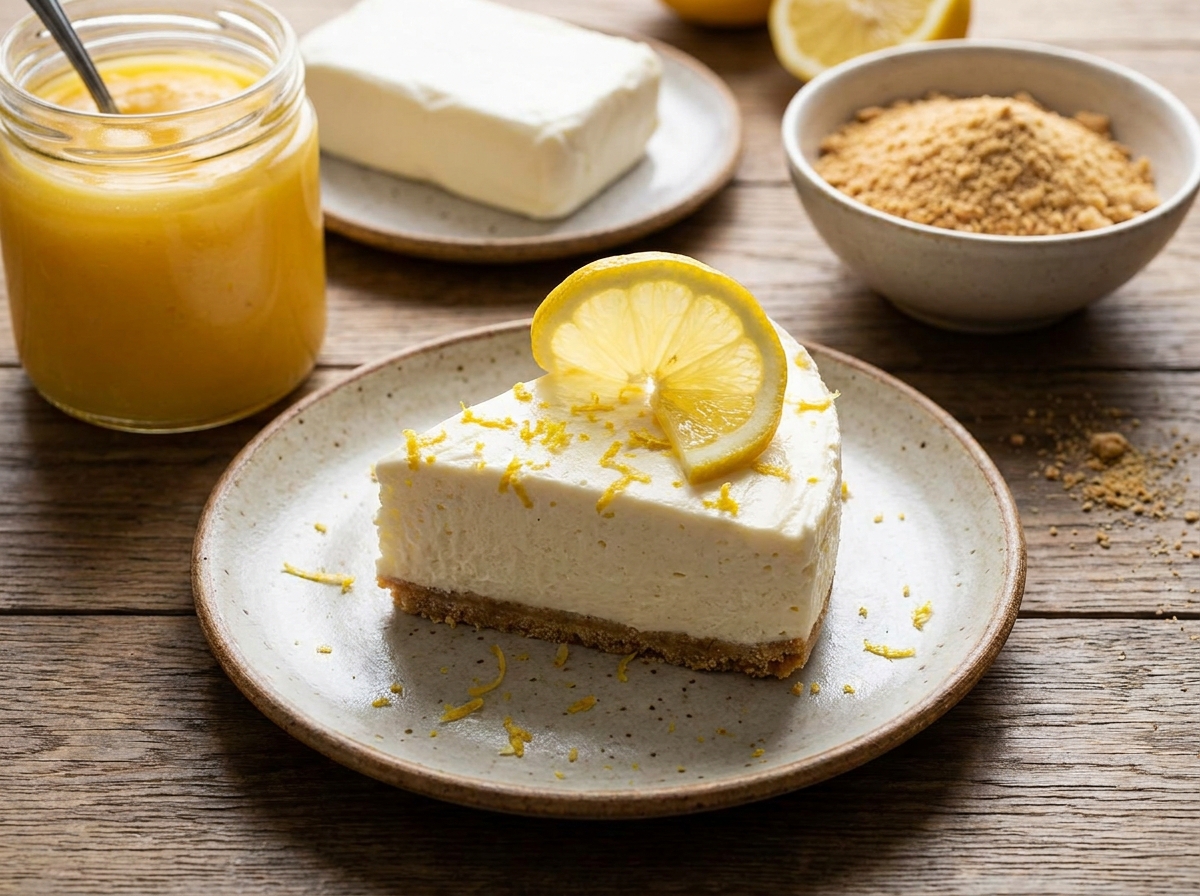
3-Ingredient No-Bake Lemon Cheesecake
Softened cream cheese, sweetened condensed milk, and fresh lemon juice, whisked into a creamy filling that sets in the fridge — no oven, no water bath, no eggs.
Thank you for reading this post, don't forget to subscribe!
There is something wonderfully satisfying about a dessert that looks elegant but requires almost no effort. 3-Ingredient No-Bake Lemon Cheesecake is exactly that kind of recipe.
With softened cream cheese, sweetened condensed milk, and fresh lemon juice, you can create a creamy, tangy cheesecake filling without turning on the oven or preparing a complicated custard. The lemon cuts through the richness of the cream cheese and condensed milk, creating a bright flavor that feels especially refreshing after a meal. Once the filling is poured into a prepared graham cracker crust, the refrigerator takes over and transforms the soft mixture into a sliceable dessert.
This recipe is particularly useful when you want a homemade cheesecake without the usual stress associated with baking one. There is no water bath, no worrying about cracks on the surface, and no need to monitor an oven temperature for an hour. Instead, the technique centers around getting the cream cheese completely smooth, incorporating the condensed milk gradually, and adding the lemon juice until the filling thickens. The finished cheesecake is creamy, cool, sweet, and pleasantly tart — simple enough for a beginner but delicious enough to become a regular favorite.
3-Ingredient No-Bake Lemon Cheesecake is a chilled dessert made from three primary ingredients: cream cheese, sweetened condensed milk, and fresh lemon juice. The mixture does not require baking because the combination of the ingredients creates a thick, creamy filling that firms during refrigeration. It is poured into a prepared 9-inch graham cracker crust and chilled for at least four hours before serving.
The flavor is a beautiful balance of sweet and tart. Sweetened condensed milk provides concentrated sweetness and richness, while cream cheese contributes the tangy, creamy character expected from cheesecake. Fresh lemon juice brings acidity and brightness while helping the filling thicken. The result is a dessert that tastes far more elaborate than its ingredient list suggests, and the simplicity also makes it an excellent choice for warm-weather entertaining — instead of heating the kitchen with an oven, you mix everything together and let the refrigerator do the rest.
How Three Ingredients Create a Creamy Cheesecake
The success of this recipe comes from the interaction between the ingredients rather than from a long list of components. Cream cheese provides the creamy base and familiar cheesecake tang. Sweetened condensed milk adds sweetness while giving the filling body and richness. Lemon juice provides acidity that changes the texture of the mixture as it combines with the dairy ingredients.
This is why the order of preparation matters. You want the cream cheese smooth before introducing the condensed milk. Once those two ingredients are combined, the lemon juice can be incorporated gradually, and as the juice mixes into the creamy base, the filling thickens noticeably. It’s a simple example of how ingredients can perform multiple jobs — instead of relying on gelatin, eggs, or a baked custard to create structure, this cheesecake gets its characteristic consistency from its three main ingredients and sufficient chilling time.
Why This No-Bake Lemon Cheesecake Is So Easy
Traditional cheesecake can require several steps, including preparing a crust, mixing multiple ingredients, baking, cooling, and refrigerating. This recipe eliminates most of those stages. The graham cracker crust is prepared separately, while the filling takes only a few minutes to mix. The entire preparation takes approximately 10 minutes, after which the cheesecake needs at least four hours in the refrigerator to become firmly set — the hands-on time is extremely short compared with many traditional cheesecake recipes.
The recipe also creates very little cleanup. You need a mixing bowl, a mixer or beater, a spatula, and your prepared crust. There is no saucepan or complicated baking equipment involved at any point.
A Perfect Dessert for Beginners
If you have never made cheesecake before, a no-bake recipe is an excellent starting point. You do not have to worry about cracks, overbaking, underbaking, or a cheesecake that browns too much around the edges. The most important technique is simply getting the cream cheese smooth — softened cream cheese blends much more easily than cream cheese straight from the refrigerator, so allow it to soften before you begin.
Once the ingredients are combined, patience becomes the most important ingredient. Four hours of chilling may seem like a long wait after such a quick preparation, but that refrigeration time is essential for achieving a sliceable texture.
What You’ll Need
- 1 (8 oz) package cream cheese, softened
- 1 can (14 oz) sweetened condensed milk
- 1/2 cup fresh lemon juiceStrained of seeds and pulp
- 1 9-inch graham cracker crustStore-bought or homemade
Lemon zest, lemon slices, or fresh berries make a simple, classic garnish. Each slice comes out to roughly 315 calories.
Why Fresh Lemon Juice Matters
Fresh lemon juice provides a bright, natural citrus flavor that works beautifully with the rich dairy base. Bottled lemon juice can technically be used, but fresh juice generally gives a cleaner and more vibrant lemon character. You can also use the zest from the same fruit as an optional garnish — a little finely grated zest adds intense citrus aroma without changing the filling’s consistency. When squeezing the lemons, strain out seeds and large pieces of pulp before adding the juice; the recipe calls for one-half cup, so depending on the size and juiciness of your lemons, you may need several.
Equipment You’ll Need
A large mixing bowl and a hand or stand mixer make it far easier to get the cream cheese completely smooth before the other ingredients go in, which is the single biggest factor in how the finished filling turns out. A rubber spatula helps scrape every bit of filling out of the bowl and smooth the top once it’s in the crust, and a citrus juicer or reamer speeds things up if you’re squeezing fresh lemons. A sharp knife, ideally warmed under hot water between cuts, gives you the cleanest slices once the cheesecake is fully chilled.
How to Make It
- Beat the cream cheese. Place the softened cream cheese in a large mixing bowl and beat until completely smooth and creamy.
- Add the condensed milk. Slowly add the sweetened condensed milk while continuing to mix, pouring gradually so the cream cheese has time to incorporate the liquid evenly.
- Add the lemon juice. Gradually pour in the fresh lemon juice while continuing to mix. You should notice the filling becoming visibly thicker and creamier as it’s incorporated.
- Pour into the crust. Pour the completed filling into the prepared 9-inch graham cracker crust and smooth the top with a spatula.
- Chill. Cover and refrigerate for at least 4 hours, or until firmly set.
- Garnish and serve. Slice and serve chilled, garnished with lemon slices or lemon zest if desired.
Adding the Sweetened Condensed Milk
Sweetened condensed milk is thick and intensely sweet, so adding it gradually makes the mixing process easier. Pour it in a slow stream while the mixer is running at a low or medium speed. Once all the condensed milk has been incorporated, pause and scrape down the sides of the bowl, then mix again until the filling looks completely uniform. At this point, the mixture should be smooth, creamy, and rich — it may still be relatively soft, but the lemon juice will change the consistency in the next step.

How Lemon Juice Sets the Cheesecake
The lemon juice is much more than a flavor ingredient. Its acidity interacts with the dairy components and causes the filling to become thicker, which is one of the reasons this recipe can achieve a cheesecake-like texture without baking. Add the lemon juice gradually rather than dumping the entire amount into the bowl at once, and continue mixing as you pour — you should see the filling become noticeably thicker and creamier.
Once all the lemon juice has been incorporated, avoid unnecessary overmixing; the goal is simply to create a smooth, cohesive filling. Pour it directly into the prepared crust and refrigerate. The extended chilling period allows the mixture to firm further and become easier to slice.
Choosing the Right Graham Cracker Crust
A prepared graham cracker crust makes this recipe even easier, and a standard 9-inch crust provides the right size for the quantity of filling. If you prefer a homemade crust, crushed graham crackers can be combined with melted butter and pressed into a pie dish, though a store-bought crust is completely appropriate when the goal is speed and convenience.
You can also experiment with different crust flavors. A chocolate cookie crust can create a richer chocolate-lemon contrast, while a vanilla wafer crust gives the cheesecake a softer, sweeter base. Whichever crust you choose, it should be firm enough to support the creamy filling once chilled — if using a homemade crust, press it firmly into the pan and chill it before adding the filling.
How Long Should No-Bake Cheesecake Chill?
This cheesecake needs at least four hours in the refrigerator to become firmly set. Chilling overnight is even more convenient if you’re preparing the dessert for the following day. Do not judge the cheesecake’s final texture immediately after mixing — the filling will still be soft at that point, and that is completely normal. Refrigeration is an essential part of the recipe rather than an optional finishing step.
Keep the cheesecake level while it chills, and avoid placing heavy containers on top of it or moving it unnecessarily. When properly chilled, the cheesecake should hold its shape when sliced while remaining creamy rather than stiff.
How to Get a Smooth Cheesecake Texture
A smooth texture starts with properly softened cream cheese, so give it enough time to soften at room temperature before mixing. The second key is gradual incorporation: add the condensed milk slowly and mix thoroughly before moving to the lemon juice, giving each ingredient time to blend into the base. Finally, avoid introducing unnecessary air — you want the filling creamy and cohesive rather than extremely whipped, since a smooth filling produces cleaner slices after chilling.
If you notice a few small lumps before adding the lemon juice, continue beating the cream cheese until they disappear. It is much easier to fix lumps at this stage than after the entire filling has been assembled.
Troubleshooting Common Issues
My cheesecake is too soft even after chilling. The most common reason is insufficient chilling time. Refrigerate it for at least four hours, preferably longer if your refrigerator isn’t particularly cold, and double-check that you used sweetened condensed milk rather than evaporated milk.
My filling has lumps of cream cheese in it. This almost always traces back to cream cheese that wasn’t fully softened, or condensed milk added before the cream cheese was completely smooth. Beat the cream cheese alone first, and continue beating until any lumps disappear before adding anything else.
My filling never thickened properly. Make sure you’re using the full amount of lemon juice called for, added gradually while mixing. If the filling still looks thin after all the lemon juice is in, don’t worry — it will continue to firm up substantially once chilled.
My crust turned soggy underneath the filling. This can happen if the filling was poured in while still very loose, or if the pie sat at room temperature too long before going into the fridge. Refrigerate promptly once assembled.
My cheesecake cracked or looked uneven on top. Smoothing the filling with a spatula before it chills usually resolves this. A little unevenness is also easily hidden with lemon zest, lemon slices, or a border of whipped cream.
How to Slice No-Bake Cheesecake Cleanly
Once the cheesecake is fully chilled, use a sharp knife to cut it into eight slices. For cleaner cuts, dip the knife in hot water, wipe it dry, and then slice, repeating this process between cuts if necessary — the warmed blade moves through the creamy filling more smoothly. Press the knife straight down rather than using excessive sawing motions, which helps maintain the clean layers of crust and filling. If the cheesecake feels too soft to slice cleanly, return it to the refrigerator for additional chilling time before trying again.

What to Serve With Lemon Cheesecake
Because this cheesecake is rich and creamy, simple accompaniments work best. Fresh berries provide a naturally bright contrast, and a cup of coffee or tea makes an excellent pairing, particularly when serving the cheesecake after dinner, since the bitterness of coffee balances the sweetness of the condensed milk. For a more indulgent presentation, serve each slice with whipped cream or a small scoop of vanilla ice cream, and add a drizzle of berry sauce if you like. The beauty of this dessert is that it can be dressed up or served simply depending on the occasion.
A Few Ways to Make It Yours
Lemon Blueberry
Scatter fresh blueberries over the chilled cheesecake before serving, with a bit of extra lemon zest for even more citrus aroma.
Mixed Berry Topping
Strawberries, raspberries, and blackberries all work beautifully spooned over individual slices just before serving.
Chocolate Cookie Crust
Swap the graham cracker crust for a chocolate cookie crust for a richer chocolate-lemon contrast.
Whipped Cream Border
Pipe small dollops of whipped cream around the edge for a more decorative, dinner-party-ready finish.
This cheesecake’s pale, creamy filling already looks elegant smoothed evenly across the crust, so keep decoration relatively light — a sprinkle of lemon zest, a few thin lemon slices, or a scattering of berries is usually all it needs, so the fresh lemon flavor stays the star.
Make-Ahead and Storage Tips
One of the greatest advantages of no-bake cheesecake is how well it fits into a make-ahead schedule. You can prepare the entire cheesecake several hours before serving and let it chill undisturbed, or for an even easier approach, prepare it the evening before — overnight refrigeration gives the filling plenty of time to become firm. Keep the cheesecake covered in the refrigerator to protect it from absorbing other food odors and to prevent the surface from drying out. Store leftovers refrigerated and use clean utensils when serving, since the dessert contains cream cheese and sweetened condensed milk and proper refrigeration matters.
Why This Is the Perfect Summer Dessert
A no-bake lemon cheesecake is especially appealing during warm weather because it does not require an oven. The preparation is quick, and the finished dessert is served cold. Lemon also naturally creates a refreshing flavor profile — its acidity balances the richness of the cream cheese and condensed milk, making each bite taste bright rather than overwhelmingly heavy. This makes the cheesecake ideal for summer barbecues, picnics, family gatherings, birthdays, potlucks, and holiday meals. Prepare it in the morning, refrigerate it throughout the day, and it can be ready for an evening gathering with almost no last-minute work.
A Note on Dietary Adjustments
This recipe can be adapted for a few common needs with a little care. For a lower-sugar version, a reduced-sugar sweetened condensed milk can be substituted, though the texture and set may be slightly softer since sugar content affects how firmly the filling thickens. For a gluten-free version, simply use a certified gluten-free graham cracker crust — the filling itself contains no gluten at all, so that single swap is all it takes.
Full dairy-free adaptation is more difficult with this particular recipe, since cream cheese and sweetened condensed milk are both central to how the filling sets and tastes. Dairy-free cream cheese and condensed milk alternatives exist and can be substituted, though the acid-based thickening reaction may behave somewhat differently depending on the specific products, so a small test batch is worth trying first if you haven’t used those substitutes before. For those managing portion sizes, this cheesecake is rich enough that a standard eighth-slice portion is genuinely satisfying, particularly if serving alongside other desserts at a larger gathering.
Common Questions
Can I use bottled lemon juice?
Fresh lemon juice is recommended because it provides the brightest flavor, but bottled lemon juice can work if fresh lemons are unavailable. Choose a good-quality product and avoid lemon-flavored drink concentrates.
Can I make this cheesecake without a graham cracker crust?
Yes. You can use a cookie crust, shortbread crust, or another prepared pie crust. You can also serve the filling in individual dessert cups for a crust-free version.
Why is my cheesecake too soft?
The most common reason is insufficient chilling time. Refrigerate it for at least four hours, preferably longer if your refrigerator isn’t particularly cold, and make sure you used sweetened condensed milk rather than evaporated milk.
Can I make this cheesecake the day before?
Absolutely. Making it the day before is one of the easiest ways to ensure it has plenty of time to set. Keep it covered and refrigerated until you’re ready to serve.
Can I add lemon zest to the filling?
Yes, a small amount of finely grated lemon zest can intensify the citrus flavor. Use finely grated zest so the texture of the filling remains smooth.
Can I use lime juice instead of lemon juice?
Yes — lime juice reacts with the dairy in the same way and will set the filling just as reliably, giving you a slightly different, equally bright citrus flavor.
Do I need full-fat cream cheese?
Full-fat cream cheese gives the richest, creamiest texture and is recommended for the best result. Reduced-fat versions can work, though the filling may set slightly softer.
Can I freeze this cheesecake?
Freezing isn’t recommended, since the dairy-based filling can separate and lose its smooth texture once thawed. This cheesecake is best made and enjoyed within about five days for the best quality.
3-Ingredient No-Bake Lemon Cheesecake is the kind of dessert that makes homemade cheesecake feel effortless. Three simple ingredients create a creamy, tangy filling that sets beautifully in the refrigerator, while a prepared graham cracker crust provides the perfect crunchy foundation — no oven, no water bath, and no complicated technique required. Whether you’re looking for an easy family dessert, a last-minute party recipe, or a simple cheesecake for a weekend dinner, this one delivers plenty of flavor with very little work.