
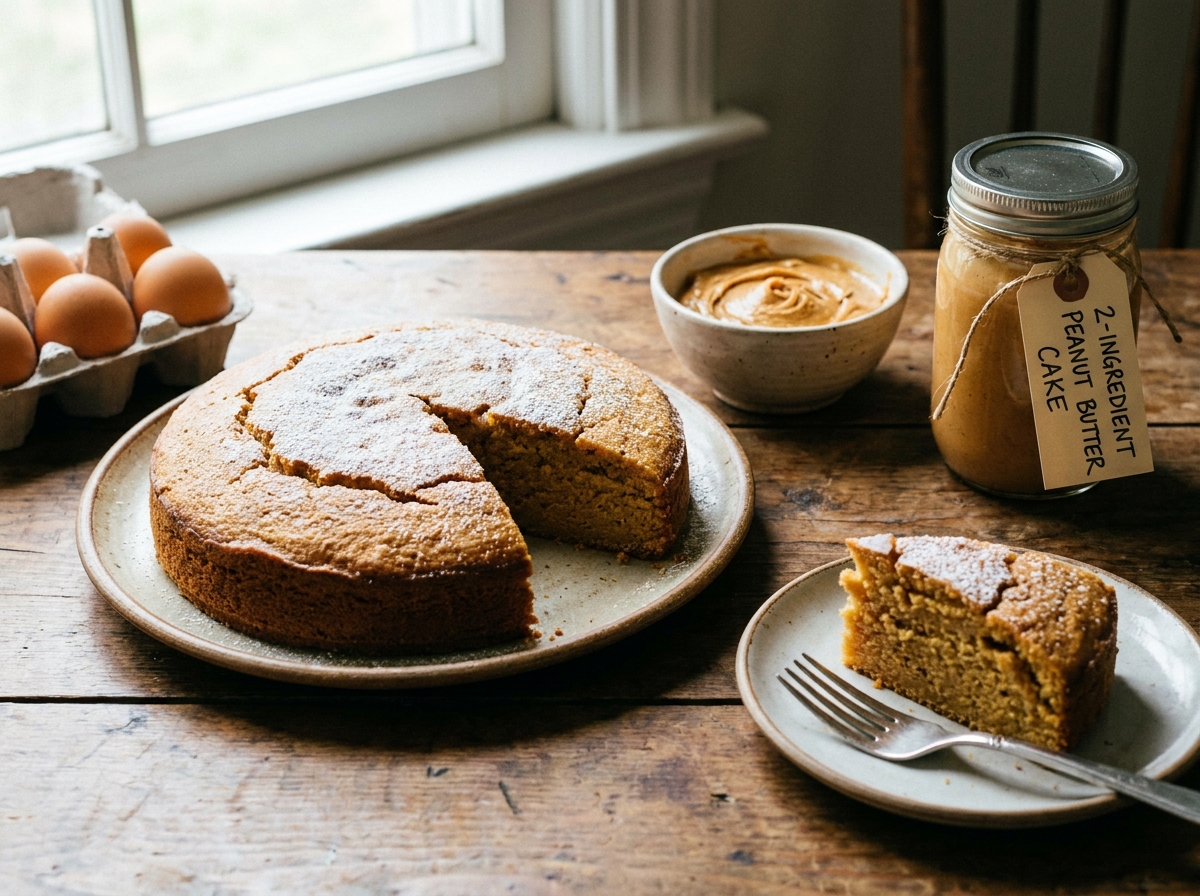
2-Ingredient Peanut Butter Cake
Just peanut butter and eggs, beaten smooth and baked into a dense, naturally rich cake with no flour, no sugar, and no leavening at all.
Thank you for reading this post, don't forget to subscribe!
2-Ingredient Peanut Butter Cake is proof that a genuinely good cake doesn’t need flour, sugar, or butter to taste rich and satisfying. Just a cup of creamy peanut butter and four eggs, beaten together until smooth and slightly fluffy, bake into a dense, naturally sweet cake with a deep peanut butter flavor in every bite.
There’s no dry ingredients to measure, no leavening agents to worry about, and no butter to cream, just two ingredients most kitchens already have on hand, whisked together and poured straight into a cake pan. What comes out of the oven looks and slices like a real cake, with a tight, moist crumb and a rich, nutty flavor that tastes far more complex than a two-ingredient recipe should.
It’s a genuinely simple dessert for anyone craving a peanut butter treat without wanting to pull out a full pantry of baking ingredients.
Why This Recipe Works
Eggs are one of the most powerful binding and leavening ingredients in baking, packed with protein that sets under heat and gives structure to whatever they’re mixed into. When four eggs are beaten together with a full cup of peanut butter, they provide enough structure and lift to hold the cake together and give it a real, cake-like crumb, even without any flour or baking powder in the mix. Peanut butter, meanwhile, supplies the fat, moisture, and natural sweetness that a traditional cake would normally get from butter, sugar, and flour combined.
Beating the peanut butter and eggs together for a full two to three minutes is what incorporates enough air into the batter to give the finished cake some lightness, rather than a dense, flat result. That extended beating time is doing real structural work, not just combining the ingredients, so it’s worth resisting the urge to rush through it.
Why This Cake Doesn’t Need Flour
A traditional cake relies on flour for structure, but this recipe replaces that entirely with the protein network built by eggs as they cook. As the batter bakes, the egg proteins set and firm up around the peanut butter, creating a structure sturdy enough to hold its shape and slice cleanly, even without a single grain of flour anywhere in the recipe.
What You’ll Need
- 1 cup creamy peanut butter
- 4 large eggs
That’s the entire list. This recipe makes 8 servings, at roughly 245 calories per serving.
A Note on Peanut Butter and Egg Size
A standard creamy peanut butter gives the smoothest batter and the most reliable results, while a natural, oilier peanut butter can make the batter looser and may need a few extra minutes of bake time. Be sure to use large eggs as specified; smaller or larger eggs can throw off the ratio of liquid to fat that this recipe depends on for its structure.
Equipment You’ll Need
An 8-inch round cake pan, greased and lined with parchment paper on the bottom, is essential for easy removal once the cake is baked. An electric mixer, handheld or stand, makes quick work of beating the peanut butter and eggs together; a whisk works too, but will require more effort to reach the same smooth, slightly fluffy consistency.
How to Make It
- Preheat and prep. Preheat your oven to 350°F (175°C). Grease an 8-inch round cake pan and line the bottom with parchment paper.
- Combine. Add the peanut butter and eggs to a large mixing bowl.
- Beat until smooth. Beat with an electric mixer for 2–3 minutes, until the mixture is smooth, creamy, and slightly fluffy.
- Pour into the pan. Pour the batter into the prepared cake pan and smooth the top.
- Bake. Bake for 25–30 minutes, or until the center is set and a toothpick inserted into the middle comes out mostly clean.
- Cool. Let the cake cool in the pan for 10 minutes, then transfer it to a wire rack to cool completely.
- Serve. Slice and serve as-is, or dust lightly with powdered sugar for an extra-special finish.
Getting the Batter Properly Fluffy
Beating the peanut butter and eggs for the full two to three minutes, rather than just until combined, is what incorporates enough air into the batter to give the finished cake real lift. The mixture should look noticeably lighter in color and slightly fluffy by the time it’s ready, a sign that enough air has been whipped in to help the cake rise properly in the oven.

Getting an Even Bake
Smoothing the top of the batter with a spatula before it goes into the oven helps the cake bake evenly across the entire pan, since an uneven surface can lead to some spots cooking faster than others. Placing the pan on the center rack of the oven, rather than too close to the top or bottom, also helps ensure even heat distribution throughout the bake.
Knowing When It’s Done
This cake is ready once the center is set and no longer looks wet or jiggly, and a toothpick inserted into the middle comes out mostly clean, a few moist crumbs clinging to it are fine, but wet batter means it needs more time. Because there’s no flour to visually signal doneness the way a traditional cake’s golden top would, relying on the toothpick test and the set appearance of the center is the most reliable way to check.
Tips for Perfect Peanut Butter Cake
Use room-temperature eggs if possible, since they incorporate more easily and evenly into the peanut butter than cold eggs straight from the refrigerator. Don’t overbake this cake; because it has no flour to keep it moist the way a traditional cake would, a few extra minutes in the oven can dry it out more noticeably than you’d expect.
Troubleshooting Common Issues
My cake sank in the middle. This can happen if the batter wasn’t beaten long enough to incorporate enough air, or if the cake was underbaked and pulled from the oven too soon.
My cake stuck to the pan. Make sure the pan is well greased and lined with parchment paper on the bottom; this batter has no flour to help it release cleanly on its own.
My cake turned out dense and heavy. Beat the peanut butter and eggs longer, closer to the full three minutes, to incorporate more air into the batter before baking.
My cake was dry. It was likely baked a few minutes too long; check for doneness a few minutes early next time, since this cake can dry out faster than a traditional flour-based one.

A Few Ways to Make It Yours
Powdered Sugar Dusting
A light dusting of powdered sugar over the cooled cake adds a simple, finished look with barely any effort.
Whipped Cream Topping
A dollop of whipped cream on each slice adds a light, creamy contrast to the dense, rich cake.
Chocolate Drizzle
A drizzle of melted chocolate over the top brings a peanut butter cup flavor to this simple cake.
Chopped Peanut Topping
A scatter of chopped peanuts over the top adds crunch and reinforces the peanut butter flavor.
The plain version is worth trying first so you know the baseline flavor before adding any extras.
How to Store Peanut Butter Cake
Store the cake covered at room temperature for up to 2 days, or in the refrigerator for up to a week for a longer shelf life. Because there’s no flour to help retain moisture the way a traditional cake would, wrapping it tightly is especially important to keep it from drying out.
When to Serve This Cake
This cake works well as a simple afternoon treat, a naturally gluten-free dessert option for a gathering, or a quick way to satisfy a peanut butter craving without needing a full baking session. Its dense, rich texture also makes it a satisfying option for a smaller, more intimate dessert course rather than a large celebration cake.
Nutrition and Serving Information
The recipe estimates approximately 245 calories per serving when the cake is divided into 8 slices, based on standard peanut butter and large egg measurements. This is only an estimate, since exact calorie and fat content will vary depending on the specific brands used. Because this recipe is built around peanut butter and eggs, it isn’t appropriate for anyone with peanut or egg allergies, though it is naturally gluten-free and contains no dairy in its basic form.
Make-Ahead Tips
This cake can be baked a day or two ahead and stored covered at room temperature or in the refrigerator, making it a convenient dessert to prepare before a gathering. Because it has no frosting or delicate topping, it travels well if you need to bring it somewhere shortly after baking.
The Science Behind an Egg-Based Cake
Eggs contain proteins that unfold and bond together as they’re heated, forming a structural network that traps air and moisture within it, the same basic mechanism that gives a soufflé or a custard its structure. When four eggs are beaten with peanut butter and baked, that same protein-setting process gives this cake its structure in place of flour’s gluten network. The peanut butter’s fat content coats and tenderizes that protein structure as it bakes, which is why the finished cake has a moist, dense crumb rather than the springy, rubbery texture a purely egg-based dish like a quiche might have.
Portioning and Yield
This recipe makes 8 servings from a single 8-inch round cake, a good size for a small gathering or a few days of dessert. If you’d like a larger cake for more people, doubling the recipe into a 9-inch pan works well, though the bake time may need to extend slightly given the larger volume of batter.
A Little Bit of History
Minimal-ingredient baking has grown into its own genre of home cooking in recent years, often built around naturally gluten-free or lower-carbohydrate combinations like this one, where eggs stand in for flour entirely. Peanut butter itself has a long history as a stand-in for butter or oil in baking, prized for the moisture and flavor it brings to a batter. This recipe combines both traditions into one of the simplest possible peanut butter desserts, built around only what’s already sitting in most kitchens.
Serving Suggestions
Serve slices at room temperature or slightly warm for the richest peanut butter flavor and the softest texture. A dusting of powdered sugar or a dollop of whipped cream dresses the cake up nicely for company, and a few fresh berries on the side add a bright, fresh contrast to the dense, nutty cake.
Choosing the Right Peanut Butter
A standard, well-stirred creamy peanut butter gives the smoothest batter and the most predictable results, since its consistency has been engineered to stay uniform. A natural peanut butter, with its tendency to separate, can work but may make the batter looser and could require a slightly longer bake time to fully set in the center.
Why This Recipe Is So Beginner-Friendly
If you’ve never baked a cake from scratch before, this is about as forgiving a place to start as you’ll find. There’s no dry ingredient list to measure precisely, no risk of throwing off a delicate ratio of flour to leavening, and no creaming butter and sugar together to get exactly right. With only two ingredients and one real technique, beating the batter long enough to add air, there’s very little room for the kind of small mistakes that can derail a more complicated cake. This makes it a genuinely approachable recipe for a first-time baker or a child who wants to help, since cracking eggs and running the mixer are both simple, satisfying tasks with real, visible results.
Adjusting the Flavor and Sweetness
As written, this cake gets all of its sweetness naturally from the peanut butter itself, giving a cake that’s rich and nutty but noticeably less sweet than a traditional frosted cake. If you’d like a sweeter result, beating in a few tablespoons of honey, maple syrup, or granulated sugar along with the peanut butter and eggs adds sweetness without disrupting the basic two-ingredient structure too much. A splash of vanilla extract can also round out the flavor nicely, adding warmth without competing with the peanut butter. Because this cake has so few ingredients to begin with, small additions tend to have an outsized effect on the final flavor, so it’s worth trying the plain version first before deciding what, if anything, you’d like to add.
Pairing This Cake With Other Desserts and Drinks
Because the flavor here is rich, dense, and distinctly peanut buttery, this cake pairs naturally with lighter, brighter options if you’re serving more than one dessert. A simple fruit salad or a citrus-based dessert cuts through the richness nicely, while something equally indulgent like a chocolate dessert leans further into the same direction if that’s the mood you’re after. On the drink side, this cake is a natural match for a cold glass of milk, the classic pairing for anything peanut butter, while coffee works well for an afternoon treat. If you’re building out a larger dessert spread, this cake reads as one of the richer, more filling options, so balancing it with something lighter helps the whole table feel varied rather than one-note.
A Note on Ingredient Proportions
The ratio of peanut butter to eggs in this recipe was chosen carefully, and it’s worth understanding why before making adjustments. One cup of peanut butter to four large eggs gives enough egg protein to set the batter into a sliceable cake structure, while the peanut butter provides enough fat and moisture to keep that structure from turning rubbery or overly eggy in flavor. If you use fewer eggs relative to the peanut butter, the batter may not have enough structure to rise and set properly; if you use more eggs without adjusting the peanut butter, the finished cake can taste more like a baked custard than a rich, peanut buttery dessert. This particular ratio is what gives the cake its dense, moist, cake-like texture rather than either a runny, underset center or an overly firm, egg-heavy one, so it’s worth treating the stated proportions as a tested baseline.
A Quick Note on Serving Temperature
This cake is good served warm, at room temperature, or chilled, which is part of what makes it such a flexible dessert to have on hand. Served warm, shortly after baking, the peanut butter flavor is at its most pronounced and the texture is at its softest. At room temperature, the cake firms up slightly and slices more neatly, making it easy to serve at a gathering without worrying about timing dessert around the oven. Chilled, the texture becomes even denser and fudgier, which some people prefer, so it’s worth trying all three to see which you like best.
Why This Recipe Is Naturally Gluten-Free
Because this cake contains no flour of any kind, it’s a naturally gluten-free dessert option without requiring any special gluten-free flour blends or substitutions that can sometimes change the texture of a traditional cake. This makes it a genuinely useful recipe to have on hand when baking for a gathering that includes guests who avoid gluten, since it doesn’t taste like a compromise or an adapted version of a “real” cake, it’s simply built differently from the ground up, using eggs rather than flour for its structure.
A Quick Note on Portion Control
Because this cake is dense and rich, a modest slice goes further here than it would with a lighter, airier flour-based cake. Cutting the pan into 10 smaller wedges rather than 8 standard slices is an easy way to stretch the cake a bit further for a small gathering, while still giving everyone a satisfying, full-flavored taste of the peanut butter.
Common Questions
Can I use natural peanut butter instead of regular?
Yes, though the batter will be looser and the cake may need a few extra minutes in the oven to fully set.
Why did my cake sink in the middle?
This usually means the batter wasn’t beaten long enough, or the cake was underbaked and pulled out too soon.
Can I add sugar or sweetener to this recipe?
Yes, a few tablespoons of sugar or honey can be beaten in with the peanut butter and eggs if you’d like a sweeter cake, though it will change the two-ingredient nature of the recipe.
Is this cake gluten-free?
Yes, since it contains no flour, this cake is naturally gluten-free as written.
Can I double this recipe?
Yes, use a 9-inch pan and double both ingredients, allowing a few extra minutes of bake time for the larger batch.
How do I know when it’s fully baked?
The center should look set rather than wet or jiggly, and a toothpick inserted into the middle should come out mostly clean.
Can I freeze this cake?
Yes, wrap it tightly and freeze for up to 2 months; thaw in the refrigerator before serving.
2-Ingredient Peanut Butter Cake turns a jar of peanut butter and a few eggs into a dense, naturally rich cake with almost no effort at all. Beat, pour, bake, and cool, that’s the entire process, and the result tastes far more complex than its short ingredient list would ever suggest.